MBABANE – The United States of America (USA) has said Taiwan and Eswatini are its trusted partners.
The United States Department of State, the equivalent of the Ministry of Foreign Affairs and International Cooperation, stated that Taipei and Mbabane provide significant benefits to the USA.
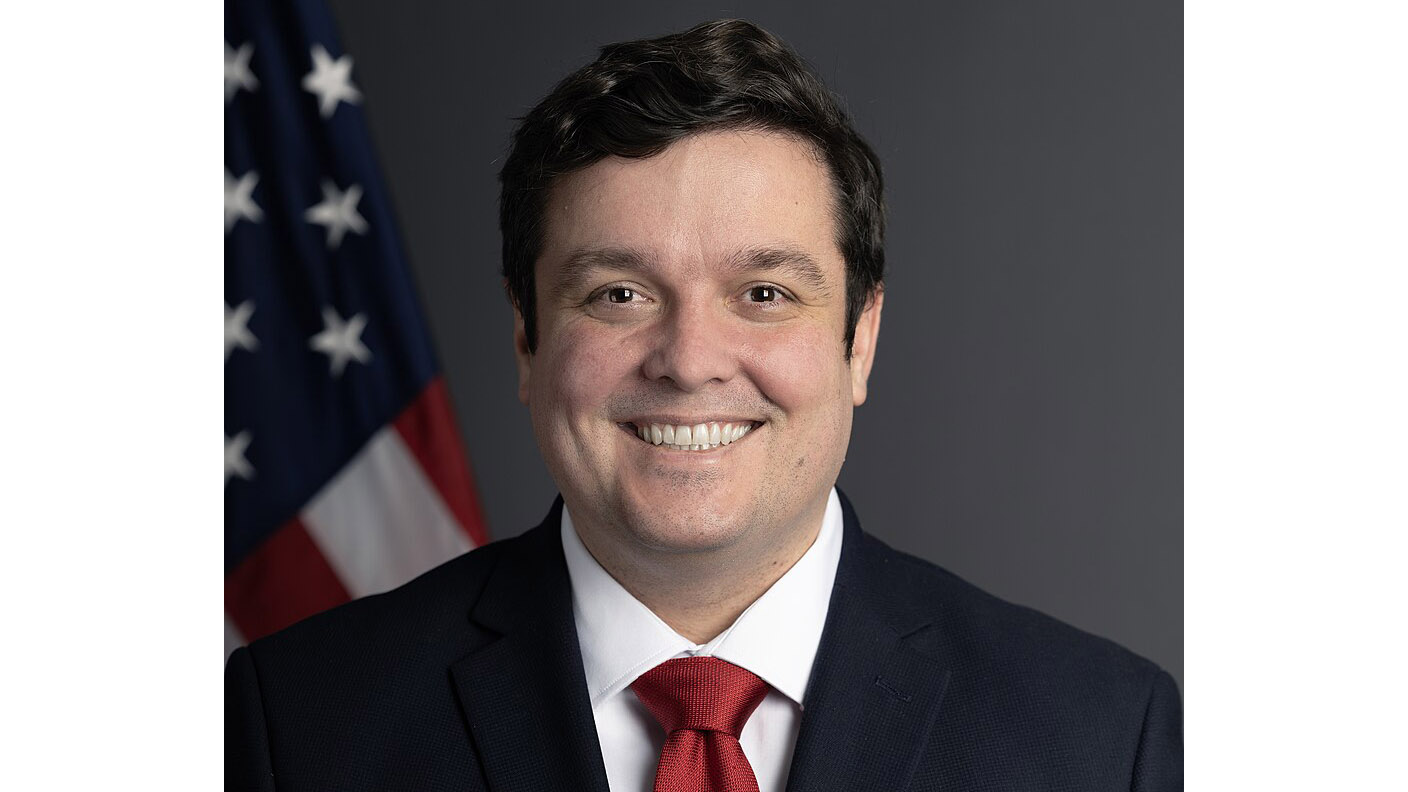
“Taiwan is a trusted and capable partner of the United States and many others, and its relationships around the world provide significant benefits to the citizens of these countries, including Eswatini,” a State Department spokesperson said. Reuters and several other mainstream media outlets did not mention the name of the spokesperson for the US Department of State. However, the incumbent Spokesperson is Tommy Pigott. Referring to the recent blocked travel of the current President of Taiwan, Lai Ching-te, the US Government stated that every democratically elected Taiwan president has made overseas trips to visit Taiwan’s diplomatic partners. USA recalled that former Taiwan President Tsai Ing-wen went to Eswatini in 2023 and 2018, without any block.
“This travel is routine and should not be politicised,” the spokesperson said.Eswatini is one of 12 countries with formal diplomatic ties to Taiwan and the only one in Africa where China has deep economic relationships. China had condemned Lai’s trip to Eswatini. However, the president finally visited the country last week. He toured the newly-opened Ezulwini Palazzo Hotel.
It must be said that the USA raised concerns under the Taipei Act regarding the decision by Madagascar, Seychelles and Mauritius to revoke overflight clearances for Taiwan’s president.
Washington described the incident as an abuse of the international civil aviation system. Meanwhile, China’s Taiwan Affairs Office dismissed the allegation but expressed appreciation for the stance and ‘practice’ of the three countries in upholding the One-China principle.
The USA-Taiwan relations are robust, unofficial and rapidly deepening. They are reportedly driven by shared democratic values, economic ties and strategic interests in the Indo-Pacific. While the US officially maintains a ‘One-China’ policy and does not have diplomatic ties with Taiwan, it supports Taiwan’s security through arms sales as per the 1979 Taiwan Relations Act.
The One-China policy is informed by the United Nations General Assembly 2758, passed in 1971.
It, however, does not mention ‘Taiwan’ or the ‘Republic of China’ explicitly, focusing instead on switching UN representation from Chiang Kai-shek to the People’s Republic of China.
While the PRC asserts this resolution validates their ‘One-China’ principle, some international legal scholars and various governments argue it only determined UN representation and did not decide Taiwan’s sovereignty.
In 2019, the United States of America (USA) passed a law that deals with all nations that undermine the Republic of China (ROC) on Taiwan.
It is called the Taipei Act or the Taipei Act of 2019 (Taiwan Allies International Protection and Enhancement Initiative).
Taipei is the capital city of Taiwan.
It has been established that the law passed so that the US Government can act as follows :
Consider in certain cases as appropriate and in alignment with US interests, reducing its economic, security and diplomatic engagement with nations that take serious or significant actions to undermine Taiwan.
Support Taiwan in strengthening its official diplomatic relationships as well as unofficial partnerships with countries in the Indo-Pacific region and around the world.
Consider, in certain cases as appropriate and in alignment with US interests, increasing its economic, security and diplomatic engagement with nations that have demonstrably strengthened, enhanced or upgraded relations with Taiwan.
The Taipei Act of 2019 (Taiwan Allies International Protection and Enhancement Initiative) seeks to strengthen Taiwan’s international standing by supporting its diplomatic ties and participation in international organisations.
It mandates that the US Government boost engagement with nations that strengthen ties with Taiwan and reconsider relationships with those that undermine it. In fact, its enactment was caused by decisions by some countries to cut ties with Taiwan to establish diplomatic relations with Mainland China.
USA lawmakers passed the legislation at a time when the People’s Republic of China was using its growing economic, diplomatic and military clout to intimidate and isolate Taiwan, also referred to as the Republic of China on Taiwan.
It is aimed at intensifying the government’s support for the island nation with a carrots-and-sticks approach, ramping up ‘economic, security and diplomatic engagement’ with countries that have ‘strengthened, enhanced or upgraded relations with Taiwan.’
According to the Taipei Act, it is the policy of the US to preserve and promote extensive, close and friendly commercial, cultural and other relations between the US and the people of Taiwan.
This USA law also refers to the Taiwan Relations Act of 1979.
Section 2 of the Taipei Act reads: “The Taiwan Relations Act of 1979 states that it is the policy of the United States to maintain the capacity of the United States to resist any resort to force or other forms of coercion that would jeopardise the security, or the social or economic system, of the people on Taiwan.”
Section 1 (3) provides that Taiwan is a free, democratic and prosperous nation of 23 million people and an ‘important contributor to peace and stability around the world.’
Section 1 (6) is concerned about the undermining of Taiwan in that since 2016, Gambia, Sao Tome and Principe, Panama, the Dominican Republic, Burkina Faso, El Salvador, Solomon Islands and Kiribati severed diplomatic relations with Taiwan in favour of a relationship with China.
Taiwan currently maintains full diplomatic relations with 12 sovereign nations around the world. Eswatini is one of those nations. In fact, the kingdom is the only country in Africa with diplomatic relations with Taiwan.
Section 1 (4) of the Taipei Act points out that since the election of the then Tsai Ing-wen as President of Taiwan in 2016, the government of the People’s Republic of China had intensified its efforts to pressure Taiwan.
The current President of Taiwan is Lai Ching-te (also known as William Lai).
It is stated in the Act that Taiwan’s unofficial relations with the United States, Australia, India, Japan and other countries are of significant benefit in strengthening its economy and preserving its international space.
Section 1 (8) of the Act reads: “According to President Tsai Ing-wen, the severance of diplomatic ties with Taiwan in favour of diplomatic relations with China is ‘part of a series of diplomatic and military acts of coercion’ by China.”
The new law complements the Asia Reassurance Initiative Act of 2018 of the USA which states that it is the United States policy ‘to support the close economic, political and security relationship between Taiwan and the United States’.
It mandates the president of the USA to do the following :
Conduct regular transfers of defence articles to Taiwan that are tailored to meet the existing and likely future threats from the People’s Republic of China, including supporting the efforts of Taiwan to develop and integrate asymmetric capabilities, as appropriate, including mobile, survivable and cost-effective capabilities, into its military forces.
Encourage the travel of high-level United States officials to Taiwan, in accordance with the Taiwan Travel Act.
The law further states that it should be the policy of the US:
(1) to advocate, as appropriate—
(a) for Taiwan’s membership in all international organisations in which Statehood is not a requirement and in which the US is also a participant; and
(b) for Taiwan to be granted observer status in other appropriate international organisations.
(2) To instruct, as appropriate, representatives of the US Government in all organisations described in paragraph to use the voice, vote and influence of the US to advocate for Taiwan’s membership or observer status in such organisations; and
(3) for the president or the president’s designees to advocate, as appropriate, for Taiwan’s membership or observer status in all organisations described in paragraph as part of any relevant bilateral engagements between the US and the People’s Republic of China, including leader summits and the US-China Comprehensive Economic Dialogue. It is stated that it is the sense of Congress that the US should engage in bilateral trade negotiations with Taiwan, with the goal of entering into a free trade agreement that is of mutual economic benefit that protects US workers and benefits US exporters.
Tommy Pigott, the US Department of State Spokesperson. The State Department says Taiwan and Eswatini are its trusted and capable partners. (Courtesy Pic)