MBABANE – It is a wait- and-see situation!
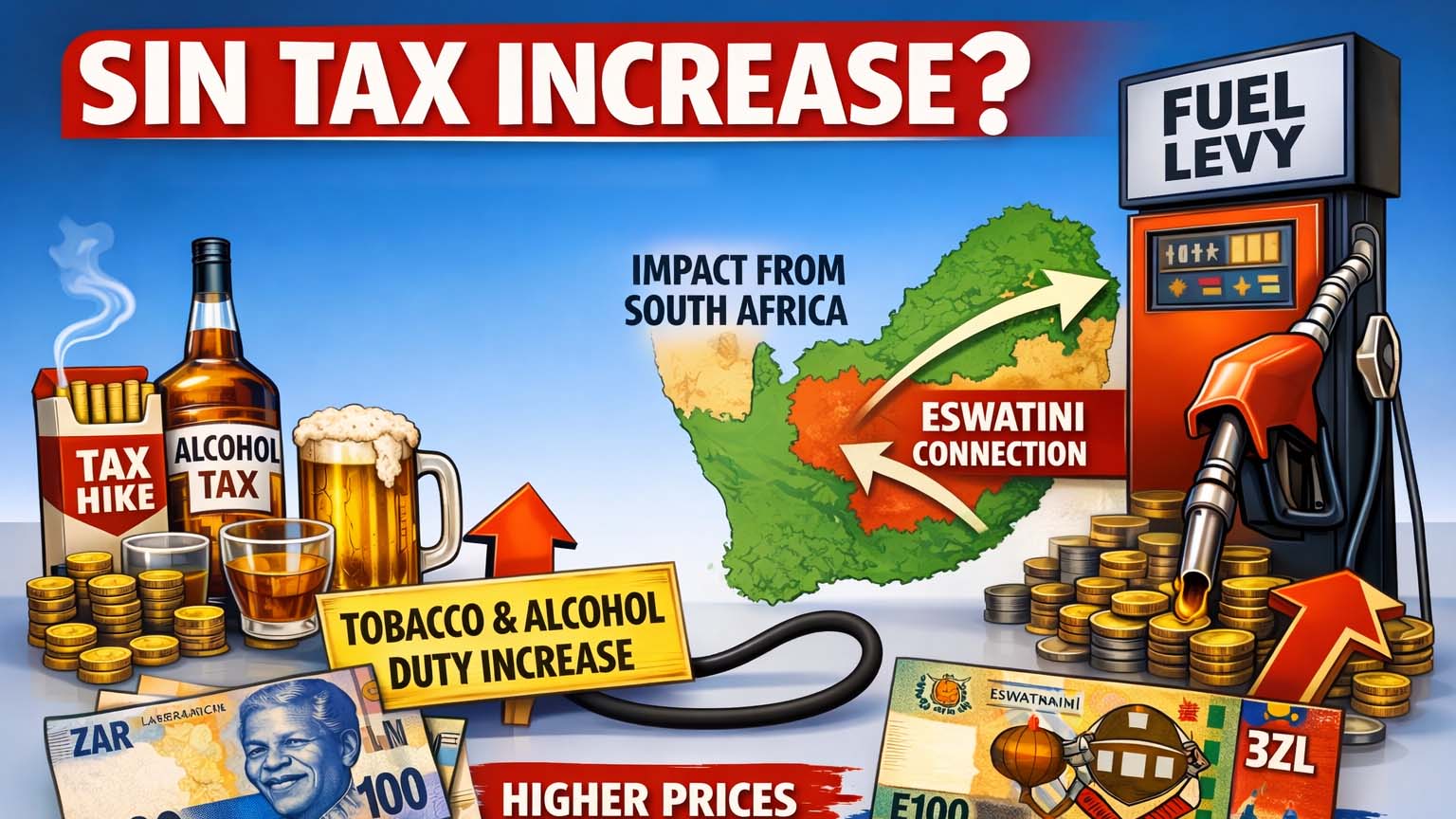
With excise duties on tobacco and alcohol expected to rise in line with inflation in neighbouring South Africa, there is a likelihood that similar increases could be effected in Eswatini.
There is also a possibility that fuel levies will increase.
The adjustments in South Africa were announced by Finance Minister Enoch Godongwana when he delivered the 2026 Budget Speech yesterday.
It should be noted, however, that whether a sin tax (such as those on alcohol and tobacco) or fuel levy increase in South Africa carries over to Eswatini depends on several key economic and policy considerations. It is not automatic, but it often influences Eswatini’s decisions.
This is because South Africa is Eswatini’s largest trading partner, its key supply source and currency anchor.
Eswatini’s currency, the Lilangeni, is pegged at par to the South African Rand.
Finance experts argue that, owing to trade integration and shared price exposure, many goods - including fuel and imported consumer products such as alcohol and cigarettes - are priced with reference to South African costs.
The effect is that if South Africa increases fuel or sin taxes, importers and retailers in Eswatini frequently face higher costs from South African suppliers. This can push up local prices even if Eswatini does not raise its own tax rates.
Fuel taxes, on the other hand, are often linked through market forces. Because Eswatini imports most of its fuel from South Africa, any levy increase there raises the import cost.
Local distributors typically pass these higher costs on to consumers unless Eswatini absorbs part of the increase by reducing its own levies.
In practice, fuel prices in Eswatini frequently rise in line with South African levy adjustments, even if Eswatini’s domestic levy remains unchanged.
Meanwhile, when presenting the 2026 Budget Speech yesterday, Minister Godongwana stated that, due to higher-than-expected revenue in 2025, a proposal to increase income taxes to collect an additional R20 billion had been scrapped.
He said that, for the first time since 2024, income tax brackets and rebates would be adjusted in line with inflation. This means taxpayers will not pay more income tax if their salaries and wages increase only in line with inflation.
However, he announced that excise duties on tobacco and alcohol would increase in line with inflation.
This means the tax on a 20-pack of cigarettes will rise from E22.81 to E23.58, while the tax on a 340 millilitre can of beer or cider will increase by 8 cents.
He also confirmed that fuel levies would rise in line with inflation. For example, the general fuel levy will increase by 9 cents per litre for petrol and 8 cents per litre for diesel.
*Full article available on Pressreader*
Sin tax increases in SA.