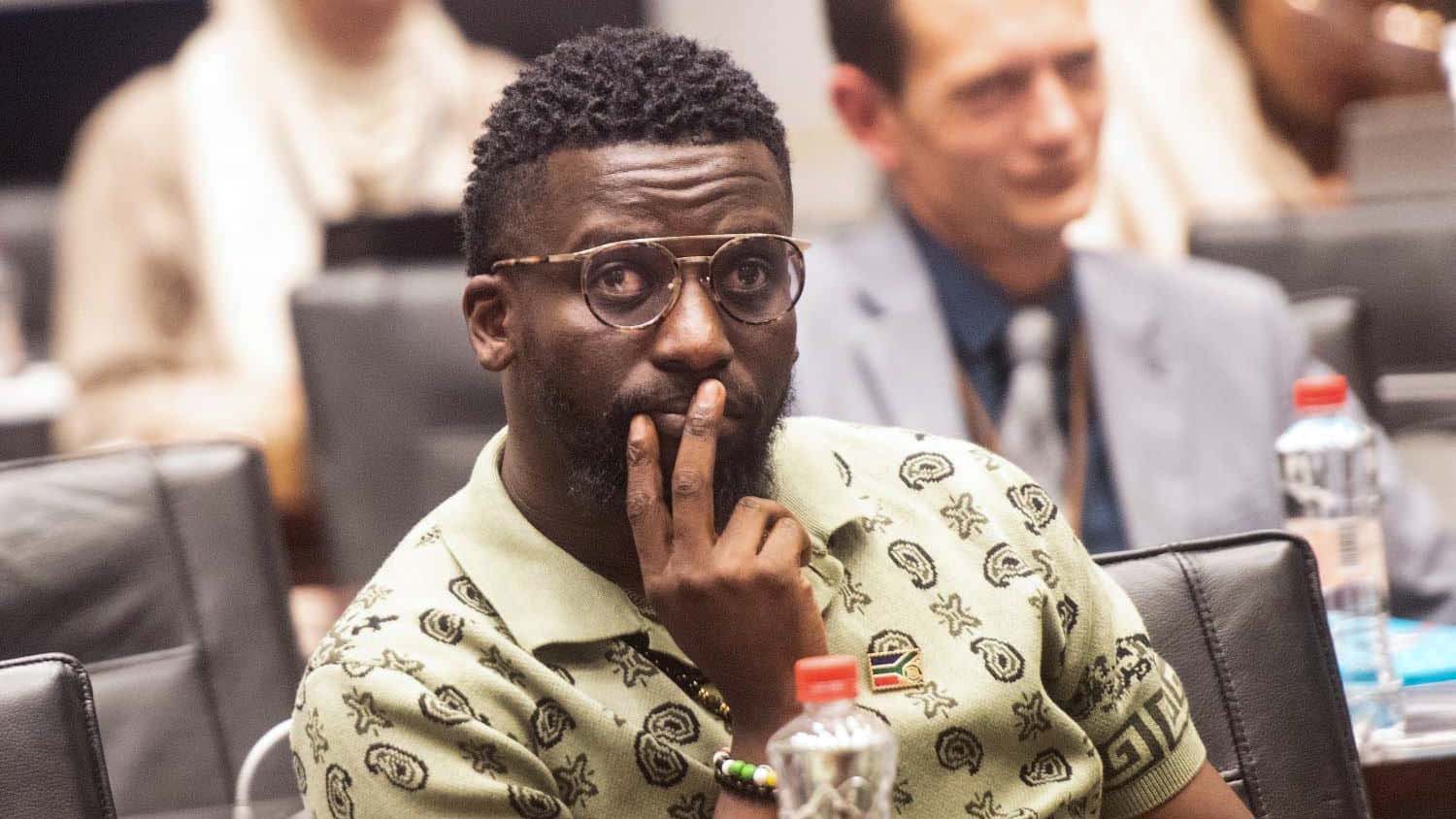
Patriotic Alliance Member of Parliament Ashley Sauls’s exchange with Vusimuzi ‘Cat’ Matlala during Parliament’s Ad Hoc Committee’s unprecedented visit to a prison to question the latter, shifted the regional conversation in a way few expected. His declaration that ‘God has entered the ring’, cut through the political noise and reached a moral place that many across the continent recognise. His warning that those who have caused harm, such as Matlala if found guilty and others who have killed for financial gain with impunity, will answer for their actions speaks to a rising continental (and biblical) truth: Nothing carried out in darkness stays hidden.
South Africa has brought to the fore how decades of withheld information is now surfacing through testimonies, inquiries and documents that emerge long after events took place. All are observing small fragments of the truth, forming a clearer picture. People who once relied on power to bury their actions now face a landscape they no longer control. Sauls’s words speak directly into this unfolding reality, where truth moves steadily, even when confrontation is delayed.
For a column that explores developments beyond Eswatini’s borders, South Africa offers a mirror of patterns seen across Africa and globally. In several countries, individuals hold tightly to influence and wealth, even at the cost of their lives. Violence, intimidation and secret dealings have shaped public life in ways that punish ordinary citizens. Corruption does not stop at political manoeuvring; it produces fear, suffering and an environment where wrongdoing infiltrates daily existence. Nevertheless, history repeatedly shows that hidden deeds eventually rise to the surface, leaving those responsible exposed. Some elderly leaders in Africa and globally saw even their own army generals and deputies turning on them, powerful families fleeing to the East amid State capture allegations. South Africa’s latest disclosures have also unexpectedly pulled Eswatini into the discussion. Matlala’s statement that he attended the King’s birthday celebrations, coupled with accusations that an Eswatini identity document was unlawfully issued to him by Nonhlanhla Malambe, placed the kingdom inside a narrative that did not begin here. Julius Malema’s questioning linked Matlala’s South African story to Eswatini in ways no one predicted last week.
This link emerges at a time when Eswatini continues to confront its own legacy of misconduct by individuals entrusted with authority. State looting has weakened essential systems. One of the clearest signs appeared in hospitals where empty medicine shelves have left patients without treatment. Procurement failures have disrupted supplies that citizens rely on daily. When people holding public responsibility place self-interest above service, as they even played the blame game on the drug shortage issue, some two weeks ago; while the citizenry suffer deeply and quietly, is problematic. This suffering is part of a wider African experience: Harm reaches ordinary people long before it reaches those who caused it.
Sauls’s statement speaks to Eswatini as much as to South Africa. His warning that wrongdoing carries consequences applies to anyone who has placed personal benefit above public duty. In many African countries, individuals tied to financial wrongdoing trust that positions, networks and silence for both preservation and protection. History shows that such safety does not last. Records surface when least expected. Witnesses come forward at unexpected moments, at times at a deadly cost, as in the sad case of South African whistle-blower Babitha Deokaran; who revealed the corrupt dealings at a Thembisa hospital and was consequently shot 12 times. Connections between past events and present disclosures begin to form without warning. ‘God has entered the ring,’ resonates because it captures an experience shared across borders: Truth has a way of rising when its time arrives.
This pattern becomes clearer as South Africa continues to confront its own past. Matters once dismissed now occupy public attention. Incidents once concealed now stand open to examination. Wrongdoing that appeared safe beneath layers of influence now faces national questioning. This gradual shift mirrors experiences in other African States, where actions carried out in silence eventually reshape the political and social climate.
Eswatini cannot dismiss this lesson. Those who have manipulated (and continue to) public systems, diverted funds or abused their access may remain confident that the details of their actions will never emerge. They may trust in their networks or assume public frustration will fade. However, the region shows how quickly circumstances can turn. People who once acted without concern eventually face the weight of what they created. The empty hospital shelves, delayed public services and weakened institutions leave a lasting record. Harm does not vanish simply because those responsible hold important positions. Wrongdoing writes its own testimony and that testimony endures.
Sauls’s declaration links two national experiences without equating them. It signals a continental pattern: Wrongdoing carried out of sight gathers strength until circumstances allow truth to surface. Once that process begins, it rarely reverses.
God sees the widow, the fatherless, the visitor and the poor, as Zachariah 7:10 reminds us. He sees those who cause harm and those who take from the vulnerable. When people refuse to change, He does not stay on the sidelines. God enters the ring and when He does, no influence, no network and no silence can withstand His judgement. Comments: bongwebagcinile@gmail.com
Patriotic Alliance Member of Parliament Ashley Sauls’s exchange with Vusimuzi ‘Cat’ Matlala during Parliament’s Ad Hoc Committee’s unprecedented visit to a prison to question the latter, shifted the regional conversation in a way few expected. (Pic: The Citizen)