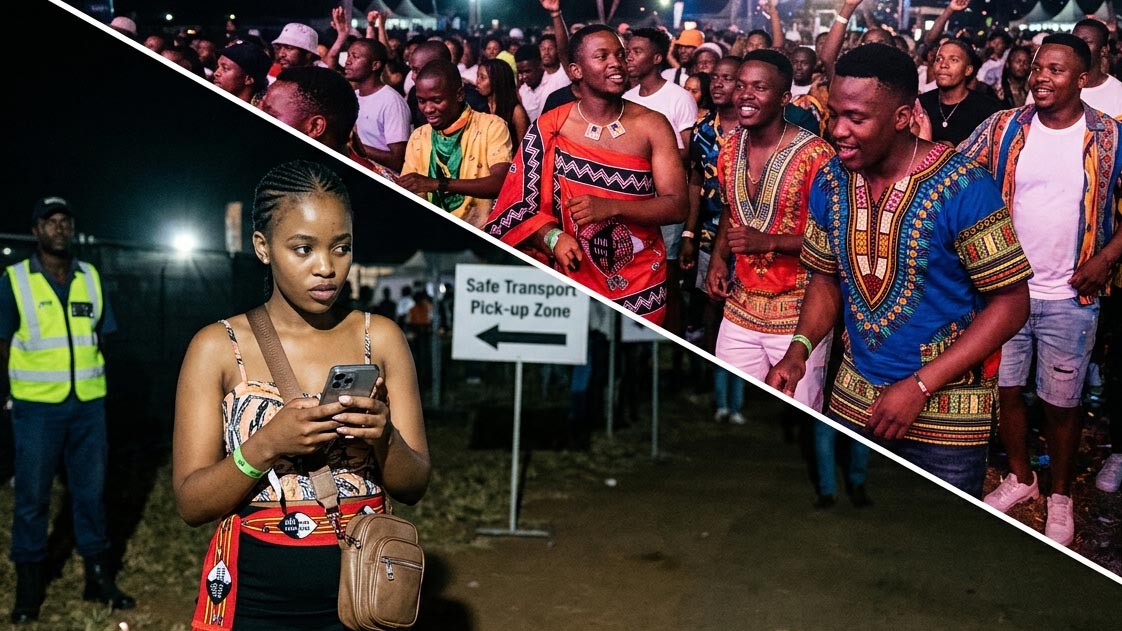
This past weekend, thousands of emaSwati gathered to celebrate, socialise and enjoy some of the country’s biggest events. Festivals, concerts, sporting activities and social gatherings brought people together in a vibrant display of culture and community. Social media was flooded with pictures of smiling faces, colourful outfits and memorable moments. Yet beneath the excitement lies a reality that many women know all too well. Men often attend events wondering whether they will have fun. Women attend events wondering whether they will get home safely. This difference may seem subtle, but it reveals a profound inequality in how women and men experience public spaces.
For many women, attending an event involves a level of planning that goes far beyond choosing an outfit or buying a ticket. It includes questions such as: ‘‘Who am I going with? How will I get home? Is there someone I can call if I feel unsafe? Should I share my location with a friend? Will there be enough lighting in the parking area? Can I trust the taxi driver? What if someone follows me?’’ These are questions that many men rarely have to consider.
Women are taught from an early age to manage risk. We are told not to walk alone at night. We are told to watch our drinks. We are told not to trust strangers. We are told to stay alert. While these lessons are often shared with good intentions, they also reveal something troubling: Society has normalised the idea that women must constantly adjust their behaviour to avoid becoming victims. The burden of safety has largely been placed on women themselves.
When incidents of harassment, assault or violence occur, the conversation often turns to what the woman could have done differently. Was she alone? Had she been drinking? Why did she stay out late? Rarely do we ask why some people feel entitled to harass, intimidate or harm others in the first place.
This tendency to scrutinise women’s decisions instead of addressing harmful behaviour reflects a deeper societal problem. It shifts responsibility away from perpetrators and places it on potential victims. Large public events bring this issue into sharp focus.
Crowded spaces can be exciting, but they can also create opportunities for harassment and abuse. Unwanted touching, inappropriate comments, stalking and intimidation often thrive in environments where people feel anonymous within a crowd. Many women have stories of feeling uncomfortable at events, but choosing to remain silent because they did not want to ‘cause a scene’ or because they believed no one would take their concerns seriously.
Safety is not only about preventing extreme acts of violence. It is also about creating environments where women can participate fully without fear, anxiety or constant vigilance. This requires a shift in how we think about event planning and public safety.
Organisers should consider safety as carefully as they consider entertainment. Adequate lighting, visible security personnel, clear emergency procedures, accessible reporting mechanisms and safe transport options should be viewed as essential components of any successful event. Safety should not be treated as an afterthought or an optional extra.
At the same time, communities must challenge the attitudes that make women feel unsafe in the first place. Respect for personal boundaries, accountability for inappropriate behaviour and active bystander intervention are just as important as physical security measures.
The conversation about safety should also include men. Not because all men are responsible for violence, but because all members of society have a role to play in creating safer public spaces. Men can challenge harmful behaviour among peers, support friends who experience harassment and help foster cultures where respect is non-negotiable.
The goal is not to make women fearful of attending events. On the contrary, it is to create conditions where women can experience the same freedom that many men take for granted.
Imagine attending a festival and thinking only about the music. Imagine leaving a concert without calculating the safest route home. Imagine enjoying a night out without constantly scanning your surroundings for potential threats. For many women, that freedom remains elusive.
As Eswatini continues to host larger and more diverse public events, we should ask ourselves an important question: How do we measure success? Is it by the number of tickets sold? The economic impact? The social media engagement?
Or should we also measure success by whether every attendee, regardless of gender, felt safe, respected and able to enjoy the experience without fear? A successful event is not simply one that entertains people. It is one that allows them to return home with nothing but good memories. Women deserve that freedom too.
This past weekend, thousands of emaSwati gathered to celebrate, socialise and enjoy some of the country’s biggest events. Festivals, concerts, sporting activities and social gatherings brought people together in a vibrant display of culture and community.