MBABANE – Government drivers were allegedly used as middlemen in the sophisticated overtime payment syndicate that siphoned nearly E12 million from public coffers during and after the COVID-19 period.
The Preliminary Investigating Committee (PIC) established by the Ministry of Education and Training, found what it described as a coordinated network involving drivers, administrative personnel and officials from various government institutions who allegedly manipulated overtime systems between January 2020 and December 2025.
The drivers are from the Ministry of Education and Training, while the senior government officials are drawn from various other departments.
The committee estimated the State’s financial exposure at E11 929 456.38.
The findings provide a picture of how a scheme that initially appeared to involve drivers allegedly evolved into a multi-layered operation stretching beyond a single ministry.
According to the report, overtime payments were allegedly processed without proper supporting documentation, valid authorisation or evidence that the work had actually been performed.
Investigators found that drivers became the primary recipients of payments, with funds deposited directly into their personal bank accounts.
However, the report states that the drivers were not necessarily the final beneficiaries.
Instead, investigators allege that recipients were required to surrender significant portions of the money to individuals who facilitated the processing and approval of the claims.
The committee found that beneficiaries commonly returned between 50 and 75 per cent of the funds they received.
“The scheme was sustained through a network of coordinated actors, each performing distinct roles within the process,” states the report.
Investigators say the arrangement relied heavily on verbal instructions, undocumented approvals and informal administrative practices that bypassed established financial controls.
The report describes the operation as a structured system, in which different participants allegedly performed specific functions to ensure payments continued to flow.
Drivers reportedly acted as intermediaries, through them funds were channelled before being redistributed.
The committee found that some drivers knowingly participated in the arrangement, while others were recruited into it through colleagues already benefitting from the payments.
Some allegedly received payments despite not submitting claims, while others admitted involvement and cooperated with investigators.
The report notes that economic hardship was cited by several drivers as a factor influencing their participation.
Nonetheless, investigators concluded that the acceptance and redistribution of funds helped sustain the network.
….*
How drivers were drawn into network
MBABANE – The investigation into the alleged E11.9 million overtime payment scandal reveals how government drivers became central figures in a network that investigators say expanded steadily over several years.
According to the report, drivers occupied a strategic position because payments were deposited directly into their personal bank accounts.
While this made them appear to be the primary beneficiaries, investigators found that many allegedly acted as conduits through whom money flowed to other participants.
The committee classified implicated drivers into several categories.
These included active participants who allegedly knowingly took part in the scheme, recruited participants who joined after being approached by colleagues, cooperative participants who admitted involvement and assisted investigators, passive beneficiaries who received funds without submitting claims and individuals who denied involvement despite evidence gathered during the investigation.
Investigators found that recruitment played a significant role in expanding the network.
Drivers who were already receiving substantial overtime payments allegedly encouraged colleagues to join.
The committee says this helped normalise the arrangement and increased the number of participants over time.
Interviews conducted during the investigation revealed that financial pressure featured prominently in explanations provided by some drivers.
Several reportedly cited economic hardship and family responsibilities as factors influencing their decisions.
However, investigators concluded that acceptance of the payments and subsequent redistribution of funds contributed directly to sustaining the alleged scheme.
The report further reveals that some drivers were allegedly assigned duties beyond their normal responsibilities.
These included sanitation-related tasks and other assignments outside their prescribed scope of work.
*Full article available on Pressreader*
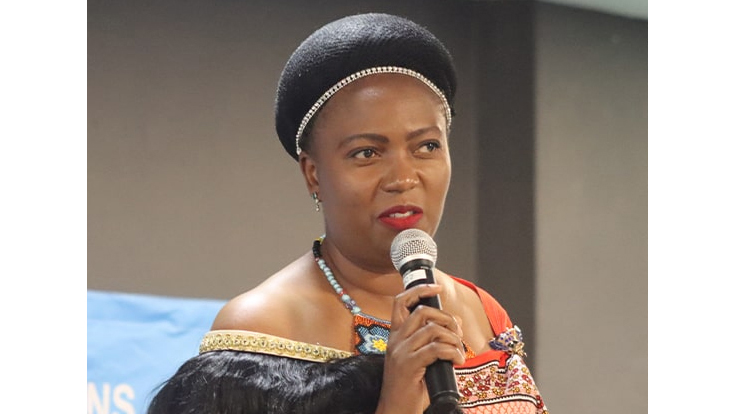
Ministry of Education and Training PS, Nanikie Mnisi who initially opened the case. (File pic)