Madam,
There is a silent anguish unfolding in the homes of ordinary women across Eswatini. It is not the kind of suffering that announces itself with sirens or dramatic headlines. It creeps quietly into empty cupboards, unfinished meals and the haunted eyes of mothers who no longer know how they will feed their children tomorrow.
The escalating cost of food has become more than an economic inconvenience; it has evolved into a humanitarian crisis attacking the dignity of women who already carry the unbearable burden of poverty, unemployment and inequality. Across rural communities and urban townships alike, women are waging invisible wars against hunger, while desperately attempting to preserve the fragile stability of their households.
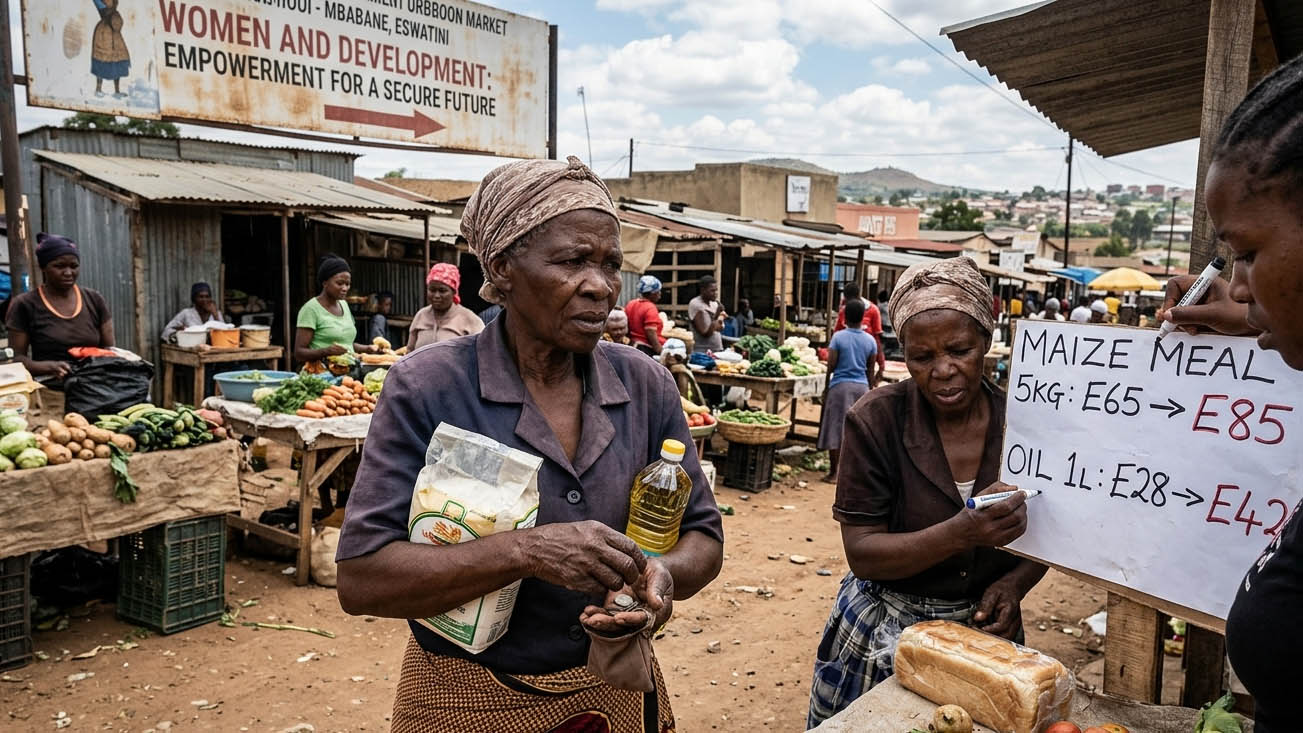
A loaf of bread, cooking oil, maize meal, beans and vegetables have become luxury commodities for many struggling families. What was once enough to sustain a household for a week barely survives three days. Women now walk through supermarket aisles calculating which child must eat less, which meal can be skipped and which necessity must be sacrificed.
It is heartbreaking that in a nation where women remain the backbone of agriculture, markets and caregiving, they are also the ones most brutalised by food insecurity. Reports continue to show that rural poverty remains alarmingly high, with women-headed households disproportionately affected by hunger and economic hardship.
One cannot speak about rising food prices without confronting the brutal reality of unemployment. Thousands of women wake up every morning with neither salaries nor opportunities, yet society still expects them to perform miracles in their kitchens. Some sell tomatoes by the roadside under the scorching sun, while others wake before dawn to wash clothes, braid hair or sell fat cakes simply to afford supper. Yet even these modest hustles are collapsing under the weight of inflation and economic uncertainty.
What pains the soul most is the cruel paradox confronting women in the country. They till the soil, plant crops and feed the nation, yet many of them sleep hungry. Climate shocks, prolonged droughts and erratic rainfall continue to devastate food production, leaving families vulnerable and dependent on expensive imported unhealthy food.
In many homes, mothers have mastered the painful art of pretending not to be hungry. They will claim they already ate earlier, simply to ensure their children receive the little food available. Some dilute porridge with excessive water to make it stretch further, while others survive on tea for an entire day. These are not isolated incidents. They are daily realities hidden behind forced smiles and exhausted faces.
The emotional toll of poverty upon women is devastating. Hunger humiliates. It strips away confidence, peace and hope. It forces mothers into impossible choices between transport money, school fees, electricity and food. It is impossible for a woman to think about empowerment when her greatest concern is whether there will be dinner that evening.
The tragedy becomes even more profound when children enter the equation.
Teachers continue to report learners struggling to concentrate in classrooms because they arrive at school hungry. A hungry child cannot fully dream, learn or flourish. The nation cannot speak confidently about development, while children are quietly starving in communities overwhelmed by poverty.
Food insecurity is not merely about empty stomachs. It is deeply intertwined with social instability, gender-based violence and mental health struggles. When desperation enters households, tension follows closely behind. Women often become the first casualties of frustration within financially strained homes.
Government interventions and humanitarian assistance remain important, but they are no longer enough on their own. Women do not merely need temporary relief parcels; they require sustainable economic empowerment. They need agricultural support, access to land, affordable farming inputs and markets for their produce and protection from exploitative systems that continue to impoverish them.
There must also be greater investment in agroecology and climate-resilient (indigenous farming) farming methods to reduce dependence on costly imported food and harmful agricultural practices. Rural women possess invaluable indigenous knowledge capable of transforming food systems if only they were adequately supported.
Most importantly, policymakers must begin listening to the voices of ordinary women. Behind every inflation statistic lies a mother crying silently at night. Behind every economic report stands a grandmother skipping meals for her grandchildren. Behind every rising food price is another family sinking deeper into despair.
A society is ultimately judged by how it treats its most vulnerable citizens.
If women continue carrying the burden of national hardship alone, then the future itself becomes endangered. Women are not asking for luxury. They are asking for survival, dignity and the basic right to feed their families without humiliation.
The rising cost of food may appear to some as a statistical discussion for economists and politicians. However, for countless women across the country, it is a daily catastrophe unfolding on dinner tables, in market stalls and within weary hearts.
The cries of struggling women can no longer remain background noise in national conversations. Hunger has a face. In Eswatini, the face is increasingly of a female.
There is a silent anguish unfolding in the homes of ordinary women across Eswatini.