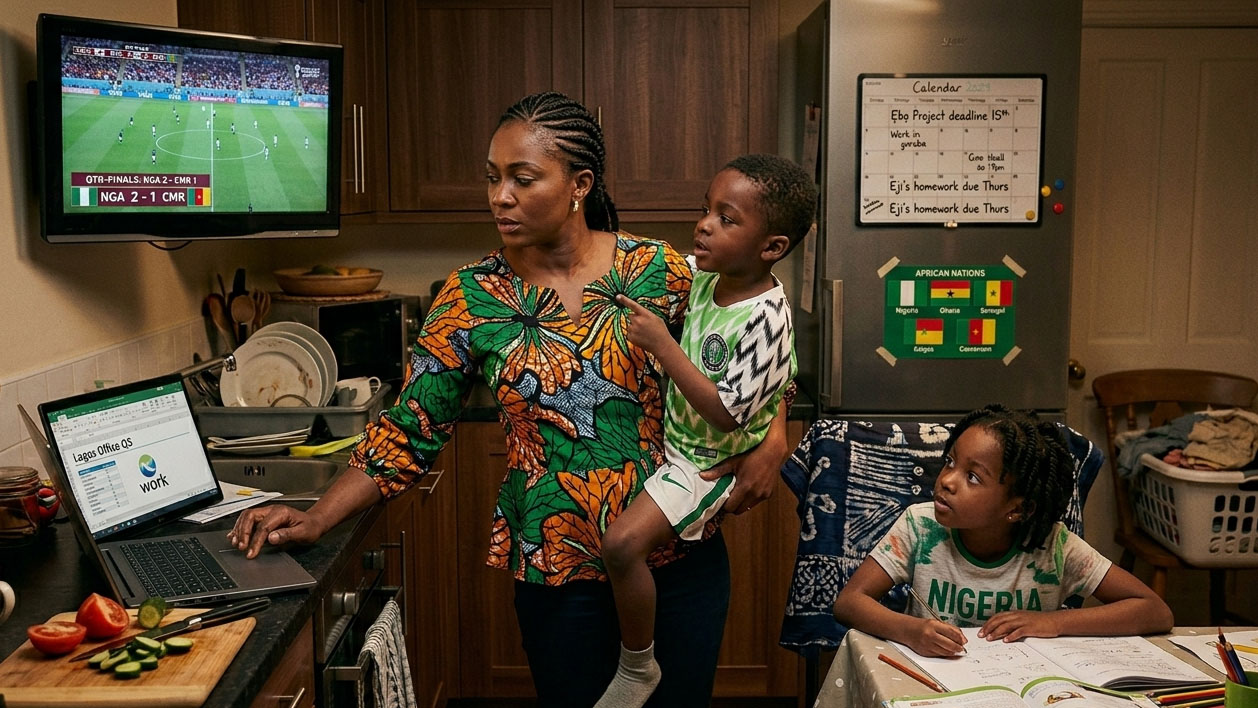
Every four years, the world seems to pause for football. Streets become quieter during big matches, social media fills with predictions and celebrations and suddenly everyone has an opinion about formations, penalties and who deserves to lift the trophy. The FIFA World Cup is often described as a global event that brings people together. However, for many working mothers, experiencing the World Cup looks very different from what is shown on television.
While some fans gather in sports bars, host viewing parties or spend entire afternoons discussing statistics, many mothers are watching the tournament from the sidelines of their own busy lives. They are checking scores between meetings, listening to match commentary while cooking dinner and trying to catch highlights after everyone else in the household has gone to bed.
The reality is that motherhood rarely pauses for a sporting event, no matter how significant it may be. For a working mum, a World Cup match often competes with a long list of responsibilities. There are lunches to prepare, school uniforms to iron, homework to supervise, bills to pay and work deadlines to meet. The final whistle may blow, but the laundry basket remains full. A dramatic penalty shootout may be unfolding on screen while a child is asking for help with a school project.
This does not mean mothers enjoy the World Cup any less. In fact, many women are passionate football fans. The difference is that they often experience the tournament while carrying the invisible labour that keeps families functioning. There is something symbolic about this. Football teaches us about teamwork, strategy, sacrifice and resilience. Ironically, these are the very skills mothers use every single day.
Working mothers understand what it means to perform under pressure. They know what it feels like to keep going when they are exhausted. They understand that success is rarely achieved by individual effort alone. Every day, they coordinate schedules, solve problems, manage crises and support others, often without recognition.
Perhaps that is why many mothers find themselves rooting for the underdogs during the World Cup. They know what it means to fight with limited resources. They understand the determination required to keep showing up when the odds seem stacked against you.
The World Cup can also be a reminder of how differently leisure is experienced by men and women. In many households, a man watching football is viewed as relaxing. A woman watching football may still be expected to monitor the children, prepare meals, answer questions and respond to everyone’s needs. Even while sitting on the couch, she remains ‘on duty.’ This isn’t true in every home, but it is a reality many women quietly recognise. The tournament, therefore, raises an important question: Who gets uninterrupted time to enjoy recreation? For working mothers, leisure often comes with conditions attached. It is squeezed into small moments between obligations rather than being treated as a legitimate need. Yet rest, enjoyment and hobbies are not luxuries. They are important for well-being.
The World Cup also creates unique opportunities for connection within families. Many mothers use football as a chance to bond with their children. They explain the rules to curious young fans, celebrate goals together and turn matches into family experiences. Years later, children may not remember every result, but they will remember sitting on the couch with their mother, cheering for the same team. In this way, the World Cup becomes about more than football. It becomes about shared memories.
For mothers raising daughters, the tournament can spark conversations about representation in sport. It can be an opportunity to challenge outdated ideas about football being a ‘man’s game.’ Girls deserve to see that they can love sport, understand sport and participate in sport without apology. The World Cup may feature the world’s best footballers, but many women are playing their own demanding tournament at home and in the workplace every day. They are balancing competing priorities, managing multiple roles and carrying responsibilities that often go unseen. So as the world celebrates spectacular goals and heroic performances, perhaps we should also acknowledge the everyday champions among us. The working mother who wakes up before sunrise to prepare her family for the day. The mother who works a full shift and still finds the energy to help with homework. The mother who catches only 10 minutes of a match because she is busy caring for everyone else. She may never receive a medal. There will be no roaring crowd chanting her name. No trophy presentation. No victory parade. Yet, her endurance, commitment and determination deserve recognition.
The World Cup reminds us that greatness is often measured by what happens on the field. Yet some of the most remarkable displays of resilience happen far from the stadium lights, in homes where working mothers continue to show up, day after day, long after the final whistle has blown.
Every four years, the world seems to pause for football. Streets become quieter during big matches, social media fills with predictions and celebrations and suddenly everyone has an opinion about formations, penalties and who deserves to lift the trophy.