

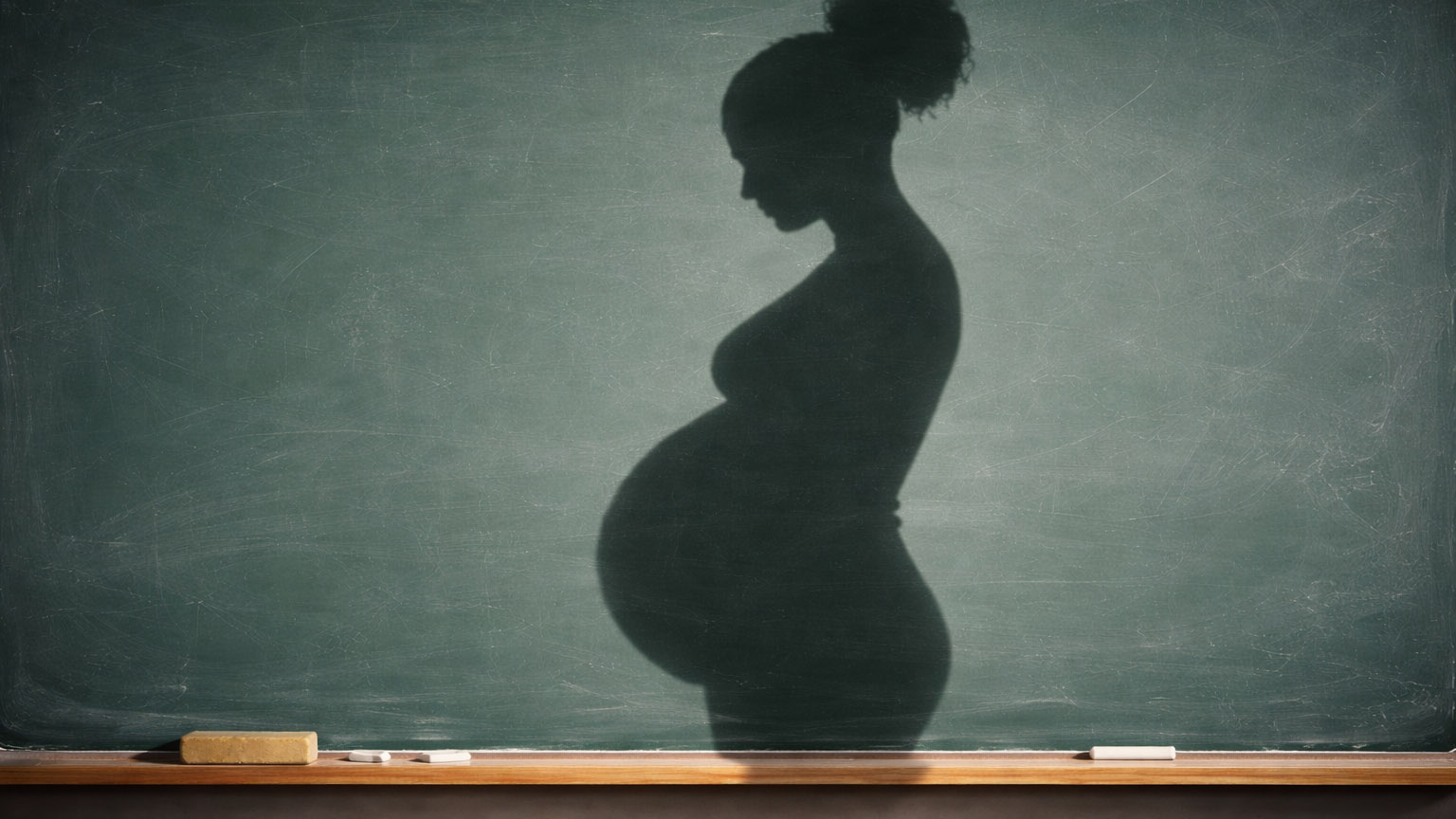
MBABANE – While the Swaziland Education and Training Sector Policy (EDSEC) has long been praised as a progressive step within Eswatini’s education sector, fresh concerns are emerging from communities and experts who fear that the policy may be unintentionally contributing to a rise in teenage pregnancies by normalising early motherhood.
The policy, adopted in 2011, guarantees pregnant learners the right to continue their education and return to school after giving birth. Supported by the country’s national Gender Policy, EDSEC explicitly states that schools must not permanently expel learners due to pregnancy.
Instead, school administrators are required to allow pregnant pupils to take time off to care for their babies and then return to the classroom to complete their studies.
Government directives issued in 2020 further reinforced the policy by instructing schools to ensure that pregnant learners are allowed to return to class, particularly to sit for examinations and complete their academic programmes.
The Ministry of Education and Training refers to this approach as the “re-entry rule”, a measure designed to ensure that teenage mothers are not permanently excluded from the education system.
The policy is rooted in the recognition of education as a fundamental human right, as outlined in the United Nations (UN) human rights framework, to which Eswatini is a signatory.
However, while the policy has been applauded for protecting the rights of vulnerable learners, statistics on teenage pregnancy continue to raise alarm, prompting some communities to question whether the policy is achieving its intended goals.
Rising teenage pregnancy
Data from international and national reports indicate that teenage pregnancy remains a persistent and growing challenge in the country.
A 2024 incidence report released by the United Nations Population Fund (UNFPA) recorded more than 530 teenage pregnancies within specific regional contexts across the country.
Broader national statistics also paint a worrying picture.
Eswatini has one of the youngest populations in the region, with young people aged between 10 and 24 making up approximately 34 per cent of the population, translating to nearly 400 000 individuals out of the country’s 1.2 million people.
Population projections suggest that this youthful demographic will continue to grow in the coming years.
Education sector reports indicate that teenage pregnancy remains one of the leading causes of school dropouts among girls.
According to the Annual Education Census (AEC), pregnancy has consistently appeared among the major factors forcing learners out of school.
In 2016 alone, 1 308 female learners across all levels of education dropped out due to pregnancy, highlighting the scale of the problem.
The situation also affects boys, with some forced to leave school after impregnating their female counterparts.
At the primary school level, the 2016 AEC report shows that 6 570 learners dropped out of school during the year.
Of these, 230 learners cited pregnancy as the reason for leaving school, including 203 girls and 27 boys.
Many of these learners were in Grades 5, 6 and 7, typically aged between 10 and 15 years, an adolescent stage considered critical for human development.
In 2016 alone, 1 179 learners dropped out due to pregnancy in secondary schools.
Of the girls who dropped out, 626 were from lower secondary (Forms 1–3) while 295 were from senior secondary (Forms 4–6).
In Eswatini, the adolescent fertility rate has been estimated at 87 births per 1 000 girls aged between 15 and 19 years, according to UNFPA statistics.
Although some recent data shows a slight improvement, the problem remains widespread.
For example,the adolescent birth rate declined from 89 births per 1 000 girls in 2010 to about 78 births per 1 000 in 2022, but experts say the rate is still high.
More concerning is the disparity between rural and urban communities.
Young women aged between 20 and 24 years in rural areas are twice as likely to give birth before the age of 18 compared with those living in urban areas.
Statistics show that 14 per cent of rural young women give birth before 18, compared to only six per cent in urban settings.
Young women from the poorest households are five times more likely to give birth before the age of 18 compared with those from wealthier households.
Education levels also influence the risk.
Adolescent girls with only primary school education experience pregnancy rates as high as 106 births per 1 000, compared with 75 births per 1 000 among those who have reached secondary education.
The situation worsened during the COVID-19 pandemic.
During a three-month period alone in 2021, 1 094 adolescent girls reportedly became pregnant, raising concerns about the vulnerability of young girls during periods of social disruption.
Pregnancies among very young adolescents aged 10 to 14 years have also shown a slight increase in recent years.
Drivers of teenage pregnancy
Research suggests that multiple factors contribute to the persistence of teenage pregnancy in the country.
One of the key drivers is early sexual debut. Studies show that some adolescents begin engaging in sexual activity at a very young age.
Surveys indicate that about three per cent of young people aged between 15 and 24 reported having had sexual intercourse before the age of 15.
Some young girls engage in relationships with older men in exchange for money, cellphones or other material goods.
Studies suggest that in such relationships, the older partner often dictates whether protection is used. This dynamic increases the risk of unintended pregnancy and sexually transmitted infections.
Communities raise questions
Against this backdrop, some communities have begun questioning whether the education policy is doing enough to prevent teenage pregnancy.
An official employed by a non-governmental organisation (NGO), speaking on condition of anonymity, said communities were increasingly blaming government for introducing a policy that they believe may be sending the wrong message.
The official said teenage pregnancies were rising across many rural areas, prompting parents to question whether the policy was unintentionally encouraging risky behaviour.
“Parents in rural communities are concerned that children only see the policy as protecting their right to remain in school,” the official said.
According to the official, frustrations among parents stem from the perception that prevention programmes remain weak in many communities.
“Without strong preventative measures, the policy risks becoming an act of sympathy rather than a tool that addresses the real causes of teenage pregnancy,” the official added.
Across many rural areas, teenage pregnancy continues to emerge as a major social concern.
For families, the instinct to support pregnant teenagers is often rooted in compassion and cultural values.
However, experts say empathy alone cannot address the deeper structural drivers of early pregnancy.
Need for stronger prevention
Women’s rights activist Nomsa Mbuli said while the policy remains important, it must be strengthened with preventative measures.
Mbuli said she understood why some communities believed the policy might be contributing to the perception that teenage pregnancy carries fewer consequences.
“I appreciate and understand where those sentiments come from,” she said.
However, Mbuli emphasised that teenage pregnancy must be viewed within a broader socio-economic context.
She said poverty and economic vulnerability often place young girls at risk.
According to Mbuli, some girls enter transactional relationships with older men simply to meet basic needs such as school uniforms, sanitary products and transport money.
“The economic vulnerability of women and girls, particularly in rural areas, perpetuates cycles where older men exploit younger girls’ financial dependency,” she said.
Mbuli said empowerment programmes aimed at young girls were critical in addressing the root causes of teenage pregnancy.
She also called for expanded reproductive health education and improved access to youth-friendly health services.
Policy defended
Meanwhile, Colani Hlatshwako, coordinator of the One Billion Rising campaign in Eswatini, dismissed criticism of the policy as misguided.
Hlatshwako said the main purpose of the policy was to ensure that young girls who fall pregnant are not permanently excluded from education.
“The policy gives young mothers an opportunity to rebuild their lives through education,” she said.
According to Hlatshwako, blaming the policy alone ignores the role played by adult men who prey on vulnerable girls.
“It must be remembered that many of these pregnancies involve older men taking advantage of young girls,” she said.
She argued that public anger should be directed toward perpetrators rather than a policy designed to protect victims.
Hlatshwako also urged government to strengthen enforcement mechanisms so that individuals responsible for impregnating underage girls face legal consequences.
“If the policy is strengthened to punish those responsible, it will become more effective instead of being seen as a sympathy act by government,” she said.
She also criticised inconsistencies within the justice system when dealing with sexual offence cases.
Hlatshwako referred to a recent case reported in local media where a man accused of raping and impregnating a 14-year-old girl was reportedly released on the grounds that he needed employment to support the child.
According to her, such decisions undermine efforts to protect young girls and send the wrong message to perpetrators.
She further stressed that discussions around teenage pregnancy should not focus only on girls.
“It is unfortunate that when we talk about teenage pregnancy, the focus is always on girls,” she said.
“Boys must also be educated about responsibility, respect and the consequences of early parenthood.”
Policy incomplete
A sociologist from University of Eswatini (UNESWA), who also spoke anonymously, said the policy itself was not the problem.
Instead, the academic argued that the policy was incomplete.
“The policy mainly focuses on managing the consequences of teenage pregnancy rather than preventing it,” the sociologist said.
According to the academic, early parenthood carries serious long-term consequences for both individuals and the country.
“When young people become parents before completing their education or entering the workforce, it limits their economic potential and increases long-term vulnerability,” the sociologist said.
The academic added that high teenage pregnancy rates could also affect national development.
Government response
Minister for Education and Training Owen Nxumalo acknowledged community concerns but defended the policy.
Nxumalo said the policy remains necessary because it protects the educational rights of young girls.
However, he admitted that it may need strengthening.
The minister said government was exploring ways to empower the policy so that cases involving the impregnation of underage girls could be investigated and prosecuted more effectively.
He said many teenage pregnancies involve older men exploiting vulnerable girls.
“If there are no consequences, perpetrators will continue destroying the futures of young girls,” Nxumalo said.
He added that guidance and counselling programmes in schools were designed to help learners deal with peer pressure, relationships and reproductive health issues.
While the education policy protects the right of young mothers to continue learning, many believe that more aggressive prevention strategies are urgently needed to curb the rising tide of teenage pregnancy and safeguard the future of the country’s young people.


















Leave a comment