MBABANE – In terms of cash, the South African Government has noted Eswatini Electricity Company’s (EEC) contribution to ESKOM.
Reporting to Parliament on ESKOM’s exports to Eswatini and other neighbouring countries, Minister for Electricity and Energy Kgosientsho Ramokgopa who visited the country last November, said South Africa expected to earn an estimated E18.8 billion from the neighbouring States, including Eswatini.
He was responding to parliamentary questions.
As a net importer of electricity, mainly from South Africa, it has been reported that EEC spent E2 021 504 621 on electricity purchases in 2025 and E1 694 853 374 in 2024. EEC spent E1 408 080 407 in 2023.
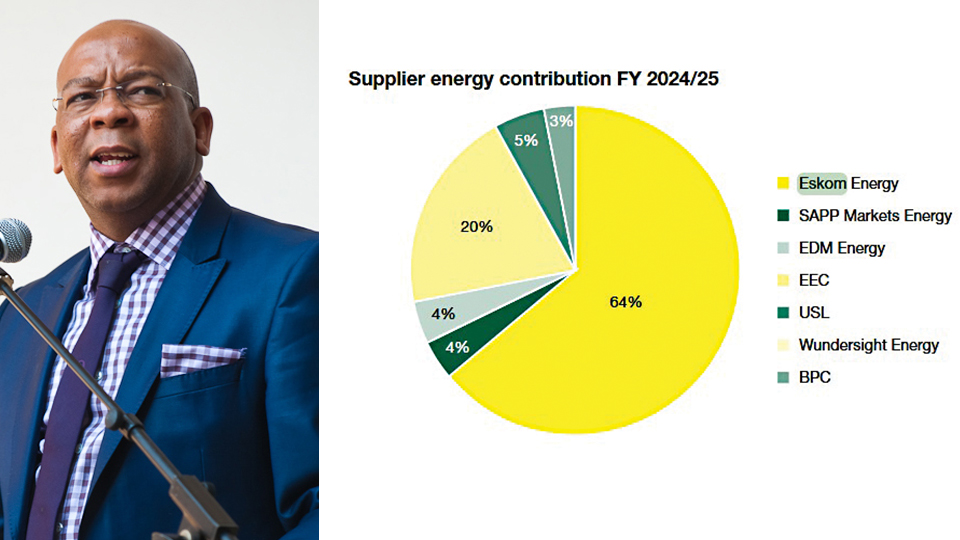
Between 2024 and 2025, the public enterprise spent E3 716 357 995.00 on energy purchases, of which 54 per cent was imported from ESKOM.
It must be said that 54 per cent of the costs incurred by EEC in power purchases from South Africa between 2024 and 2025 is around E2 006 833 317.30 (Two billion, six million, eight hundred thirty-three thousand, three hundred seventeen and thirty cents).
According to a report from Eswatini Energy Regulatory Authority (ESERA), EEC has been able to generate at least 30 per cent of electricity within the borders of the country, importing about 70 per cent from outside of the country. To mitigate costs, ESERA reports that EEC concluded cross-border power supply agreements with Mozambique. It is understood that discussions with Zimbabwe’s ZESA are reportedly ongoing.
According to EEC, Eswatini’s strong reliance on energy imports, particularly from ESKOM continued to be a significant material matter within the parastatal. EEC reported that it had started the construction of the Lower Maguduza Hydro Power project. It must be said that this project has been allocated to an independent power producer.
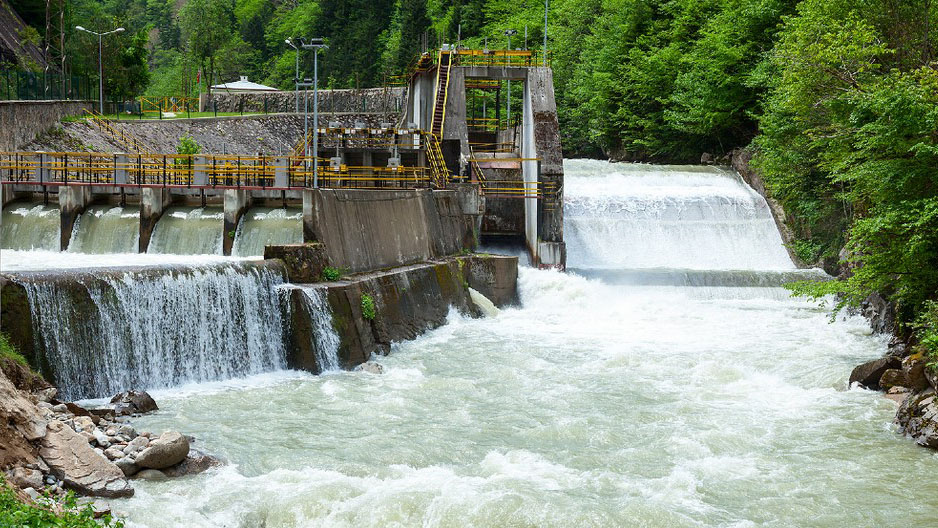
The project is expected to come into commercial operation in early 2027. It is expected to add 13.5MW of run-of river power to the country and contribute towards reduction of import.
The public enterprise signed a 25-year contract for this power station. Local electricity generation is set to increase by at least 20 per cent following the 25-year Power Purchase Agreement between EEC and Middle Lusutfu Hydropower, the independent power producer for the proposed 13.5MW Lower Maguduza Hydro Power Scheme.
EEC, in its report, states that local electricity demand coupled with potential increased demand from South African electricity users might increase this risk and cause strain on regional supply, threatening energy security in Eswatini. As the ESKOM import costs are escalating, it is understood that EEC continues to utilise the Day Ahead Market (DAM) power trading platform for cheaper power purchases as well as the coming on stream of its Lavumisa Solar PV plant. It is said that the increase in DAM purchase coincided with the high season, during which electricity rates especially from ESKOM, are highest.
As a result, EEC continued power trading with Electricidade de Moçambique (EdM) which also contributed positively to the optimisation of power trading. Cost of electricity sales amounted to E2.525 billion; a 16 per cent increase from the E2.178 billion incurred in the previous year.
According to EEC, the high cost of imported electricity was the main contributor to the increased cost of sales. Power purchases and wheeling charges accounted for 70 per cent of cost of sales. The aggregate increase on electricity purchases from all sources during the year was 20 per cent, while power generation, transmission and distribution costs increased by seven per cent. EEC reports that it continued to mitigate the cost of sales expenditure through smart trading in the Southern Africa Power Pool’s (SAPP) DAM. UMkhonto weSizwe MP Moses Mbatha wanted to know how many Southern African countries received energy from South Africa.
*…
Cost of energy imports exceeds EEC’s customer tariffs
MBABANE – EEC has faced an exceptionally challenging year, particularly in managing and containing import costs.
This is contained in the 2025 annual report for the Eswatini Electricity Company (EEC). According to the report, EEC closed the financial year ended March 31, 2025, with a net loss of E80 million and a significantly larger operating loss of E247 million. The report highlights that the Southern African region experienced a severe drought, which greatly disrupted power supply within the Southern African Power Pool (SAPP) market. As a result, EEC was forced to rely heavily on electricity imports from the National Transmission Company of South Africa (NTCSA), a subsidiary of ESKOM Ltd. It is mentioned that this dependency was especially acute during the high-demand winter season from June to August 2024.
According to the report, the cost of electricity purchased from NTCSA far exceeded EEC’s retail tariffs, particularly for residential customers. The report states that this disparity led to substantial financial losses during peak demand times, which the company was unable to recover over the remainder of the year. Compounding the situation, the report notes that local electricity generation was severely constrained due to the drought. The drying up of dams caused delays in commencing local generation operations, further increasing reliance on high-cost imports.
It is stated that cost of sales for the year were E2 909 million, up from E2 525 million in 2024. According to the report, the increased cost of sales was attributable to an increase in import tariffs, with the major supplier, NTCSA, increasing tariffs by 13.24 per cent during the year. Coupled with this price increase, the report mentions there was a significant increase in the units purchased from NTCSA due to supply challenges in the SAPP market.
The report highlights that the Day Ahead Market (DAM) power trading platform also experienced significant challenges due to the drought conditions.
This led to a reduction in energy purchases from 139.6 GWh to 49 GWh, resulting in the forfeiture of access to typically more affordable power rates secured in the previous year. Furthermore, it is mentioned that in response to rising energy costs imposed by Electricidade de Moçambique (EDM), the company strategically scaled down electricity purchases, reducing demand from 20MW to 5MW. The report states that this measure aligns with ongoing efforts to optimise operational efficiency and manage costs.
According to the report, EEC’s profit has been trending downward over the past six years, mainly due to the cumulative effect of adverse tariff decisions while absorbing very high increases from electricity import tariffs. While the EEC was granted an average tariff increase of 9.08 per cent for the 2023/24 and 2024/25 financial years, the report notes this was offset by the NTCSA increase of 13.24 per cent.
*Full article available on Pressreader*