LOBAMBA – Some Members of Parliament (MPs) and Cabinet ministers have listed legal, financial, cultural and ethical concerns among the reasons they feel DNA testing before issuance of birth certificates is not ideal.
One of the reasons cited is that the exercise could be costly for government.
Others are of the view that it is against Eswatini cultural norms.
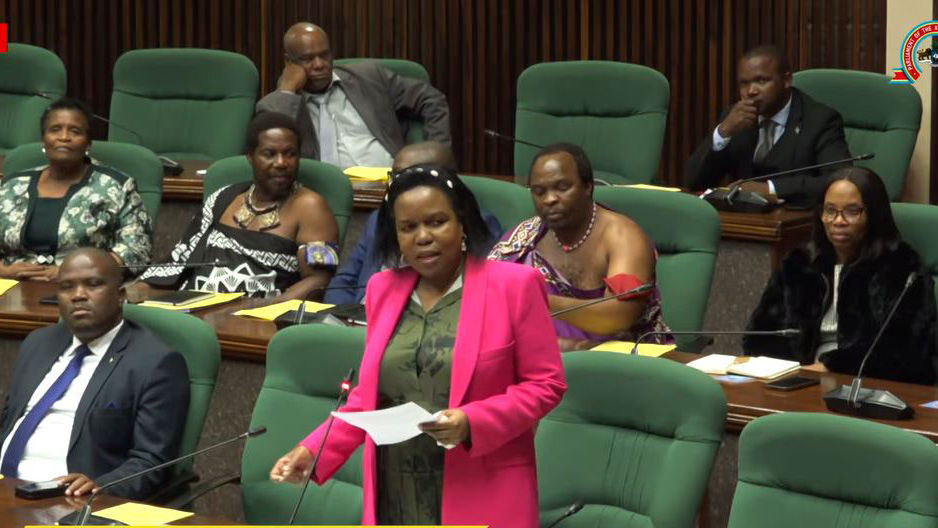
Minister for Home Affairs Princess Lindiwe described the proposal as a complex matter that demands a balanced approach.
While acknowledging that paternity disputes exist, she questioned whether compulsory DNA testing for every birth would be justified when international studies suggest that disputed paternity cases accounted for only between two and four per cent.
“Must we enforce compulsory DNA testing simply because of that percentage?” she asked.
The minister said existing legal mechanisms already provide a remedy for disputed paternity, noting that courts could order DNA tests whenever there was reasonable doubt.
Deputy Speaker Madala Mhlanga echoed concerns about the sensitivity of the issue, warning that compulsory DNA testing could potentially infringe on the rights of some individuals while also affecting cultural practices.
He said the proposal requires extensive consultation with communities, traditional leaders, child rights organisations and other stakeholders before any legislative changes could be contemplated.
Mhlanga also questioned whether the current law already allowed mothers who doubted a child’s paternity to register the child using their own surname, arguing that Parliament had amended legislation relating to birth registration not long ago and needs to establish what circumstances have changed to warrant another amendment.
He further raised concerns about the financial implications of implementing nationwide compulsory DNA testing.
According to the Deputy Speaker, the country is already grappling with pressing developmental priorities, including deteriorating roads and shortages of medicines in public hospitals, making it unrealistic to introduce an expensive nationwide DNA testing programme.
Minister for Tinkhundla Administration and Development Sikhumbuzo Dlamini supported calls for broader public consultation, saying the matter touches directly on Eswatini customs and traditional family structures.
He said compulsory DNA testing represents a relatively new concept that has never formed part of traditional Eswatini society, where communities historically rely on family structures and customary processes to determine parentage and maintain social cohesion.
“The DNA testing is a new thing; it is un-Swati. As emaSwati, we had our own way of dealing with these matters. We must go back to our values and strengthen how we raise our children,” Dlamini said.
The minister argued that the debate should not focus solely on DNA testing but should instead address broader social challenges, including family breakdown, parenting and gender-based violence.
Dlamini also reflected on traditional approaches to family life, saying Eswatini culture had historically prioritised preserving families even in situations where children were born outside marriage.
*Full article available on Pressreader*
Minister for Home Affairs, Princess Lindiwe makes a submission on the proposed DNA testing before the issuance of a birth certificate. (Pic: Ntombi Mhlongo)