Madam,
The Honourable prime minister’s recent tour of the Mkhaliphi farm at Sicunusa serves as a shining example of what is possible when determination meets the right support. It was heartening to see the Eswatini Agriculture Development Fund bearing fruit as the Mkhaliphi siblings transformed agricultural support into a thriving commercial enterprise. Their success stands as a testament to what can be achieved through hard work and access to financing, proving that if we provide the right tools, our people will thrive.
However, as we celebrate this success, we must face the reality that if agriculture is to remain our true economic backbone, we need a sustainable pipeline of skilled youth. We have already heard the warnings regarding the predicted El Niño and it is clear that we cannot afford to leave our future to chance. To weather such climate volatility, we need a generation that is not merely willing to till the land, but one that is technically equipped to do so with modern, sustainable and climate-resilient practices.
This brings me to the urgent need for a national shift towards Competency-Based Education (CBE) in our schools. CBE represents a fundamental shift in how we approach learning. Instead of basing a learners’ progression on the time they spend in a classroom, CBE focuses on the mastery of specific skills. In our current system, pupils are judged by the years they have attended school, but in a competency model, they are judged by what they can actually do.
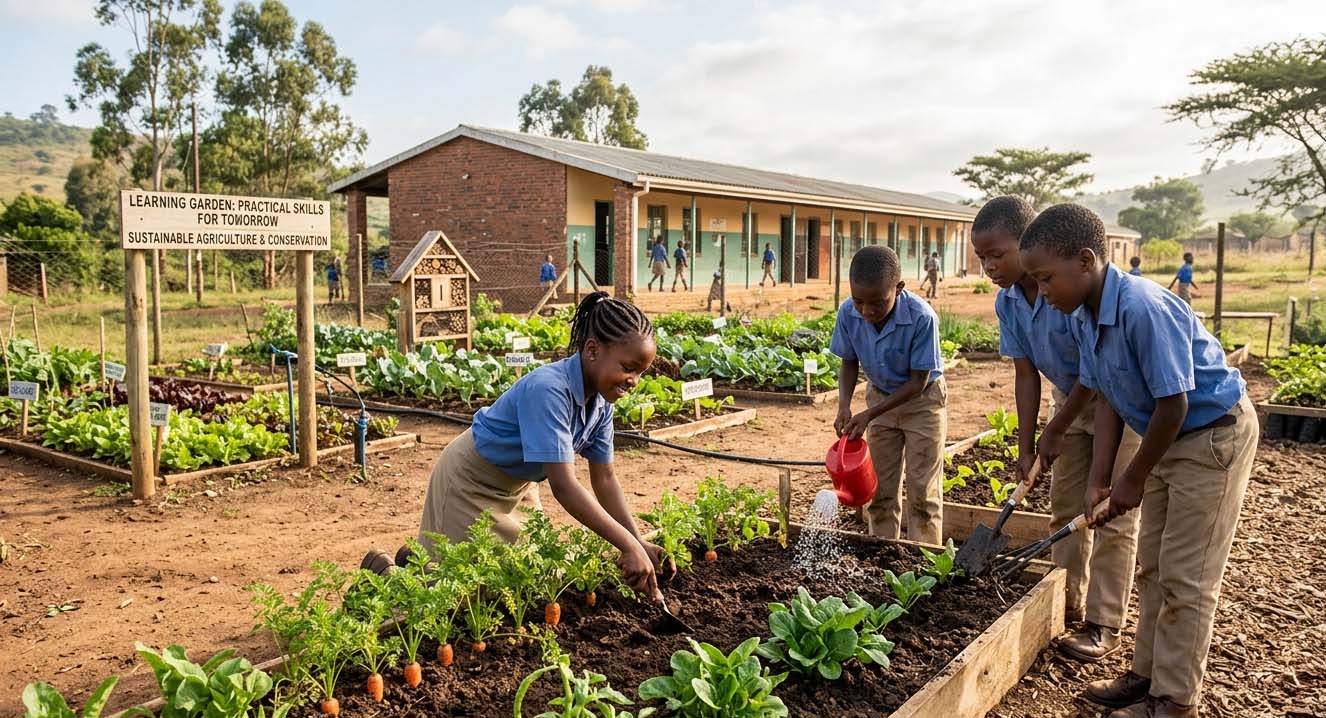
We must introduce foundational practical competencies at the primary level. This is not about forcing children into jobs, but about creating an exposure phase where they can discover their natural aptitudes, whether in agriculture, technology or design.
Waiting until Form IV is a failed strategy, it merely delays the discovery of talent and creates an experience gap that leaves our youth unemployable. By integrating CBE at an early age, we ensure that every child identifies a specific interest long before they reach secondary school.
Furthermore, institutions like Gwamile Vocational must evolve. They should not only admit learners who have completed high school, they should create pathways for those who leave at Form III, allowing them to complete their competency certifications. The current reality is sobering, too many graduates from our universities are flooding the technical industry after struggling to find work in their fields, such as Law or Public Relations. They are now repairing cars or working in beauty salons out of necessity. Had they been assessed through a competency-based curriculum from an early age, they could have mastered these trades and become experts.
We must overhaul our curriculum, otherwise we will continue to produce unemployed youth and exacerbate the high crime rate that plagues our country. However, education alone is not the solution. Once these young people have proven their competence, they must be supported with toolboxes and start-up capital. Providing knowledge without the means to apply it is a missed opportunity. Critically, there must be a system of monitoring to ensure these incentives are used appropriately.
The time for talk has passed, the time for a curriculum that builds a self-sustaining, skilled generation is now.
The Honourable prime minister’s recent tour of the Mkhaliphi farm at Sicunusa serves as a shining example of what is possible when determination meets the right support.