MBABANE – Fraudsters are becoming increasingly sophisticated, using cloned voices and fake social media accounts to deceive unsuspecting members of the public into sending money.
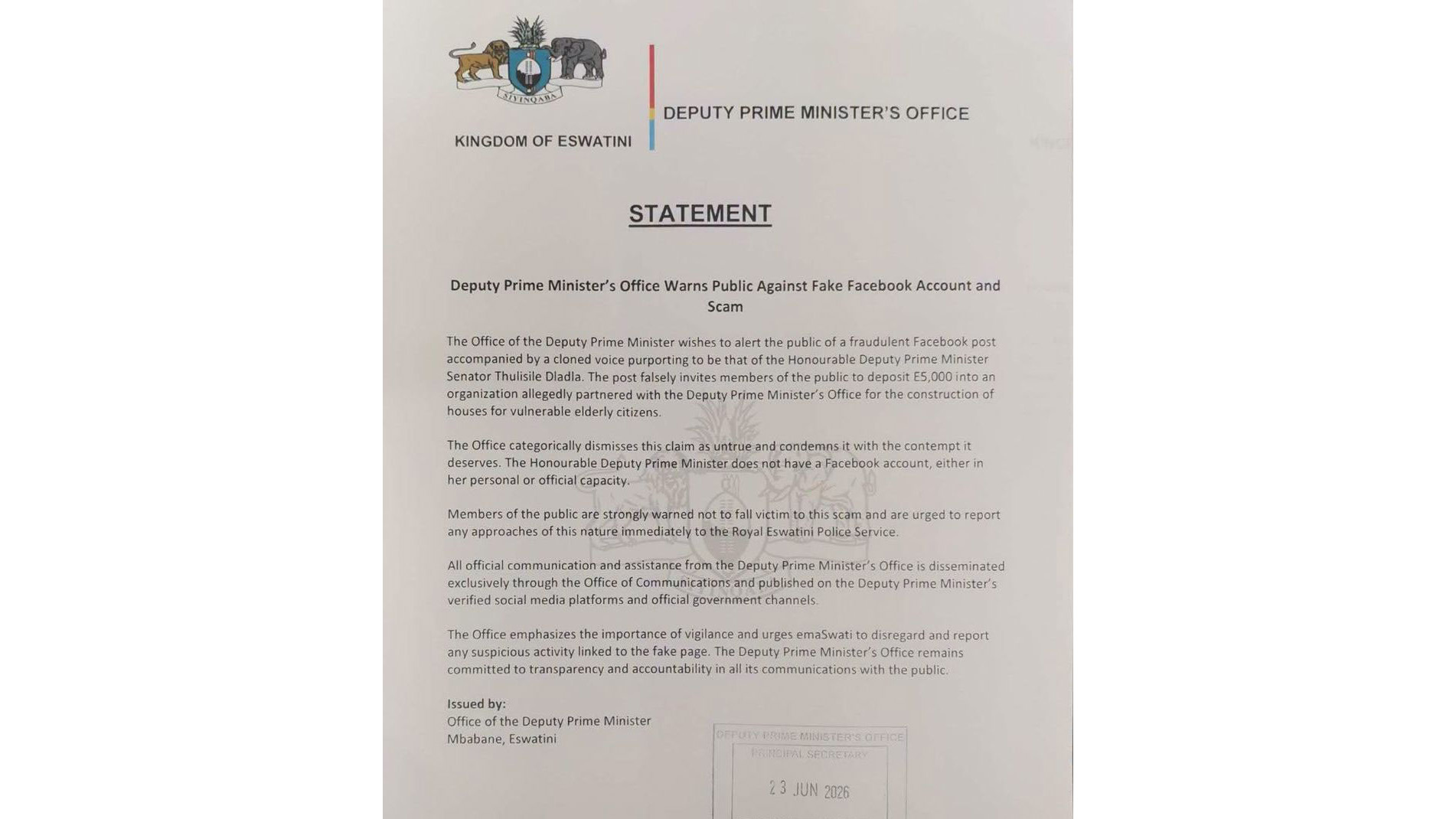
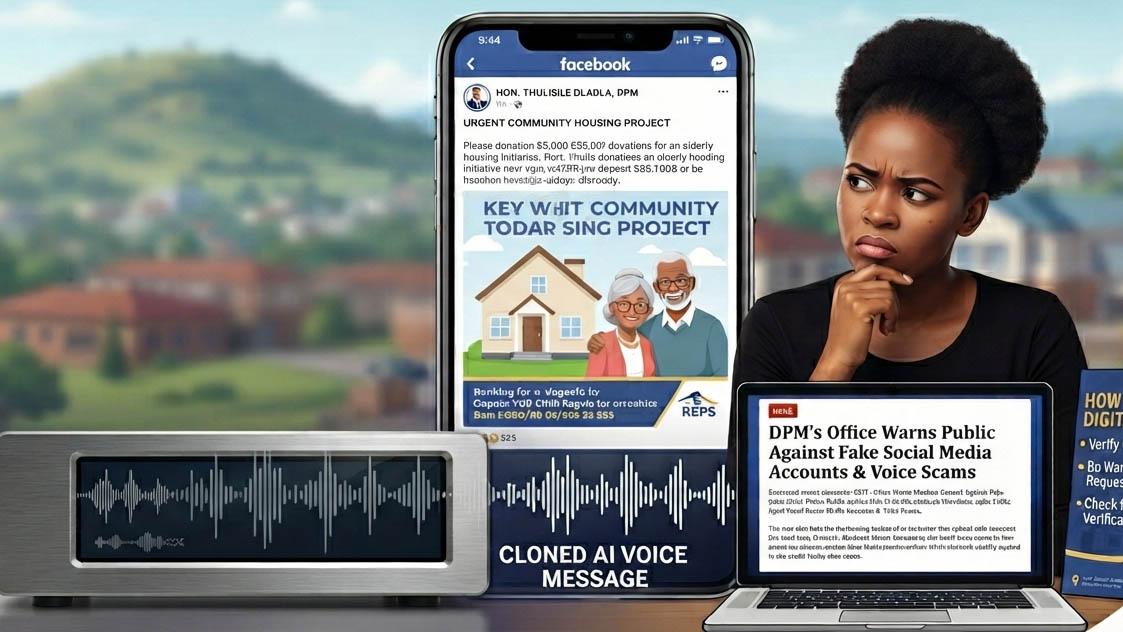
The Deputy Prime Minister’s Office has issued an urgent warning about a fraudulent Facebook post accompanied by a cloned voice purporting to be that of Deputy Prime Minister (DPM) Thulisile Dladla.
According to a statement issued by the office, the scammers are inviting members of the public to deposit E5 000 into an organisation they claim has partnered with the DPM’s Office to build houses for vulnerable elderly citizens. “The office categorically dismisses this claim as untrue and condemns it with the contempt it deserves,” reads the statement.
The office further clarified that Dladla does not have a Facebook account, either in her personal or official capacity. Members of the public have been urged not to fall victim to the scam and to immediately report such incidents to the Royal Eswatini Police Service (REPS).
The latest incident highlights a worrying evolution in cyber fraud, with criminals now using artificial intelligence to clone voices, mimic identities and create highly convincing scams.
The trend is not unique to Eswatini. South African television personality and businesswoman Carol Bouwer recently warned the public after fraudsters cloned her voice and used her identity to ask people for money, claiming she was stranded at airports and needed urgent financial assistance. She said the fraudsters even used names of people close to her to make the scam believable.
Bouwer urged people to block and report the scammers, stressing that ‘no matter how much the person sounds like me, it’s not me’. Media personality Somizi Mhlongo has also previously cautioned his followers about criminals impersonating him on social media and messaging platforms to solicit money from friends and relatives, underscoring the growing threat posed by digital impersonation scams.
International and local cybersecurity experts have warned that AI-generated voice cloning technology has become increasingly accessible and capable of reproducing voices with remarkable accuracy, making it difficult for people to distinguish between real and fake audio recordings. Research has shown that rapidly advancing audio deepfakes are eroding public trust in authentic speech and creating new avenues for fraud. The DPM’s Office said all official communication and assistance programmes are disseminated exclusively through its Office of Communications and verified social media platforms and government channels.
*Full article available on Pressreader*