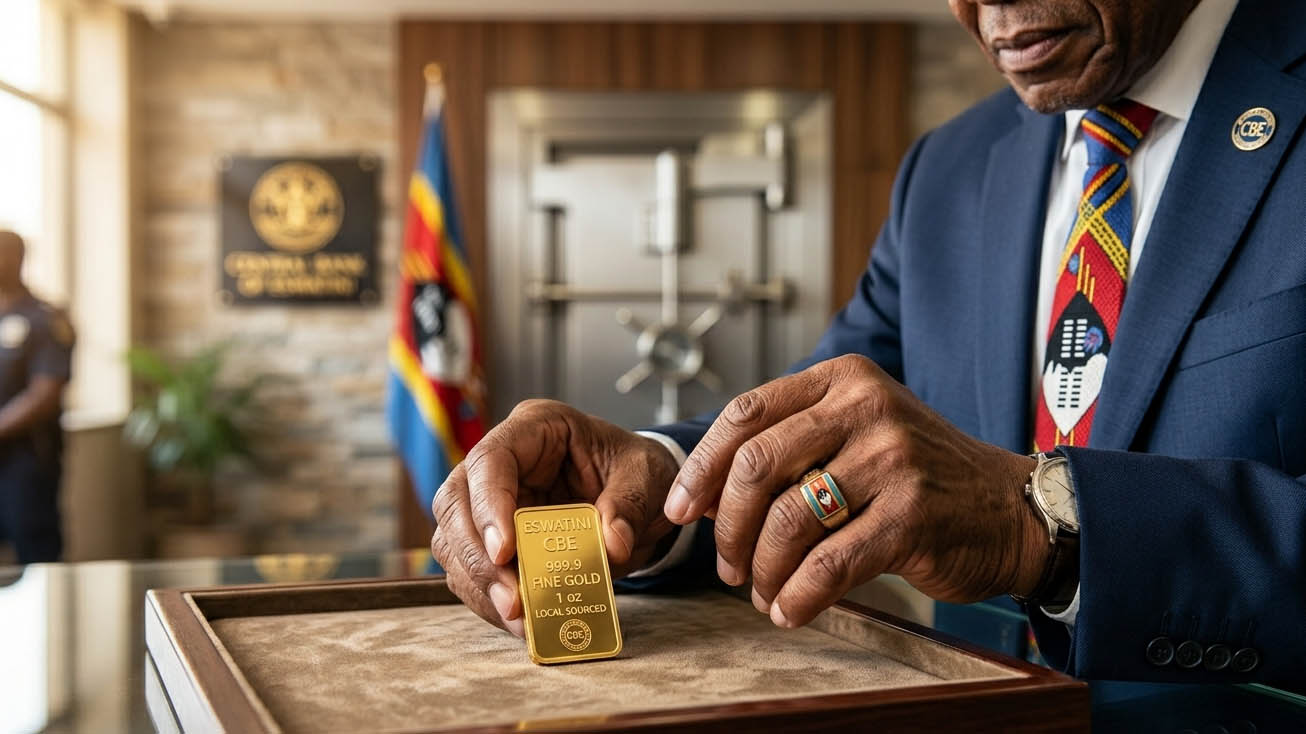
Central Bank reserves are the cornerstone of a nation’s financial stability. They are assets held by the monetary authority to support the national currency, manage external shocks and instil confidence in the economy. Reserves provide liquidity for imports, act as a buffer against balance-of-payments crises and reassure investors and rating agencies that the country can meet its obligations. In essence, they are the insurance policy of the state, ensuring that even in turbulent times, the economy can withstand external pressures.
Reserves composition
Globally, reserves compose a mix of foreign exchange holdings, special drawing rights (SDRs) from the International Monetary Fund (IMF) and gold. Foreign exchange holdings are typically cash deposits or investments in short-term government securities denominated in major currencies such as the US dollar, euro or South African rand. SDRs are allocations from the IMF that can be exchanged for hard currency when needed. Gold, meanwhile, has historically been a timeless store of value, recognised across borders and resilient during crises.
The balance between these assets varies by country, but the principle remains the same: Reserves must be liquid, credible and able to protect the economy against shocks. At present, the CBE’s reserves as import cover fall below the recommended three months of import cover and this has become the new norm. It is, therefore, imperative that the CBE optimise its reserve composition.
Why gold?
Gold is unique among reserve assets because it is not tied to the fiscal or monetary policy of any single country. Its value tends to rise during periods of uncertainty, making it a safe-haven asset. In our context, gold offers diversification by reducing reliance on foreign exchange holdings, particularly the South African Rand, which dominates trade but exposes the country to regional volatility. It also acts as an inflation hedge, retaining value when currencies depreciate.
Although gold is not immediately spendable, it can be sold or swapped for foreign currency when needed, providing liquidity in times of stress. Beyond these financial benefits, holding gold signals prudent management, reassuring investors and international partners. If sourced locally, gold also stimulates mining and refining industries, keeping value within the domestic economy.
Local sourcing
If the CBE expands its gold holdings through local purchases, the process will involve structured agreements with miners and refiners to guarantee supply and quality. Payment would be made in Emalangeni, strengthening the domestic currency by converting local production into reserve assets.
Certification would be essential to ensure that the gold meets international standards of purity and weight. Once acquired, the gold would be integrated into official reserves alongside foreign currency holdings and SACU receipts. This approach not only diversifies reserves, but also supports local industry, creating a virtuous cycle between monetary policy and economic development.
Beneficiation
Local sourcing of gold would significantly enhance beneficiation in Eswatini by anchoring value addition within the domestic economy. Instead of exporting raw minerals and losing potential gains, structured purchases by the Central Bank would encourage local refining, certification and processing industries to develop. This creates skilled employment opportunities, strengthens technical capacity and fosters linkages with manufacturing sectors that rely on mineral inputs.
By retaining more of the value chain locally, Eswatini could capture higher margins, stimulate small-scale miners and refiners and reduce dependence on external markets. Beneficiation also promotes industrial diversification, ensuring that mining revenues translate into broader economic development. Ultimately, local sourcing transforms gold from a mere export commodity into a catalyst for sustainable growth and resilience. Also, this would diversify the local gold value chain, with local beneficiation for reserves; there is potential for gold-related products diversification.
Other minerals?
While the kingdom has deposits of coal, diamonds and iron ore, these minerals are not suitable as reserve assets. The reasons are structural. Gold is traded on deep, global markets with standardised pricing, while other minerals lack such liquid and universally recognised markets. Gold reserves are measured in ounces of defined purity, whereas minerals like coal or lithium vary in grade and quality, complicating valuation. Industrial minerals are subject to demand cycles in energy, construction or technology sectors, making their prices volatile and unreliable as stores of value.
Diamonds, despite their high value, face grading and ethical sourcing challenges that undermine their suitability as reserve assets. Minerals such as coal or iron ore are physically bulky, costly to store and impractical for reserve management. Thus, while lithium and tantalum may become lucrative exports, they are better suited to generating foreign exchange earnings rather than serving as reserve assets.
Strategic implications
The CBE’s move into gold reflects a broader trend among emerging markets. As global uncertainty rises, Central Banks are diversifying away from reliance on major currencies. For the country, this strategy is particularly relevant given the fiscal pressures of a growing wage bill and rising debt, which accelerate drawing down on reserves.
Diversification is paramount for sustainability. Gold reserves provide a hedge against these vulnerabilities, strengthening external sector stability, reassuring creditors and aligning Eswatini with global best practices. However, the strategy must be carefully managed to avoid distorting local gold markets or incurring excessive storage costs.
Central Bank reserves are the cornerstone of a nation’s financial stability. They are assets held by the monetary authority to support the national currency, manage external shocks and instil confidence in the economy.