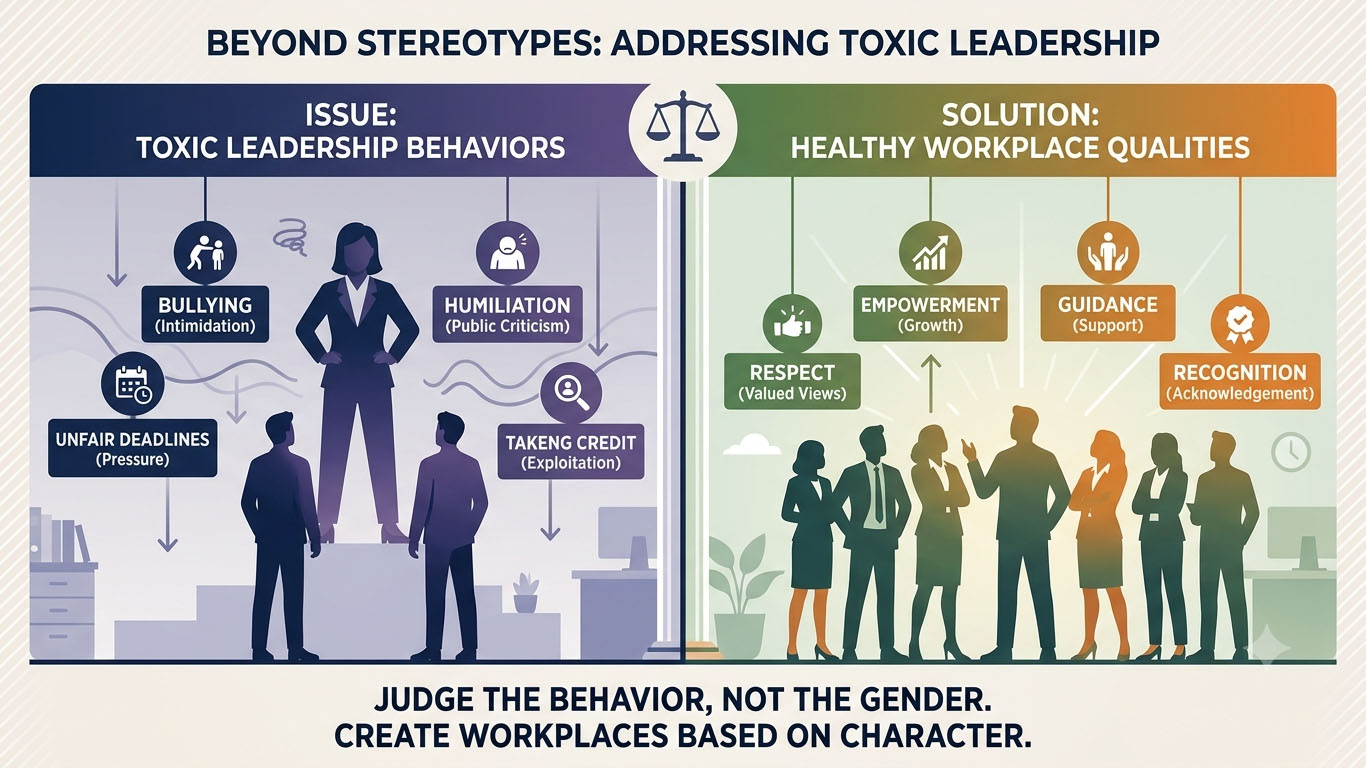
Every workplace has its horror stories. The manager who humiliates staff during meetings. The supervisor who takes credit for other people’s work. The boss who thrives on fear, intimidation and impossible deadlines. When these stories are shared, however, a familiar narrative often emerges: ‘Women are the worst bosses.’
It is a statement repeated so often that many people accept it as fact. Female bosses are described as emotional, jealous, difficult, controlling and abusive. Male bosses who display the same behaviours are often dismissed as tough, demanding or simply authoritative.
As a woman, I find this stereotype not only unfair but deeply problematic. It reduces complex workplace dynamics into a gender issue and distracts us from the real problem, which is abuse of power. The truth is simple. Horrible bosses exist. However, being horrible has absolutely nothing to do with being female. Many of us have worked under toxic leaders of different genders. Some men create hostile work environments through aggression, bullying and intimidation. Some women do the same. The common denominator is not gender; it is leadership style, emotional intelligence, accountability and respect for others. Yet society seems particularly eager to scrutinise women in leadership positions.
When a male boss is direct, he is often seen as decisive. When a female boss is direct, she may be labelled difficult. A man who enforces standards is viewed as strong. A woman enforcing those same standards may be described as mean or power-hungry. This double standard creates a no-win situation for women leaders. If they are firm, they are criticised for being harsh. If they are collaborative, they are viewed as weak. If they are ambitious, they are accused of stepping on others to get ahead.
As a result, many ordinary workplace conflicts become filtered through a gendered lens. Employees may attribute frustrations to gender rather than evaluating the actual behaviour involved. This stereotype also ignores the countless women who lead with compassion, integrity and competence. Across Eswatini and around the world, women manage businesses, lead organisations, head government departments, run schools and coordinate community programmes. They mentor young professionals, advocate for work-life balance, create supportive environments and challenge outdated workplace cultures. Unfortunately, these positive examples rarely generate the same attention as stories about difficult female bosses. We remember the bad experiences because negativity travels faster than success. The myth of the ‘toxic female boss’ can also create barriers for women seeking leadership positions. Some organisations hesitate to promote women because of assumptions that they will be difficult to work with. Some employees enter working relationships with female supervisors already expecting conflict. These biases can influence perceptions long before a woman has had the opportunity to demonstrate her leadership abilities. The consequences extend beyond individual women. They affect entire workplaces.
When people focus on gender rather than behaviour, organisations fail to address the real causes of toxic cultures. Bullying, harassment, favouritism, poor communication and abuse of authority can thrive when leaders are judged based on stereotypes instead of accountability. A toxic boss should be challenged because they are toxic, not because they are male or female. Similarly, a good boss should be recognised because they create healthy work environments, not because they fit society’s expectations of how men or women should lead. The conversation we should be having is not whether women make worse bosses than men. We should be asking what qualities make a good leader.
A good leader communicates clearly. They treat staff with respect. They provide guidance rather than humiliation. They recognise achievements. They take responsibility for mistakes. They understand that leadership is not about controlling people but empowering them to succeed. None of these qualities belong exclusively to men or women. Likewise, the traits associated with toxic leadership, manipulation, bullying, arrogance, dishonesty and abuse of power are not gender specific. They are human flaws that can appear in anyone who lacks self-awareness and accountability. Women already face enough barriers in leadership without being burdened by stereotypes that paint them as naturally difficult bosses. Such narratives discourage talented women from pursuing leadership roles and reinforce outdated beliefs about who deserves authority. If we genuinely want healthier workplaces, we must move beyond these assumptions. The next time someone says women are the worst bosses, it is worth asking a simple question: Are we criticising a person’s behaviour or are we criticising their gender? The answer matters. Because the problem has never been women in leadership. The problem is toxic leadership itself. And until we stop confusing the two, we will continue to misunderstand what truly makes a workplace thrive or fail.
Every workplace has its horror stories. The manager who humiliates staff during meetings. The supervisor who takes credit for other people’s work.