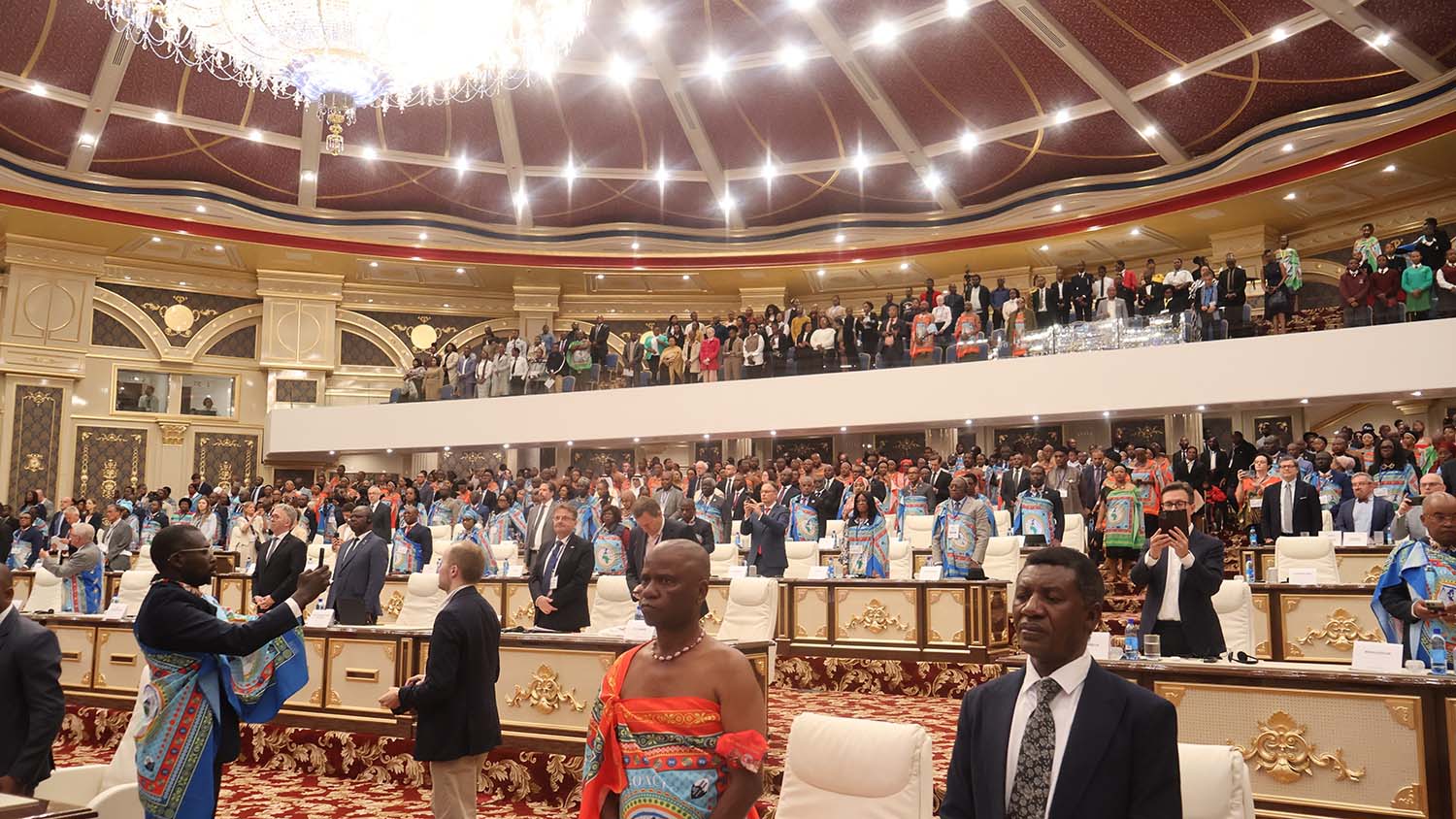
Swiftly upon opening its doors, a week later, the Ezulwini Palazzo International Convention Centre (ICC) welcomed delegates for the First Plenary Session of the Africa-EU Parliamentary Assembly and a decade-long debate is finally being settled. For years, the towering structure in the heart of the Ezulwini Valley was viewed by some as a fiscal drain. However, as we witness the sheer scale of the OACP-EU summit, the first of its kind held on Eswatini soil, it is clear that the Palazzo is not just a building; it is the cornerstone of Eswatini’s economic renaissance.
The mission of the Ezulwini Palazzo ICC and its integrated Five-Star Hotel (FISH) is simple yet profound: To transition the kingdom from a quiet regional player into a global powerhouse for the MICE industry viz, Meetings, Incentives, Conferences and Exhibitions.
From vision to global venue
The narrative of the Palazzo shifted irrevocably on April 25, 2026. Officially unveiled by His Majesty King Mswati III during his 58th Birthday celebrations, the opening was a masterclass in national branding. The Royal Signature Expo, which ran alongside the inauguration, transformed the venue into a vibrant marketplace where local innovators in jewellery, fashion and technology stood shoulder-to-shoulder with international brands. By hosting a celebration of this magnitude, which included performances by global icons like Davido and a record-breaking drone light show, the Palazzo proved it could handle the logistical complexity and security requirements of the world’s elite. This wasn’t just a party; it was a stress test that the facility passed with flying colours, signalling to international organisers that the kingdom is ready for the big leagues.
The OACP-EU Plenary: A $450 million statement
The current Africa-EU Parliamentary Assembly (May 12–14) is the most significant diplomatic event in the nation’s history. Bringing together legislators from 79 OACPS member States and 27 EU nations, the event represents a collective constituency of 1.5 billion people. The economics of this single three-day event are staggering.
While critics often point to the E8 billion (roughly US$450 million) investment required to complete the facility, the payback phase has officially begun. The arrival of hundreds of high-spending European and African parliamentarians has created a hospitality halo over the region. Occupancy and yield: Every bed in the Ezulwini Palazzo Hotel is filled, with spillover effects reaching every lodge and guesthouse within a 30-kilometre radius. The multiplier effect: The revenue generated by the summit doesn’t stay within the ICC walls.
It flows into the pockets of local caterers, private security firms, artisanal craft markets and transport providers. Direct foreign spend: International delegates typically spend significantly more per day than leisure tourists, providing a vital injection of foreign currency into the national treasury.
The anchor of excellence
The case for the Ezulwini Palazzo rests largely on its integrated hotel model. Managed by international experts, the Ezulwini Palazzo Hotel provides the luxury infrastructure that high-level business travellers demand.
For too long, Eswatini lost major regional contracts because it lacked a venue that could provide five-star accommodation and world-class conferencing under one roof.
The hotel acts as the commercial anchor. By offering 51 000 square metres of luxury across seven floors, it ensures that the ICC remains a year-round destination. When there are no diplomatic summits, the hotel captures the burgeoning bleisure (Business + Leisure) market. It allows Eswatini to pitch itself as a destination where a CEO can chair a Board meeting in the morning and be on a game drive at the Mlilwane Wildlife Sanctuary by the afternoon.
Prospects: The road to Southern Africa’s boardroom
The future of the Ezulwini Palazzo is not just in politics, but in profit. As the African Continental Free Trade Area (AfCFTA) gains momentum, there is an urgent need for neutral, high-quality venues for trade negotiations and corporate congresses.
Corporate hub: The Palazzo is perfectly positioned to attract the annual general meetings of major regional corporations and the tech summits of the burgeoning African Silicon Valley.
Intellectual capital: By hosting specialised congresses in agriculture, green energy or medicine, the venue will attract global experts, facilitating a brain gain and technology transfer for Eswatini’s youth.
National branding: Every high-profile event broadcast from the Palazzo serves as a multi-million-dollar advertisement for the kingdom, lowering the cost of attracting future foreign direct investment (FDI).
A necessary evolution
The facility can be leveraged as a primary driver of wealth and new business. The two events that have been hosted in the venue post-opening show that it has promise. There is a need to ramp up marketing and ensure perpetual conferences for the venue. This is an assessment I share. In the global economy, visibility is currency.
The Ezulwini Palazzo ICC has bought Eswatini a seat at the world’s most exclusive table. As we watch the OACPS-EU delegates deliberate on the global race for critical raw materials today, we are witnessing the Palazzo doing exactly what it was designed to do: Making Eswatini the place where the world’s most important conversations happen. The Ezulwini Crown is no longer a dream; it is an economic reality that will pay dividends for generations to come.
The Ezulwini Palazzo chamber was packed to the brim as delegates witnessed the official opening of the Africa-EU Parliamentary Assembly yesterday. (PICS: Ntombi Mhlongo)