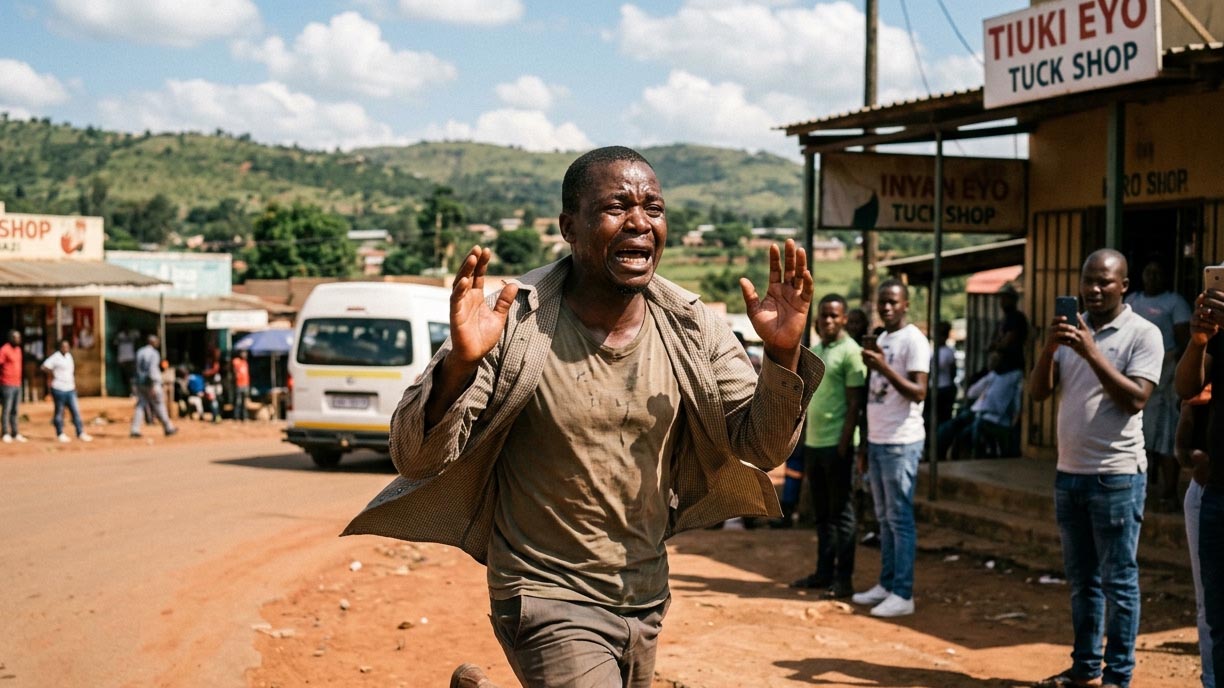
There are certain sentences that deserve to be protected as national heritage in Eswatini. Not because they are inspiring. Not because they united the nation, but because they carry the full emotional collapse of a grown African man in five words. ‘Ungishaya mbamba lomake wakami’. A man said this in court. Openly. Publicly. In front of adults. You must understand the seriousness of that statement. African men do not confess weakness easily. A liSwati man would rather announce bankruptcy, gout and spiritual attacks before admitting that ‘she is beating me’.Now, before people start typing angry Facebook essays with one finger, let us establish something clearly. Violence against women is real, evil and deadly. Women suffer abuse every day and many live in fear inside relationships.
However, another truth is quietly limping around our communities with swollen lips and emotional damage. Some men are also getting assaulted at home. Society reacts to this information the same way people react when a goat enters a posh bar.
Complete confusion. The moment a man says, ‘my girlfriend hits me’, people stop behaving like citizens and start behaving like an audience. Even the laughter changes. Men laugh differently when another man is suffering. It is that painful laugh that says thank God it’s not me.
According to court proceedings, this man returned home after getting paid. Already, that is a dangerous time in many relationships. Payday is like load-shedding. Everybody becomes tense and emotional. The man says he sent money to his other children from different mothers. Which means this gentleman understood the Bible clearly and procreated. Five children with different mothers? At this point, the brother does not need a wallet. He needs a payroll department. Then, trying to maintain peace in the home, the man bought braids for his partner. Braids. Men do not buy braids casually. Buying braids is a diplomatic mission. It is the relationship equivalent of the United Nations sending peacekeepers. A man buying braids is saying, ‘my love, let there be harmony in this republic’, but instead of peace, war breaks out. The woman claimed his partner assaulted him and the brother ran outside, screaming and wailing for help. ‘Inyandzaleyo!’ Now let me explain something. A grown liSwati man screaming ‘inyandzaleyo’ in public is not ordinary panic. That is the final stage of male suffering. That is a man abandoning pride completely, because African masculinity is organised like a secret society. Men are taught very early that pain must remain private.
A boy falls from a tree? Get up and move on! A teenager gets dumped? “Indvodza ayikhali. Ikhala iya embili njenge ambulance.” A husband gets beaten with a wooden spoon? He is told to leave the kitchen.
Society has trained men to treat emotional suffering like contraband. Some men are out here living in fear of people wearing bonnets. The most dangerous thing? Nobody believes them.You can arrive at work with scratches on your neck looking like you fought a leopard in the Lubombo mountains and your colleagues will still ask you what you did to upset her.
Even reporting abuse as a man sounds terrifying. Imagine entering a police station. Officer: What happened? Man: My girlfriend assaulted me. Immediately, the officer removes his glasses slowly, like a principal investigating failed Mathematics results. With what? Open hands, he responds.At that point, even the Holy Spirit must fight laughter, but according to the accused, the police actually advised him to open a case because if the woman reported first, he would be arrested.
Couples are no longer communicating. They are exchanging counterattacks. Some homes sound like WWE auditions. You hear ‘don’t speak to me like that’, then utensils start flying across the kitchen like taxis changing lanes at Logoba. Now here is where the conversation becomes uncomfortable.When women report abuse correctly, society mobilises immediately. Counsellors appear. Community meetings happen. Protection systems activate. As they should, but when a man reports abuse, people react like he just confessed fear of butterflies. The first question is always, but what did you do?The ancient belief that every assaulted man must somehow deserve it. A man can appear with a swollen eye the size of a tennis ball and people will still say: ‘Why do you always get into her nerves?’
We laugh because male suffering has been converted into entertainment. Men themselves contribute to this silence. African men would rather suffer quietly than become WhatsApp status material. A man can lose his job quietly. Lose his hair quietly. Lose his happiness quietly, but admitting your girlfriend slapped you in front of her cousins? Brother, society treats that like lunacy.
Now, let us also be honest about something else. According to the case, the accused pleaded guilty to assaulting and strangling the complainant. Once strangling enters the conversation, we are no longer discussing relationship drama. That is no longer a love language; that is a crime documentary.Violence escalating in any direction is dangerous, but hidden inside this ugly story is another truth people avoid discussing. Some relationships are mutually toxic long before police become involved. One person insults. The other retaliates. One throws a cup.
The other throws hands. Then suddenly, everybody is standing before a magistrate explaining why love now requires witness statements. The accused even told the court he struggles to leave because the woman lives close to his parental home. And honestly, African break-ups are difficult. You cannot heal peacefully when your ex passes your gate every morning carrying tomatoes, anger and fresh gossip. Some men stay because of the children. Some stay because of shame. Some stay because they genuinely love the person hurting them and some stay because they already bought the braids.
Mfowethu, no synthetic hairstyle can solve spiritual warfare. Not braids. Not Brazilian wigs.
Not even those expensive instals that require transport money and emotional resilience. The real weave this country needs is weaving honesty into conversations about domestic violence. Women need protection. Men also need protection, because abuse is abuse. Whether the victim is wearing heels, overalls or size-10 Grasshoppers, until society learns to take everybody’s pain seriously, more brothers will continue sprinting into the streets after payday, screaming ‘Inyandzaleyo!’
There are certain sentences that deserve to be protected as national heritage in Eswatini. Not because they are inspiring.