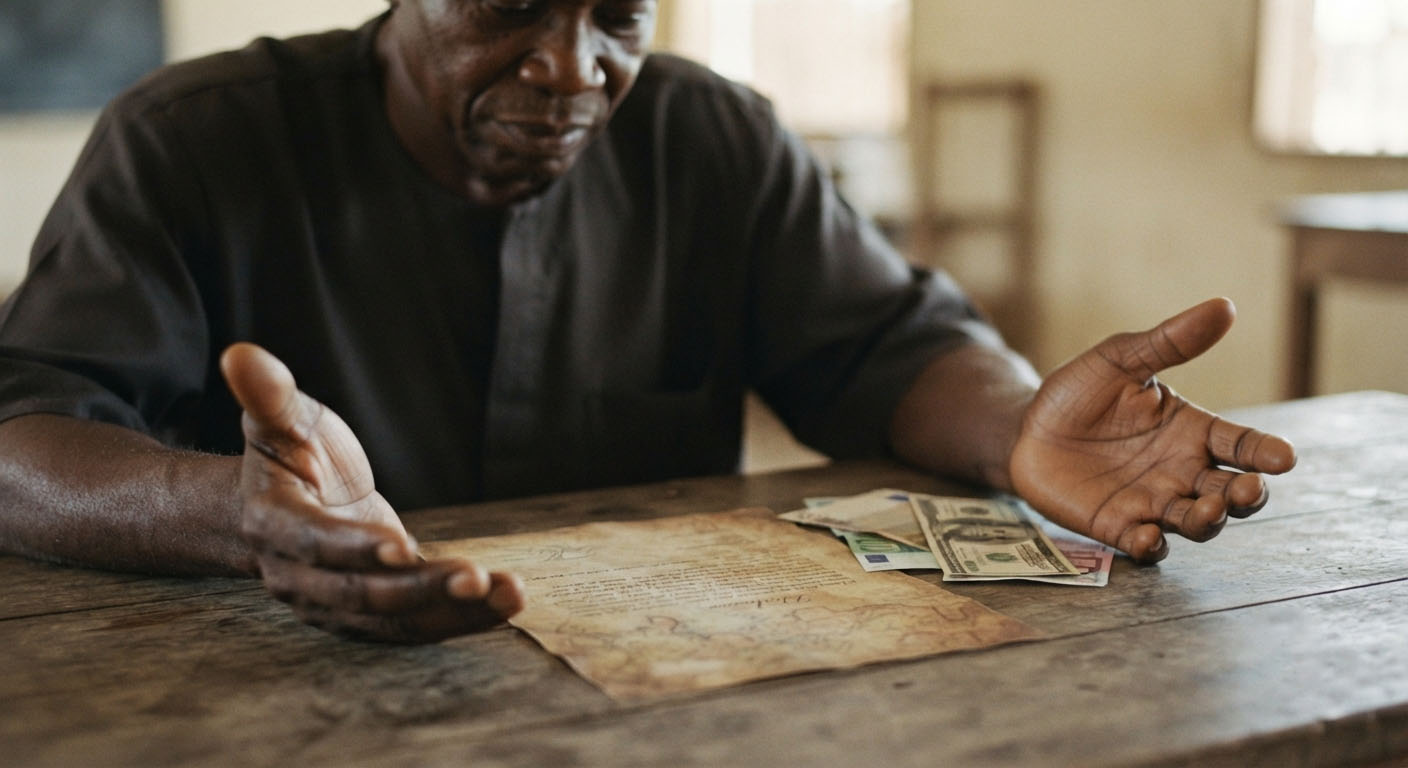
More than 200 years after the abolition of the transatlantic slave trade, the question of reparations continues to stir intense debate across continents.
Last week, African and Caribbean leaders gathered in Ghana and renewed calls for former slave-trading nations to issue formal apologies and provide reparations for one of history’s greatest injustices.
The conference, held in Accra, ended with delegates endorsing a 19-point plan that seeks debt relief, the return of looted cultural artefacts and the creation of a global reparations fund. The gathering followed a landmark United Nations General Assembly resolution adopted in March, which recognised transatlantic slavery as the ‘gravest crime against humanity’.
At the heart of the discussion lies a difficult question - can any amount of money compensate for centuries of suffering, exploitation and trauma?
Between the 15th and 19th centuries, an estimated 12 to 15 million Africans were forcibly removed from their homes and transported across the Atlantic. Families were separated, cultures disrupted and generations stripped of their dignity and freedom. The economic gains generated through slave labour helped build wealth in Europe and the Americas while leaving deep scars across Africa and the Caribbean.
Speaking at the conference, Ghanaian President John Dramani Mahama struck a careful balance between responsibility and blame. “History does not ask us to inherit guilt, but it asks us to inherit responsibility,” he told delegates.
His remarks touched on the central challenge confronting governments today. Most of those being asked to pay reparations did not commit the crimes. Likewise, the victims are no longer alive. Still, the consequences of slavery continue to shape societies through inequality, poverty and underdevelopment.
Supporters of reparations argue that this is not simply about events of the distant past. They contend that the wealth accumulated through slavery laid the foundations for modern prosperity in some countries while creating disadvantages that persist elsewhere.
Critics, however, question how reparations would work in practice. Who would receive the money? How much would be enough? Which countries should contribute and which should benefit? These questions have remained unanswered despite decades of discussion.
French President Emmanuel Macron offered a perspective that may resonate with many observers. While acknowledging the horrors of slavery and the dehumanisation of enslaved people, he warned against viewing reparations solely through a financial lens. Reparations, he said, should not become a ‘cheque written to bring the story to a close’. That observation deserves serious consideration.
History offers examples where reparations have been paid with varying degrees of success. Following the Second World War, Germany paid billions of Euros to Holocaust survivors and to Israel. While no compensation could erase the suffering inflicted by Nazi crimes, the payments were widely viewed as an acknowledgement of responsibility and an important step towards reconciliation.
Similarly, in 1988, the United States Government formally apologised and compensated Japanese Americans who had been interned during the Second World War. Each surviving internee received compensation as recognition of the injustice they endured. Again, the payments did not erase trauma, but they represented official recognition that a wrong had occurred.
New Zealand has negotiated settlements with Māori communities over land confiscations and treaty violations. While many Māori leaders have stated that no settlement can fully restore what was lost, the process has helped rebuild relationships and address longstanding grievances.
These examples reveal an important truth. Reparations seldom succeed because of the amount paid. Their value often lies in acknowledgement, accountability and a willingness to confront uncomfortable history.
The challenge with slavery is that the scale is vastly greater. The trade spanned centuries crossed continents and affected millions of people. Calculating the economic cost alone would be nearly impossible. Calculating the emotional cost is above measure.
Can there ever be a sufficient payment for a mother who watched her child being sold away? Can a financial package compensate for generations who lost their names, languages, identities and ancestral connections? Can money heal inherited trauma carried across centuries? The honest answer is probably no.
The late South African statesman and anti-apartheid icon Nelson Mandela once observed: “Resentment is like drinking poison and then hoping it will kill your enemies.” His words remind us that societies cannot remain trapped indefinitely by the injustices of the past. At the same time, Civil Rights Leader Martin Luther King Jr warned that ‘Injustice anywhere is a threat to justice everywhere.’ Ignoring historical wrongs entirely carries its own dangers.
The United Kingdom finds itself in a particularly uncomfortable position. The British Government continues to reject reparations, arguing that current institutions cannot be held responsible for historical actions. Yet history records that when slavery was abolished in the 1830s, compensation was paid not to the enslaved, but to slave owners. In modern terms, those payments amounted to more than £16 billion.
What is certain is that slavery’s legacy cannot be measured solely in Pounds, Dollars or Euros. The physical chains were removed long ago, but the emotional and psychological wounds continue to whisper across generations.
More than 200 years after the abolition of the transatlantic slave trade, the question of reparations continues to stir intense debate across continents.