

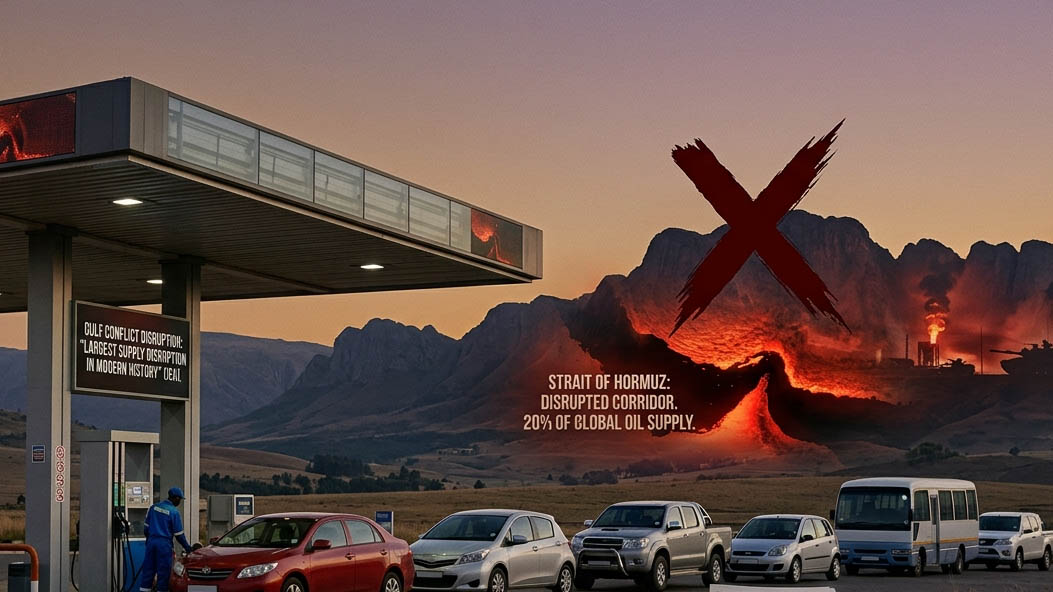
In times of geopolitical crisis, truth often becomes fragmented. Nowhere is this more evident than in the global conversation around fuel availability amid the ongoing Gulf conflict. Governments insist that reserves are stable and supply chains remain intact, yet headlines from across the world tell a different story – one of shortages, price shocks, and mounting uncertainty. The contradiction is not accidental; it reflects the uneasy space between reassurance and reality.
At the heart of this ambiguity lies the disruption of one of the world’s most critical corridors – the Strait of Hormuz. Roughly 20 per cent of global oil supply passes through this narrow channel, and its partial closure has triggered what the International Energy Agency describes as the largest supply disruption in modern history. Oil flows have plunged dramatically, with millions of barrels per day effectively removed from global circulation. Yet, despite this, many governments continue to project calm.
In Southern Africa, particularly in Eswatini and its neighbour South Africa, this calm appears justified – at least for now. Officials in South Africa maintain that there is no immediate fuel shortage, attributing rising prices primarily to global oil volatility rather than supply constraints. On the surface, fuel stations remain operational and there are no widespread reports of queues or rationing.
However, this stability is fragile. South Africa imports around 90 per cent of its fuel, much of it from the Gulf region, currently embroiled in conflict. This dependency exposes the region to external shocks that may not yet have fully materialised. International news warns of a potential ‘fuel cliff’ should disruptions persist, with limited reserves, estimated at just a few weeks, offering little long-term protection. Even in the absence of shortages, rising oil prices – now exceeding US$100 (E1 715) per barrel – are already filtering through to consumers in the form of higher transport and living costs. Elsewhere, the cracks are far more visible.
In parts of Asia, the situation has escalated beyond price pressures into tangible shortages. Countries heavily reliant on Middle Eastern imports, such as the Philippines, have declared energy emergencies, with fuel reserves dwindling and hundreds of petrol stations closing. Across the region, industries are slowing or halting production due to a lack of petroleum-based inputs, affecting everything from plastics to food packaging.
In Europe and other developed economies, the impact has taken a different form, with sharp price increases and sporadic supply disruptions. In the United Kingdom, petrol prices have surged significantly, with reports of temporary shortages and growing public frustration. Meanwhile, Australia has begun preparing for rationing scenarios, citing critically low reserves and tightening global supply.
What emerges is a deeply uneven global picture. Some countries, shielded by strategic reserves or diversified supply chains, maintain a façade of stability. Others, more exposed to the immediate effects of disrupted shipping routes, are already grappling with crisis conditions. Yet, both realities stem from the same source, a global oil system under strain. This is where the ambiguity becomes dangerous.
By emphasising current stability, governments risk underplaying the long-term implications of a prolonged conflict. Oil markets are inherently forward-looking; prices today reflect fears about tomorrow. And those fears are not unfounded. It is warned that sustained disruptions could trigger inflation, slow economic growth and even push vulnerable economies into recession. For Africa, where many nations rely heavily on imported fuel, the consequences could be particularly severe, affecting everything from food prices to fiscal stability.
Eswatini, though currently insulated from visible disruption, is not immune. Its economic ties to South Africa mean that any significant shift in regional fuel availability will inevitably have ripple effects across its borders. The absence of queues today does not guarantee supply tomorrow.
The lesson from past oil crises – from 1973 to the present – is that energy security is rarely tested in moments of calm. It is tested in how nations prepare for disruption before it becomes unavoidable.
At present, the world is caught between reassurance and reality. Fuel is still flowing in many places, but the systems that sustain that flow are under unprecedented pressure. If the Gulf conflict intensifies or drags on, the current sense of stability may prove to be little more than a temporary illusion.
And when that illusion fades, the consequences will not be evenly shared.
















Leave a comment