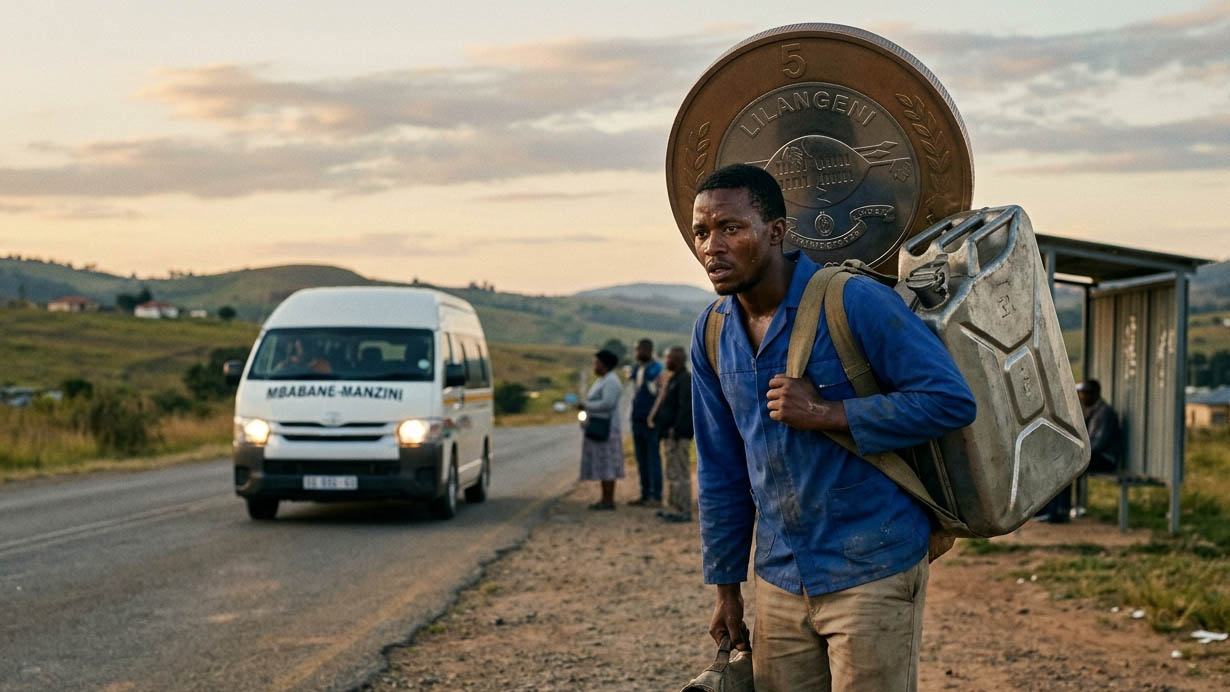
Not so long ago, emaSwati were trying to adjust to the fuel hike announced by the Ministry of Natural Resources and Energy, which had already pushed up the prices of basic goods and daily necessities. To some, it has not yet sunk in that fuel price has increased. Now, with transport fares increase looming, many commuters say life is becoming even more difficult. For workers, students and ordinary citizen who depend on public transport every day, the added cost means stretching already limited budgets, skipping certain expenses and worrying about how they will make ends meet before month-end.
The additional cost may seem small on paper, but in real life and over time it places significant pressure on the citizens’ lives. A worker travelling to and from work daily could now spend considerably more on transport each month, leaving less money for rent, food and school expenses. Parents and guardians are equally concerned, especially those supporting children in schools and tertiary institutions while also dealing with more than one child commuting daily, the fare increase means having to make difficult financial decisions. On the other hand, transport operators insists that the increase is inevitable. They argue that rising petrol and diesel prices, vehicle maintenance costs and spare parts have made it difficult to continue operating under reduced fares. Secretary General of the Swaziland Local Kombi Association, Musa Dlamini, said operators had previously absorbed some of the costs out of consideration for commuters with the understanding citizens’ financial struggles and cost of living. “The increase in fuel prices is affecting the transport business. It goes beyond fixing car parts and operators had no other option but to enforce the full gazette fare,” said Dlamini. The concern is not only about the current increase, but what it represents for the future.
A fear that continued fuel price hikes could result in even higher transport costs in the coming months, making it harder for ordinary citizens to survive. If transport fares continue to rise every time fuel prices increase, how will an ordinary citizen survive? How will a worker or an employee earning a modest salary manage to pay for transport, buy food and still support family? How will students continue attending classes consistently when their allowances remain the same while daily expenses keep increasing? This seems like a beginning of the unknown. To rural families, these are no longer just economic questions, but everyday realities shaping how they live, travel and survive. The transport fares issue is more serious than imagined! It raises concerns for the thousands of emaSwati already struggling to survive in a country with a high unemployment rate. To many job seekers, public transport is the only way to travel to towns and cities in search for employment opportunities, submit applications and attend interviews. With transports continuing to rise, many people may feel that even looking for work is becoming increasingly expensive.
How is an unemployed graduate expected to attend interviews in Mbabane, Manzini or Nhlangano without money for transport? How will young people continue searching for opportunities when simply travelling from one place to another has become a financial challenge? The sad part is that, missing an interview may not be due to lack of qualifications or a motivation, but because they simply cannot afford the fare. Public transport is more than just means of travel, it is a daily necessity that connects workers to their jobs, students to schools and universities and families to essential services. In the country, there are so many unemployed citizens who also rely on financial support from relatives or temporary piece jobs to survive and the increase in transport costs places further strains on already struggling households. For that reason, job seekers may be forced to choose between using money for transport or buying necessities. Members of Parliament need to urgently look into the growing cost of living crisis, as the continued increase in the prices of basic necessities is placing ordinary emaSwati under severe financial pressure. While transport fares, fuel prices, electricity and others continue to rise, salaries or wages seems to have remained unchanged for some time. In struggling families, the situation has become increasingly difficult because income is no longer matching the rising cost of survival.
How are people expected to survive when salaries remain stagnant, while the prices of necessities keep rising? Members of Parliament should intervene to find balanced solutions that protect both transport businesses and the public from continuous financial strain.
The rise of cost of living cannot be separated from global events taking place beyond Eswatini’s borders. The ongoing tensions and conflicts in the Middle East among powerful nations, have contributed to instability in global oil markets, which has resulted in the rise of fuel prices in many countries, including Eswatini. Although, these conflicts seem distant, their effects are now being felt by ordinary people at grassroots level. As transport fares and the prices of necessities continue to rise, emaSwati are left wondering how much more they can endure. The burden is becoming too heavy for ordinary citizens whose income remain unchanged. The question remains, what more is yet to increase? For comments: mkhabelanamhla@gmail.com
Not so long ago, emaSwati were trying to adjust to the fuel hike announced by the Ministry of Natural Resources and Energy, which had already pushed up the prices of basic goods and daily necessities.