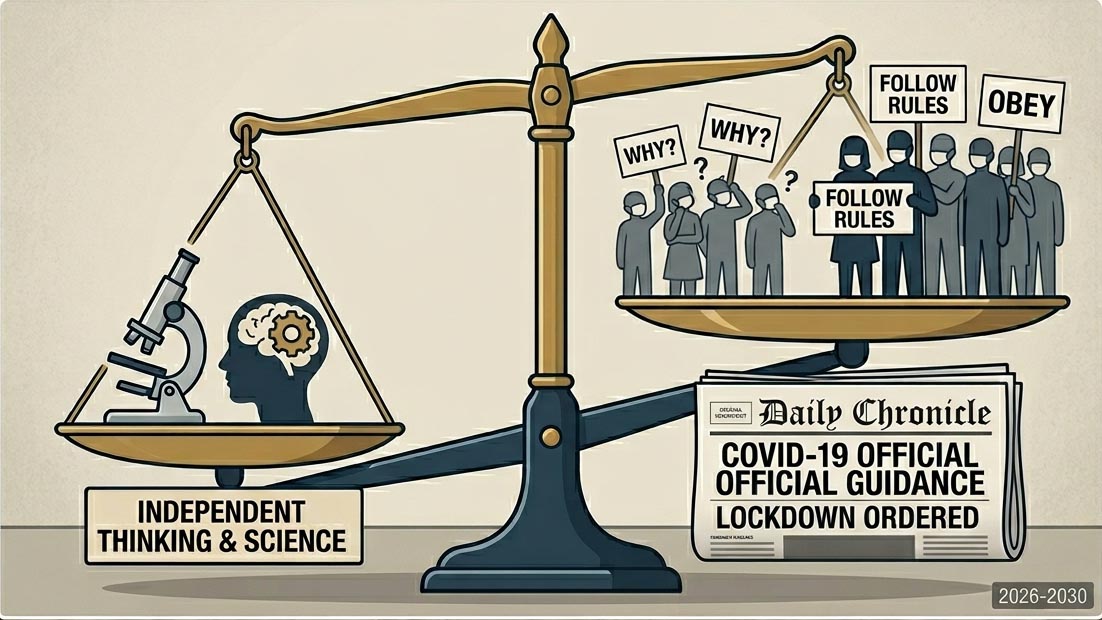
As headlines around the world begin carrying reports about hantavirus infections, many people are once again reacting with fear before facts. Social media is already filling with panic, speculation and calls for extreme measures, almost as though the world learnt nothing from the COVID-19 era.
Perhaps this time, humanity must pause long enough to ask harder questions. Not reckless questions. Not conspiracy-driven fantasies. Genuine questions rooted in science, transparency and critical thought. The COVID-19 period revealed an uncomfortable truth: Governments, global institutions, pharmaceutical giants and even celebrated medical authorities are not beyond scrutiny. During those years, citizens who merely questioned official narratives were often mocked, censored, fired or labelled dangerous. With time, several positions once dismissed outright later became accepted or at least openly debated.
That reality alone should remind the public that blind obedience is never a substitute for informed thinking. During the pandemic, figures such as US President Donald Trump and several independent scientists were heavily criticised for discussing alternative treatments or challenging lockdown policies. Some medical professionals lost jobs, reputations and social standing simply for asking whether existing medicines could assist in treatment protocols. Whether one agreed with them or not, the intensity with which dissent was crushed should concern every democratic society.
Science grows through questioning, not intimidation. White House Medical Adviser Anthony Fauci later faced intense scrutiny over several COVID-19-era statements. Congressional hearings and media reports revisited comments regarding masks, social distancing and herd immunity thresholds. Critics argued that shifting messaging damaged confidence in health institutions.
One of the most widely discussed moments came after Fauci acknowledged that early public guidance against widespread mask usage was partly influenced by concerns about shortages for healthcare workers. Critics saw this as proof that authorities were willing to shape messaging strategically rather than communicate complete transparency from the beginning.
Meanwhile, lockdown sceptics often point to the treatment of scientists such as Jay Bhattacharya and others who challenged blanket restrictions. Some were portrayed as irresponsible despite holding credible academic backgrounds. Years later, debates around school closures, mental health deterioration, economic collapse and vaccine mandates continue across many countries.
What angered many people was not simply that authorities may have been wrong on some issues. Science evolves. Mistakes happen. The greater concern was the intolerance towards open debate.
During COVID-19, questioning official policy could cost livelihoods. That atmosphere must never return. The world should also remember the controversy surrounding a 2010 scenario-planning document produced by the Rockefeller Foundation in partnership with the Global Business Network. The report, titled ‘Scenarios for the Future of Technology and International Development’, contained a scenario known as ‘Lock Step’, which imagined a future pandemic resulting in tighter State controls, travel restrictions and increased public compliance with government authority.
Again, the lesson is not to descend into paranoia. The lesson is that citizens should read, analyse and think critically, instead of accepting every official statement without reflection.
Fear is powerful. It can convince populations to surrender freedoms, isolate from loved ones, silence debate and demonise neighbours almost overnight.
COVID-19 revealed how quickly societies could become divided between the ‘obedient’ and the ‘questioners’.
As hantavirus stories spread, caution is certainly necessary. Hantavirus is a real disease linked mainly to rodents and rodent droppings, and health authorities are correct to educate the public about prevention. Caution must not become hysteria. People should seek facts from multiple credible sources. They should examine data calmly. They should ask whether proposed measures are proportionate. They should resist becoming emotional weapons for political or corporate agendas. Most importantly, they should never surrender the ability to think independently. Prayer, too, matters during uncertain times. Throughout history, humanity has survived wars, plagues and disasters not only through medicine but also through faith, wisdom and community strength. In moments of fear, societies need calm minds as much as they need laboratories.
The danger during crises is not only the disease itself. It is also the temptation for populations to abandon reason. The public, consequently, has a responsibility as well: To reject both blind fear and reckless misinformation.
Critical thinking sits between those extremes. If another global health scare emerges, humanity must do better than it did before. Citizens should neither dismiss every warning nor worship every televised expert without question. A healthy society is one where evidence can be challenged openly. That may be the biggest lesson the world failed to learn the first time around.
As headlines around the world begin carrying reports about hantavirus infections, many people are once again reacting with fear before facts.