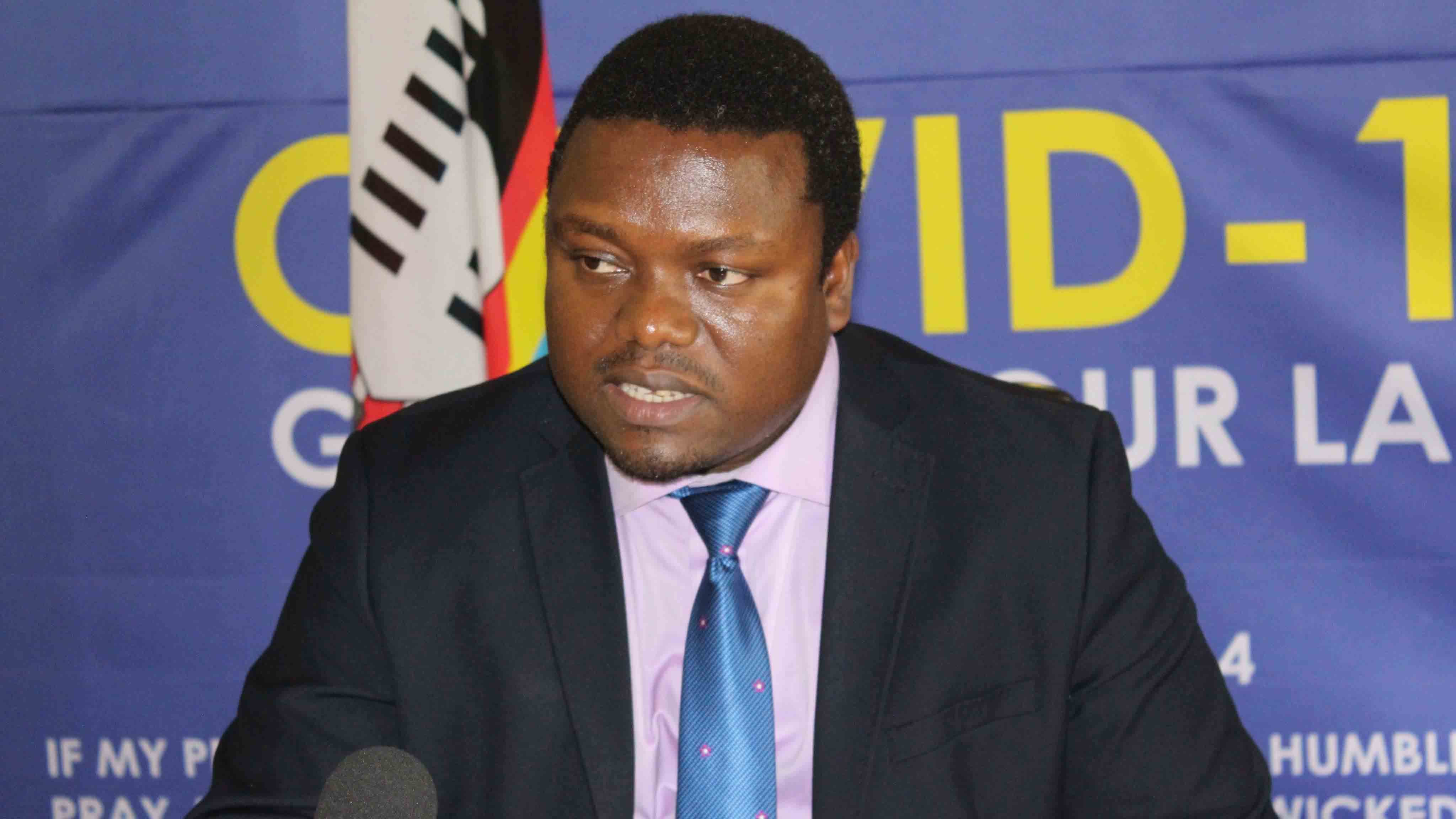
The Minister for Public Works and Transport, Chief Ndlaluhlaza Ndwandwe, deserves to be sincerely congratulated on his commendable enthusiasm, determination and hands-on commitment to upgrading Eswatini’s public road network, particularly the major road arteries linking the country’s cities and towns.
His ministry’s ongoing projects have set a new standard in infrastructure delivery, instilling renewed public confidence in the government’s vision to foster economic growth through modern transportation systems.
However, honourable minister, while the nation celebrates visible progress along our main highways, there remains an undeniable and painful reality that demands urgent attention. That is the deplorable state of the country’s feeder roads. These are the community roads that connect homesteads, schools, health facilities and farms to the main gazetted roads. Sadly, most of them are in such an appalling condition that, during the rainy season, they become completely impassable. Outside Mbabane, our capital city where Cabinet offices are located, scores of dusty roads still snake through communities, failing to reflect the infrastructure development witnessed elsewhere. For many rural dwellers, travelling to school, to a clinic or to the marketplace remains a struggle. It becomes a daily routine marked by fatigue, frustration and unfulfilled expectations. When the rains fall, these feeder roads turn into dangerous, muddy traps. Children, teachers and nurses have to wade through knee-deep mud just to perform their daily duties. Vehicles carrying agricultural produce often sink or get stuck, forcing farmers to incur unnecessary costs and losses. The situation is not only inconvenient but also retrogressive and inconsistent with Eswatini’s broader development aspirations. The Eswatini Electricity Company (EEC) can bear testimony as its technicians struggle to drive through muddy roads to attend to faults. It is deeply concerning that Members of Parliament, elected by these very communities, have failed to address this dire situation. Many of them have not mobilised the necessary resources to rehabilitate even short stretches of community roads, some measuring only 200 metres.
This neglect raises an unsettling question: Have the MPs distanced themselves from the realities of their constituencies after moving to the comfort of city life? His Majesty the King established the Regional Development Fund (RDF) precisely to address such developmental deficits. The RDF is a government initiative designed to promote rural development, alleviate poverty and enhance socio-economic progress through community-led projects. Managed by the Microprojects Unit under the broader Tinkhundla System of Government, the fund accepts applications from constituencies throughout the year. It supports a variety of projects including infrastructure, water schemes, electricity connections, income generation and other community-benefiting initiatives.
In theory, the RDF should be the ideal mechanism to support feeder road improvements. In practice, the impact has been underwhelming. Instead of acting as facilitators, some MPs have become bystanders.
The RDF exists and funds are accessible, but instead of convening community meetings to identify and prioritise the rehabilitation of feeder roads, MPs are either uninterested or consumed by political rhetoric. Rural communities remain marginalised not because government lacks financial instruments, but because of a glaring deficiency in leadership commitment at constituency level.This situation is both unfortunate and unsustainable.
Feeder roads are the backbone of rural life. They are not mere dirt paths but vital lifelines connecting human settlements to the rest of the country. There can be no main roads without feeder roads. Every tarred route, every modern highway that symbolises progress begins with a feeder road leading from someone’s home, school or community centre.
These smaller roads are the first point of contact between the individual and the State; the network upon which livelihoods depend. The feeder roads link farmers to markets, enabling trade and the flow of goods. They link the sick to hospitals and the most vulnerable to essential services. They link students to educational institution and sometimes the difference between a child attending class or staying home.
They link workers to places of employment, churches to congregations and social gatherings to a sense of national unity. To neglect them is to sever the arteries of interaction that keep our rural society alive.
Minister Ndwandwe has consistently shown a forward-looking vision in his portfolio. His ministry could now champion a deliberate Feeder Roads Upgrade Initiative, anchored on cost-effective, sustainable and community-driven methods. Not all roads require asphalt. In fact, many feeder roads can be improved using more practical options such as concrete surfacing, which lasts longer and is less prone to weather damage. For others, a simple double seal treatment may suffice, a cheaper yet durable alternative to asphalt.
It is worth noting that some of these rural paths can be rehabilitated with modest resources. There are roads whose upgrading requires only E100 000, a small amount compared to the impact it would generate in transforming access and economic opportunity. It is, therefore, an indictment of leadership that certain MPs cannot raise or allocate even that minimal budget for their communities. An MP who cannot mobilise E100 000 to rehabilitate a feeder road within his constituency has failed his people. Such representatives do not deserve re-election to Parliament.
Minister Ndwandwe, the time has come to take bold measures that define proactive leadership. The ministry could consider strengthening the existing national feeder roads programme, operating alongside the major road development agenda. Under this programme, local contractors and unemployed youth could be engaged to rehabilitate community roads using locally available materials. This approach would achieve two equally critical objectives honourable minister - improving infrastructure and creating jobs in rural areas. The result would be empowerment, pride and ownership within the communities themselves. His Majesty will be proud of you. Equally important is maintenance. Often, roads are constructed or rehabilitated, and once opened, their upkeep is forgotten. The ministry could establish a sustainable Feeder Roads Maintenance Fund dedicated to regular repairs, grading and drainage clearance.
The fund could be financed through collaborative contributions from the RDF, local businesses, development partners and the central government. Routine inspections by regional engineers should ensure accountability and transparent use of resources.
Moreover, innovation offers new possibilities. Concrete roads, for example, have proven extremely effective in several African countries where heavy rains and soil erosion previously rendered gravel roads impassable. Similarly, the adoption of low-cost paving technologies such as interlocking blocks can ensure durability and easy repair. With Eswatini’s technical capacity and youth manpower, such solutions are feasible and within reach. I must say that the issue extends beyond technology. It is about priorities. Road infrastructure is a cornerstone of development. When feeder roads are neglected, the entire economy suffers.
Agriculture, which remains the main source of income in rural Eswatini, cannot thrive without reliable transportation links. Perishable produce such as vegetables, milk and fruits depend on speedy access to markets. For children, I want to insist that poor roads often mean missed school days and declining academic performance. For expectant mothers, they can be the difference between life and death when emergencies occur. Feeder roads also play a vital role in enhancing national unity. They promote mobility across communities, enabling people to attend cultural events, funerals and family gatherings. In Eswatini’s communal setting, where kinship and social cohesion are highly valued, reliable roads strengthen those very bonds.
Neglecting them alienates rural populations and deepens the urban-rural divide. Minister Ndwandwe’s passion for infrastructure transformation is well known, but this passion must now be extended beyond the highways.
The nation’s true development will be measured not only by the smoothness of our main roads but also by how easily a rural child can reach her classroom after a night of rain.
It will be judged by how soon a mother can get to a clinic when her newborn is sick. It will be reflected in how efficiently farmers can deliver their products to town markets.
Honourable minister, this is, therefore, a plea, not a criticism from citizens who have faith in your leadership. The progress on national highways must be complemented by simultaneous attention to community networks. Mbabane and Manzini cannot flourish in isolation from our rural heartlands.
The promise of the Tinkhundla System lies in inclusive development, where every citizen, regardless of locality, enjoys the benefits of government initiatives. Brothers and sisters, community involvement is key.
The ministry could strengthen partnerships between bucopho (community representatives), traditional authorities and civil society to identify priority roads.
Transparency in project selection and public reporting of budgets could strengthen trust and prevent misuse of funds. Microprojects and RDF officers should work together with rural engineers to ensure technical quality and timely completion.
In the long term, feeder roads should be integrated into national spatial planning frameworks. Each region ought to have a Feeder Roads Development Master Plan identifying existing conditions, required improvements and budget estimates. The plan would guide yearly allocations and ensure that no constituency is left behind.
Minister Ndwandwe, Eswatini’s journey to prosperity is built on connectivity, not just digital but physical. Access to transportation defines economic participation, education opportunity and health delivery. Every kilometre of rehabilitated feeder road brings hope to a village, dignity to a community and productivity to a nation.
The rains have arrived, and once again, families across rural Eswatini are bracing for the same struggle - muddy roads, stuck vehicles, delayed food supplies, children arriving late to school and teachers absent due to inaccessibility. This has been the pattern for many years. Now is the time to end it.
Let the ministry’s next legacy project be the Feeder Roads Revival Programme, a national movement to rebuild the neglected veins of our transport system. Let every constituency take ownership, every MP take responsibility and every citizen witness the transformation that true leadership can deliver. Honourable minister, your name already stands for progress. With a decisive intervention in the rehabilitation of feeder roads, it will also stand for inclusivity and vision. The nation looks to you not just to link our cities, but to connect our people - from the dusty homesteads of Hhohho to the rolling fields of Lubombo, from the river valleys of Shiselweni to the vibrant communities of Manzini.
There are no main roads without feeder roads. There is no national development without rural inclusion and there can be no progress until every road, big or small, leads to opportunity.
I thank you.
Minister for Public Works and Transport, Chief Ndlaluhlaza Ndwandwe. (Courtesy pic)