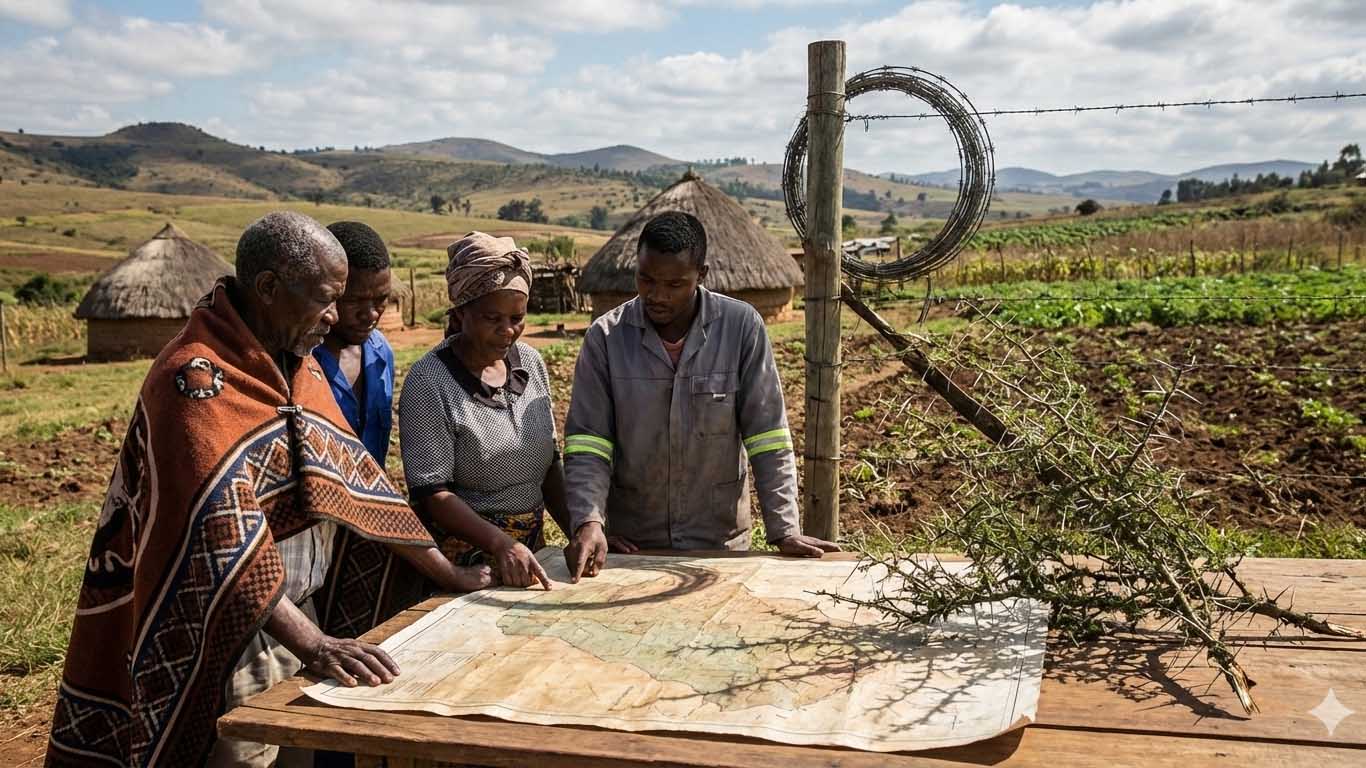
The land question in Eswatini is not an abstract historical footnote, it is the living seam that runs through nearly every major social and political fault line in the country. Recent reporting makes that plain: The Eswatini Commission on Human Rights and Public Administration says land disputes account for almost half of the complaints it receives, and government’s intervention in the long-running Mbondzela Farm conflict - including handover of newly-built homes - shows how acute and immediate these problems remain.
That stark 46 per cent figure should shock no one who pays attention to everyday life in our towns and rural communities. Land in Eswatini is where identity, livelihood and dignity meet and when allocation, ownership or access are contested, the consequences ripple outwards: Forced evictions, family dislocation, fuel for political grievance and local clashes that can erode trust in traditional authorities, courts and the State. The persistence of these disputes, decade after decade, suggests something less like an incidental administrative failure and more like a structural blind spot in our national project.
We can debate legal details - tenure instruments, the role of the Crown, statutory reform - and those debates are important. However, the conversation we desperately need is broader: A national reckoning with how land is governed, who benefits from existing arrangements and how dispute-resolution mechanisms can be made faster, fairer and transparent. Without that, episodic fixes - court orders, housing handovers, isolated mediations - will continue to paper over problems whose roots deepen with each passing season. The relief offered to displaced families at Mbondzela is welcome and humane, but it reads as triage, rather than cure unless accompanied by systemic change.
Central to any forward movement is honesty about the multiplicity of actors who make land disputes so intractable here. Traditional leaders, farm owners, commercial interests, government agencies and ordinary citizens all have stakes. Often, their interests collide and the legal and customary systems meant to adjudicate these tensions operate at cross-purposes. That confusion creates space for grievance and for exploitation. A national conversation should, therefore, include traditional leaders and smallholders, farmworkers and policymakers, women and youth who disproportionately bear the costs when access to land is contested.
We should also recognise the gendered dimensions of land conflict. Women frequently find themselves marginalised in land allocation practices and in dispute resolution, even as they carry out the bulk of agricultural labour and shoulder household welfare. Any meaningful reform must include legal protection for women’s land rights, active outreach to ensure women can bring complaints and receive remedies, and community education so cultural practices evolve in ways that protect, rather than penalise, women. The commission’s complaint statistics are a clarion call to integrate gender into land policy, not an afterthought. Public trust hinges upon two further reforms: Speed and transparency. Too many disputes are prolonged for years, leaving families in limbo and eroding faith in institutions. Where courts are engaged, delays and costs make justice inaccessible. Where customary processes operate, lack of clear procedures and record-keeping can make outcomes arbitrary. Investing in community-based dispute resolution, properly trained, impartial and accountable, alongside streamlined court pathways will reduce the backlog of grievances and the social cost of protracted conflict.
There is also an economic argument: Unresolved land disputes choke investment and productivity. Farmers who lack secure tenure hesitate to make long-term improvements. Potential investors shy from lands with contested claims. By contrast, clarity and secure land rights can catalyse development, improve food security and reduce the social welfare burden that arises from displacement and instability.
Finally, the national conversation must be accompanied by courage: To confront elite privileges, to legislate where customary practice harms rights, and to accept that some compromises will require compensation, redistribution or innovative legal mechanisms that blend customary legitimacy with constitutional protections. Political leadership will be tested, but the Mbondzela intervention shows the State can act; the question is whether that action will be episodic or part of a coherent reform strategy.
If the country is to move forward, land cannot remain the elephant in the room. Turning this thorn into a foundation for inclusive growth and justice will demand policy clarity, gender-responsive reforms, accessible dispute resolution and an honest national dialogue that includes those most affected. The path will not be easy, but the cost of inaction is already written in the complaints that flood the commission and in the lives of families uprooted by conflict. We owe it to those families and to the future of the nation to begin, openly and decisively, to sort out who owns what, why, and on what terms we all live together. Comments: 7938 6923
The land question in Eswatini is not an abstract historical footnote, it is the living seam that runs through nearly every major social and political fault line in the country.