MBABANE - For the country’s health sector to improve and provide the best services, there is a need for stronger legal frameworks.
In particular, there is a need for legislation that will regulate the operation of medical aid schemes.
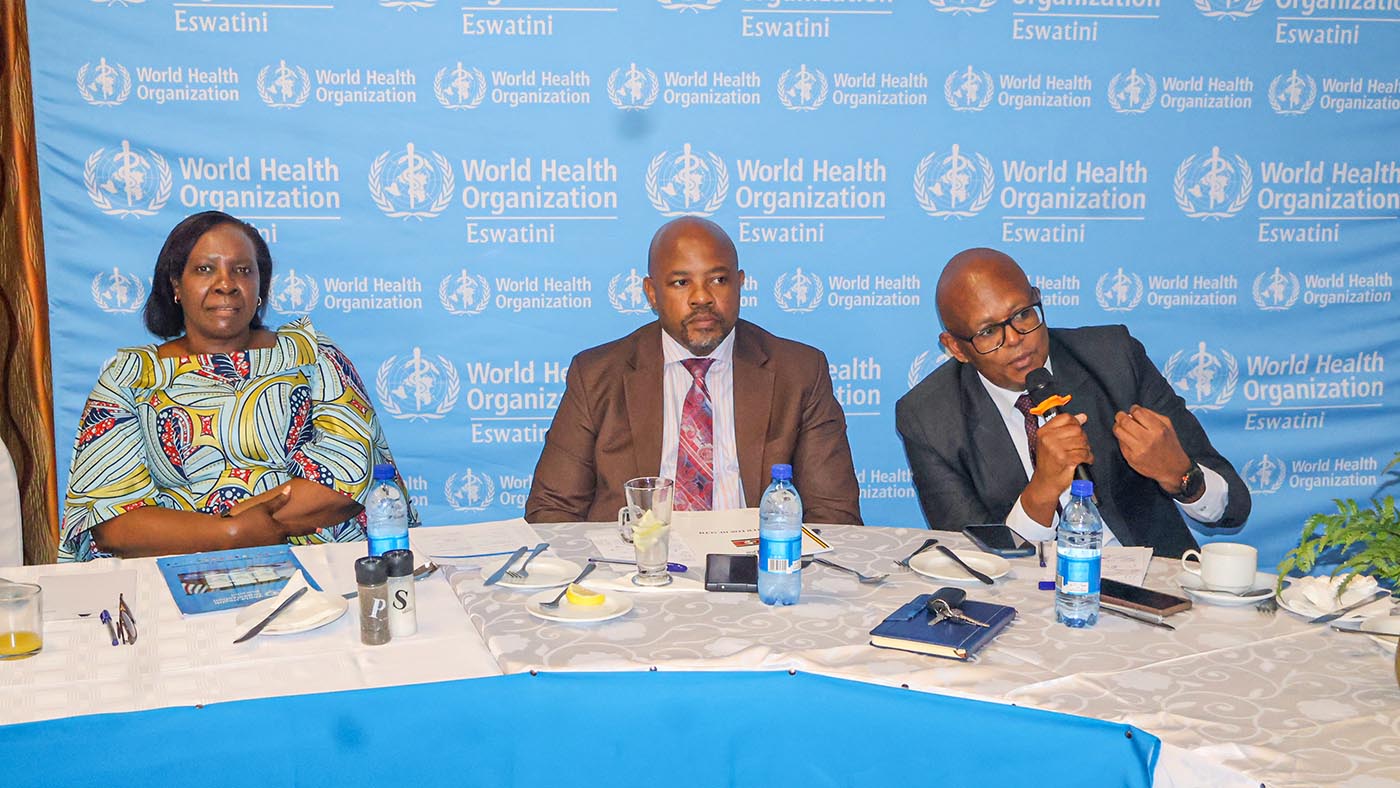
This is one of the submissions that were made during the commemoration of the World Health Day which was held by the World Health Organisation in collaboration with the Ministry of Health at the Mountain Inn yesterday.
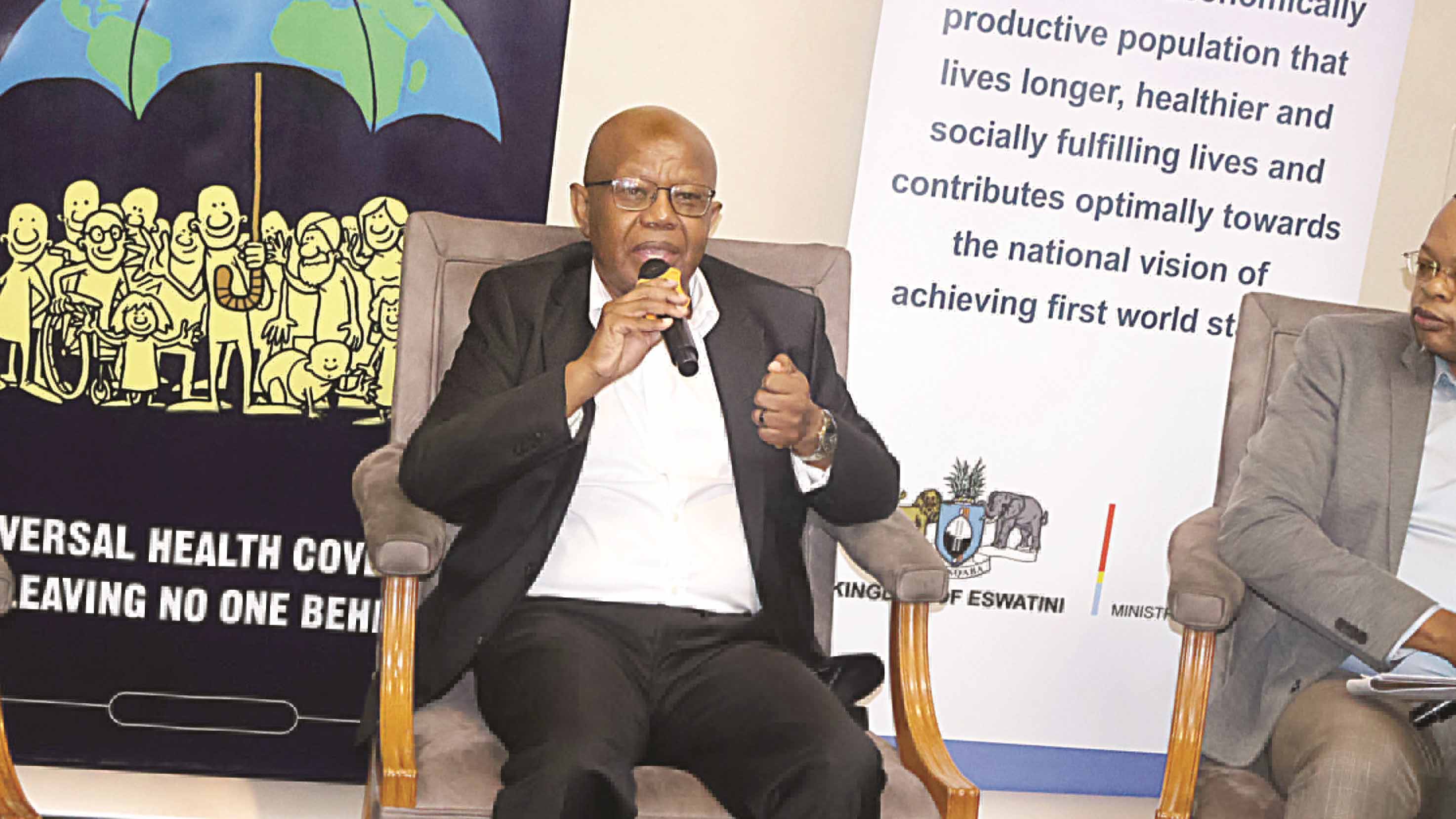
During a panel discussion, Dr Penuel Gina, Chairperson of the Business Eswatini Health Committee shared his views on how the private sector can support and sustain health financial by mobilising investments and strengthen public private partnerships.
Malinga said there are a number of ways in which the private sector can assist government in providing the best healthcare services.
He said the most important aspect that stakeholders need to look into relates to policy.
“One of the things I always wish government to look into is more on the regulatory frameworks. There are gaps and in particular, our wish is that government must establish a medical aid schemes legislation which is clearly defined. Ordinarily, we must have that mother body which look into the medical aid schemes,” Malinga said.
Another panellist who spoke at the event was The Clinic Group Medical Director, Doctor Khotso Ramphele who shared insights on how public-private partnerships (PPPs) can be effectively structured to accelerate universal health coverage (UHC) in Eswatini while ensuring robust mechanisms and strong regulatory oversight.
Ramphele said effective partnerships must be built on clearly defined roles and shared value between government and private players.
“Public-private partnerships have to be a mutually beneficial arrangement, whereby the private sector comes forward to bridge the gaps that have already been identified,” he said.
Ramphele noted that Eswatini continues to face significant healthcare needs, presenting opportunities for private sector investment and innovation. However, he cautioned that such partnerships must be carefully structured and cannot be developed hastily.
“We are aware of the gaps, and we are willing to come forward and invest,” he said, adding that success depends on a strong legal and regulatory environment.
*…
… WHO pledges continued support for Eswatini’s health system reforms
MBABANE - The World Health Organisation (WHO) has reaffirmed its commitment to support Eswatini’s universal coverage drive and health system reforms.
Speaking on behalf of the organisation during the World Health Day Commemoration yesterday, Dr Susan Tembo commended Eswatini for the progress made towards achieving Universal Health Coverage (UHC), while urging stakeholders to intensify collaboration to address emerging challenges. “It is a great honour and privilege to join the government and people of the Kingdom of Eswatini in commemorating World Health Day,” she said. “World Health Day is more than a symbolic moment, it is a call to action.”
Dr Tembo emphasised that health is not only a social good, but a fundamental human right and a critical pillar of national development. She explained that UHC ensures that all people have access to quality health services without suffering financial hardship. Eswatini, she noted, has made notable strides in advancing this goal through sustained investment in primary healthcare, strong disease control programmes and effective partnerships. “These achievements demonstrate what is possible when government leadership is matched with coordinated support from partners,” she said.
However, Dr Tembo cautioned that significant challenges remain. She pointed to fiscal constraints, shifting disease patterns, demographic changes and climate-related shocks as increasing pressures on the country’s health system. She also highlighted the decline in traditional external financing as a growing concern.
Against this backdrop, she described the recently launched National Health Financing Strategy 2025–2030 as a critical turning point for the country.
“This is not a continuation of business as usual,” she said. “It is a commitment to reform, towards a more coherent, pooled, and strategically purchased system that delivers real value for money.”
According to Dr Tembo, the strategy aims to strengthen domestic resource mobilisation, reduce fragmentation in health financing, prioritise primary healthcare and ensure that health spending translates into measurable outcomes.
Central to achieving these goals, she stressed, is the meaningful involvement of the private sector.
“Achieving Universal Health Coverage is not the responsibility of the public sector alone. It requires a whole-of-government and whole-of-society approach,” she said.
Dr Tembo acknowledged that the private sector already plays a significant role in Eswatini’s health ecosystem through service delivery, supply chains, insurance schemes, workplace health programmes, and innovation. However, she noted that its full potential remains underutilised.
*Full article available on Pressreader*