KUMASI, GHANA – Eswatini is committed to establishing a Council of Chiefs to complement its governance structure.
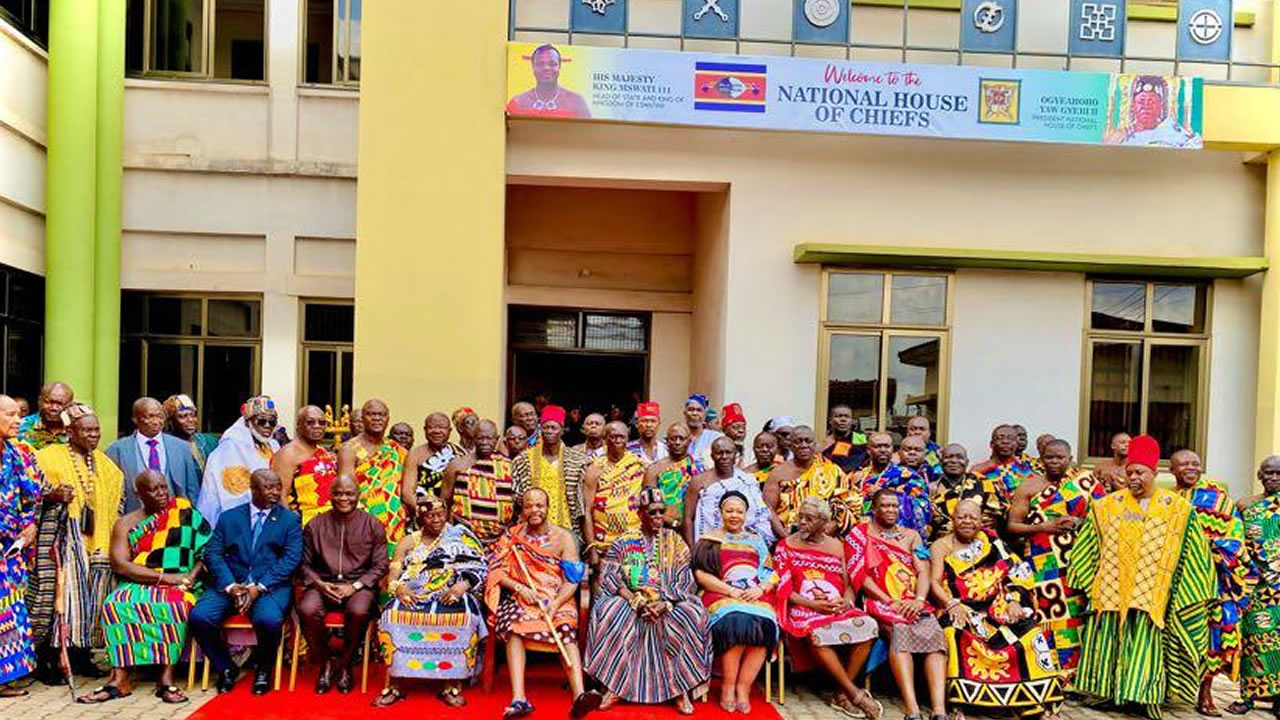
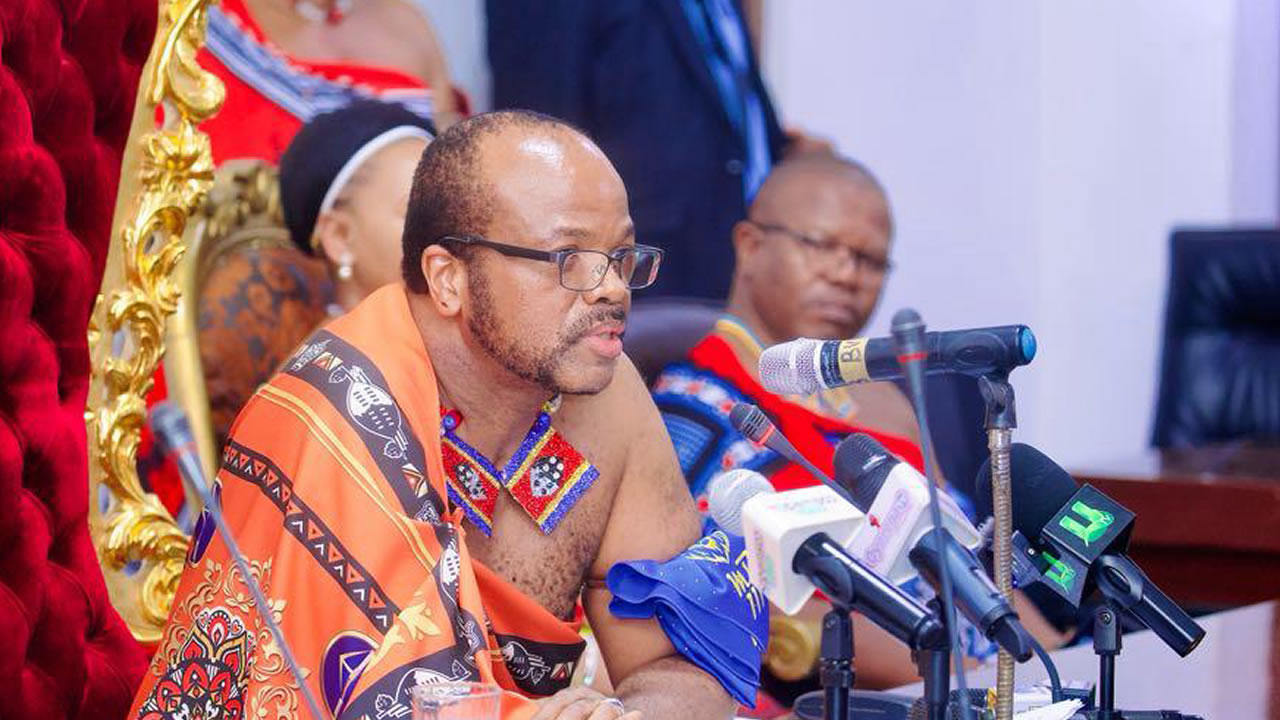
This was shared by His Majesty the King during a landmark address to Ghana’s National House of Chiefs in Kumasi. The King was introduced to the gathering by Foreign Affairs and International Cooperation Minister Pholile Shakantu.
Having a Council of Chiefs would place Eswatini as one of several African nations with formalised Houses of Chiefs or similar traditional leadership structures.
This new council will serve as a platform for chiefs to advise the State on matters of tradition, custom and cultural preservation, reinforcing their pivotal role in Eswatini’s monarchical democracy.
The King said the country’s commitment to this structure underscores a political will to harmonise tradition with modernity, ensuring that the wisdom of chiefs continues to shape national policies in a rapidly evolving world.
Frameworks
Provision for such a structure is contained in Chapter 14 of the national Constitution and is said to align with a broader African trend of recognising traditional leadership within governance frameworks.
The King emphasised that Eswatini’s chiefs, under the Tinkhundla System, are central to the nation’s identity, administering communities, resolving disputes and upholding the values of ubuntu - unity, respect, and progress. The new Council of Chiefs will amplify their role, ensuring their centuries-honed wisdom informs national laws and policies.
“This institutionalised role ensures that the wisdom of our chiefs continues to shape our laws and policies in a rapidly evolving world,” the King stated, highlighting the council’s potential to safeguard Eswatini’s cultural heritage amid globalisation’s challenges.
The King said that this initiative is a step towards ensuring that Eswatini’s traditions evolve to reflect its identity, securing a legacy of resilience for future generations.
ROLE OF CHIEFS SIGNIFIED
Brief research shows that countries such as Ghana, South Africa, Nigeria, Botswana and Uganda have established Houses of Chiefs or equivalent bodies to integrate traditional authority into modern State systems.
In Ghana, the National House of Chiefs, constitutionally protected under Article 270, serves as a custodian of traditional lands and cultures, with regional houses in 10 of the country’s 16 regions.
South Africa has a National House of Traditional Leaders and provincial houses in six provinces, namely; Eastern Cape, Free State, KwaZulu-Natal, Limpopo, Mpumalanga and North West, established under the Traditional Leadership and Governance Framework Act of 2003.
Nigeria’s traditional rulers, while not mentioned in the federal constitution, are recognised through State Councils of Traditional Rulers and Chiefs, with each State enacting its own Chiefs Laws.
Customary
Botswana’s Ntlo ya Dikgosi, a 35-member advisory body, includes hereditary and elected chiefs who advise Parliament on customary matters. Uganda’s cultural leaders, such as the Kabaka of Buganda, operate under the Institution of Traditional or Cultural Leaders Act of 2011, which recognises traditional institutions within a democratic framework.
The Council of Chiefs structure is supported by scholarly arguments emphasising the enduring relevance of traditional leadership in African governance. Professor Carola Lentz, a renowned anthropologist specialising in African chieftaincy, argues that ‘chieftaincy has come to stay’ in Ghana and other African States due to its role in mediating between the State and community, particularly in rural areas.
Lentz highlights that chiefs maintain local legitimacy and trust, enabling them to facilitate development and conflict resolution where State institutions may lack reach or cultural resonance.
This perspective underscores the value of Eswatini’s initiative, as the Council of Chiefs will institutionalise the role of chiefs as advisors, ensuring their influence is structured and impactful.
A 2018 study published in the African Journal of Rural Development examined the role of traditional leadership in South Africa’s Motlalepula village, finding that chiefs are ‘essential for bringing about constructive change’ in rural communities by mobilising cultural values to drive development initiatives.
Effective
The study, based on a mixed-methods approach with 86 participants, showed that chiefs’ involvement improved community cohesion and participation in local governance, leading to more effective service delivery in areas under customary law.
Similarly, a 2011 study in the Journal of African and Asian Local Government Studies on Botswana’s Dikgosi noted that the advisory body enhances policy legitimacy by ensuring cultural alignment, reducing tensions between modern and traditional governance systems.
These findings suggest that Eswatini’s Council of Chiefs could strengthen governance by fostering community trust, preserving cultural identity and bridging the gap between State and local priorities.
... pays tribute to King Sobhuza II, President Nkrumah
KUMASI, GHANA – His Majesty the King has paid tribute to Ghana’s first President, Dr Kwame Nkrumah, and Eswatini’s King Sobhuza II for their visionary leadership in securing independence for their nations while safeguarding traditional governance structures.
Speaking at the National House of Chiefs in Ghana, the King highlighted how both leaders worked closely with traditional authorities to ensure that African values remained central to governance. He noted that Ghana’s chieftaincy institution is enshrined in Article 270 of its Constitution, while Eswatini’s traditional leadership is protected under Chapter 14 of its Constitution.
Independence
“These leaders understood that independence was not just about political freedom, but also about preserving our identity,” the King said. “Kwame Nkrumah collaborated with Ghana’s chiefs to forge alliances, just as King Sobhuza II worked tirelessly with our chiefs to reclaim Eswatini’s sovereignty.”
The King emphasised that traditional leaders remain vital in modern governance, serving as a bridge between the past and the future.
He announced that Eswatini is establishing a Council of Chiefs, a formal advisory body to guide the State on cultural and traditional matters.
Queen mothers play vital role - His Majesty
KUMASI, GHANA – His Majesty the King has urged African nations to protect their cultural heritage from the eroding effects of modernity, emphasising the crucial role of Queen mothers in preserving traditions.
Addressing Ghana’s National House of Chiefs, the King stated that while Africa must embrace progress, it should not abandon the customs that define its identity. He praised Ghana’s Queen mothers and Eswatini’s Indlovukazi (Queen Mother) as pillars of cultural continuity.
“In Eswatini, there can be no King without the Queen Mother,” he declared. “She plays a significant role in the leadership of the kingdom, just as Ghana’s Queen mothers exemplify the strength of female leadership in governance.” The King warned against the marginalisation of traditional systems by Western democratic models, calling for innovation that respects African heritage. He cited Eswatini’s cultural ceremonies, such as Incwala, the Reed Dance and Lutsango’s Buganu Ceremony, as examples of practices that sustain national identity.