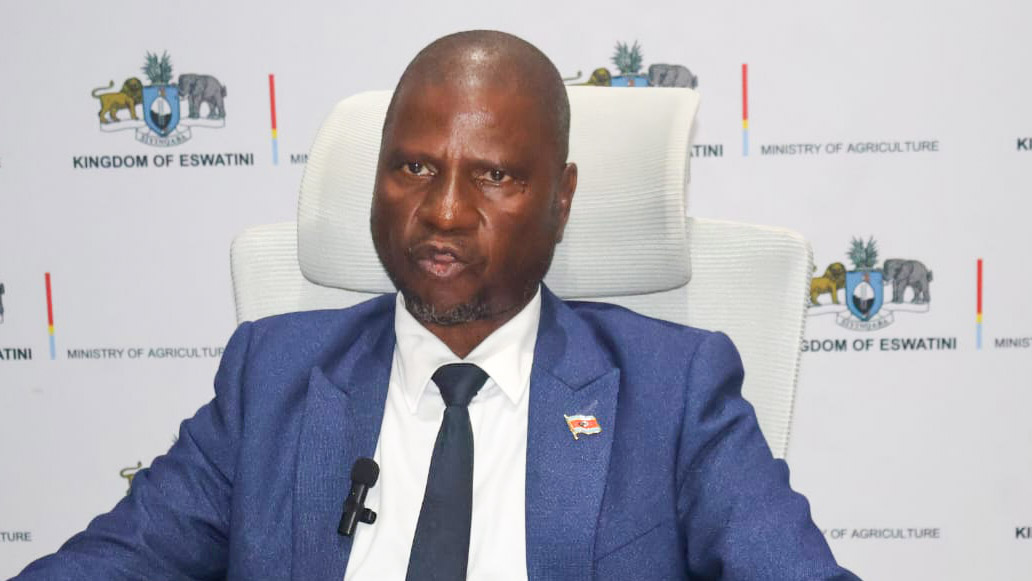
MBABANE-The Ministry of Agriculture has partially relaxed livestock movement controls, following progress made in the fight against Foot and Mouth Disease (FMD) through a nationwide mass vaccination campaign.
This latest development, which will come as good news to farmers and businesspeople involved in the meat industry was made by the Minister for Agriculture Mandla Tshawuka yesterday during a press briefing held at the ministry’s conference room.
Speaking on the latest development, Tshawuka stated that the country was beginning to see ‘great improvement’ in containing the disease, allowing for controlled movement of livestock under strict conditions.
The easing of restrictions comes after months of intensified vaccination efforts targeting cattle across high-risk areas, as part of a broader strategy to curb the spread of the highly contagious disease affecting cloven-hoofed animals.
The minister revealed that phase one of the national mass vaccinations has achieved greater results, whereby 214 dip tanks were targeted in areas where the disease was rife.
According to the ministry, over 156 020 livestock have been vaccinated two doses of the vaccine, carried out at an interval of 30 days apart.
Areas that were targeted under phase one included Lundzi, Luve, Sidvokodvo, Malandzela/Mayiwane, Ziyane as well as the Shiselweni Region
Under phase two, the ministry revealed that their targets is to reach 197 dip tanks in the Manzini Region and 153 in the Lubombo Region, with considerations given to cattle with over six months post vaccination, and those within the blue ring.
The blue ring refers to the country’s areas which are at high risks and here, the movement of cattle is strictly controlled though not banned.
For the Shiselweni Region, which is classified as a red ring since it is the core infected area, the ministry shared that dip tanks from these areas were now on the four to six month period.
To maintain immunity, the ministry said booster shots would be administered to an estimated 100 000 cattle. This will be done for areas along the Hluthi-Lavumisa-Lubuli corridor
There dip tanks located east of the barrier line towards the frontier/ border with Mozambique and South Africa.
Meat smuggling
However, even as government moves to restore normalcy within the livestock sector, Tshawuka warned that these gains were under serious threat from illegal activities, particularly the smuggling of meat into the country through undesignated entry points along the border with South Africa.
The minister explained how they recently intercepted the same group of individuals on three separate occasions transporting large quantities of meat illegally.
He said two of the incidents occurred at Oshoek Border Gate, while a third interception was made at Sandlane Border Post.
“In one of the cases, the suspects were found with approximately 3 400 tonnes of meat concealed in refuse plastic bags,” he said.
The minister said what was even more concerning was that the meat was not sourced from recognised abattoirs, but from unknown places.
“This raises serious health risks and undermines the work we are doing to control the disease,” he said.
He wondered how much illegally imported meat may have already entered the country undetected.
“If we are able to intercept such large consignments, how much more has already slipped through? This begs the question of whether we will win this fight if some people continue to water down our efforts,” he said.
The minister said illegal meat imports pose a direct threat to the success of the vaccination programme, which is central to the country’s FMD containment strategy.
Lenient
He further highlighted that current penalties for such offences have been too lenient, contributing to the persistence of the problem.
Owing to what he termed low fines for offenders, the minister said they have since pushed for amendments to strengthen fines and penalties in a bid to deter offenders.
“We hope the increased fines will act as a deterrent and strengthen our fight against the disease,” he said.
Fence theft along the country’s borders has also emerged as a major setback. Tshawuka disclosed that about 70 metres of veterinary control fence had recently been stolen, creating gaps that allow for uncontrolled movement of animals and meat products.
“These fences are critical in controlling animal movement. When they are stolen, they expose the country to further risk,” he said.
Optimism
Despite these challenges, Tshawuka expressed optimism that the country remains on track to contain the outbreak.
He noted that international markets have not withdrawn the country’s licence to export meat, indicating continued confidence in the country’s control measures.
He further revealed that government continues to submit progress reports to the World Organisation for Animal Health (WOAH), detailing vaccination coverage and infection trends.
Tshawuka assured the nation that after the completion of vaccinations, a monitoring phase will follow to assess any new infections before further reports were issued.
Firebreak injection
The minister said a ‘firebreak injection belt’ has been established to prevent the spread of the disease into unaffected regions, particularly the Hhohho Region.
He urged emaSwati to cooperate with veterinary authorities and seek guidance from local veterinary offices.
“We are making progress, but this fight requires collective responsibility. We cannot afford to have our efforts undermined,” he said.
Strict conditions still remain in place
Although movement controls have been relaxed, strict regulations remain in place.
The minister said livestock intended for slaughter must be inspected within seven days before movement, with a health certificate issued.
Farmers are required to obtain movement permits and transportation must take place within 48 hours of permit issuance.
Further, Tshawuka said all consignments must be sealed and accompanied by official documentation, including health inspection certificates and checkpoint reports.
“Animals from high-risk zones are only allowed to be slaughtered within designated abattoirs in those zones, while those from clean areas must remain within approved facilities,” he said.
Laslty, the minister said feedlot movements also remain regulated, with only registered bio-secure facilities permitted to receive animals under strict veterinary supervision.
Minister for Agriculture Mandla Tshawuka has announced the partially relaxation of livestock movement following a nationwide mass vaccinations that is yielding positive results towards containing Foot and Mouth Disease (FMD). Pic by Khaya Simelane