MANZINI – Despite government promises to phase out the lethal pesticide Masta 900, some emaSwati continue to abuse the chemical.
The Ministry of Agriculture confirmed last year that a sustainable solution was being developed following a public outcry over the widespread abuse of the substance. However, recent tragedies suggest that the chemical remains tragically accessible.
In February, a 23-year-old man of Khuphuka was found lying dead in his room after ingesting a poisonous substance while at Buseleni.
In March this year, a 21-year-old woman also ingested the poisonous pesticide at Magwanyana and had to be admitted to the Good Shepherd Catholic Hospital, where she was later revived. Also, in March a 24-year-old man of of Kandinda committed suicide by allegedly overdosing on poisonous substance and had left a suicide note next to her while inside the house at Manyisa.
Four months ago, the Minister for Agriculture Mandla Tshawuka disclosed that the Masta 900 ban remains on track, with the announcement of the effective date expected ‘very soon’. He said once the date is announced, a minimum of 30 days will be given to agro-dealers and members of the public in possession of the pesticide to dispose of it completely.
Minister Tshawuka explained that the banning of Masta 900 was in response to public outcry over deaths, attributed to the ingestion of the poisonous substance. He noted that the exercise of sensitisation for both the public and farmers was now nearing completion. He said if there is evidence of a decrease in the pesticide’s availability in stores, that is what the ministry expects.
“We cannot have barrels of Masta 900 still accessible when the ban is enforced, because getting rid of them will be difficult,” the minister had said to our sister newspaper Eswatini News.
The minister assured that the longevity of crop farming was still possible without Masta 900, as there were numerous less harmful alternatives that the ministry had already listed and which would be readily available in agro-dealerships. The identified substitutes include Decis Forte, Acephat 750 SP, Orthene 75 SP, Caragen, Judge, Emma, Tracer 120 SC, Steward and Ampligo. Farmers have been advised to use these pesticides as part of an integrated pest management approach.
The Ministry of Agriculture has warned that prolonged use of a single pesticide often results in pests developing resistance. This is reported to have been the case with Masta 900, as according to the ministry in its second quarter performance report debate responses, farmers in the Lubombo Region have reported reduced effectiveness, with some pests now resistant to it.
Meanwhile, Pesticide Action Network (PAN) has hailed countries to ban Highly Hazardous Pesticides (HHPs) that are harming people and the environment.
*Full article available on Pressreader*
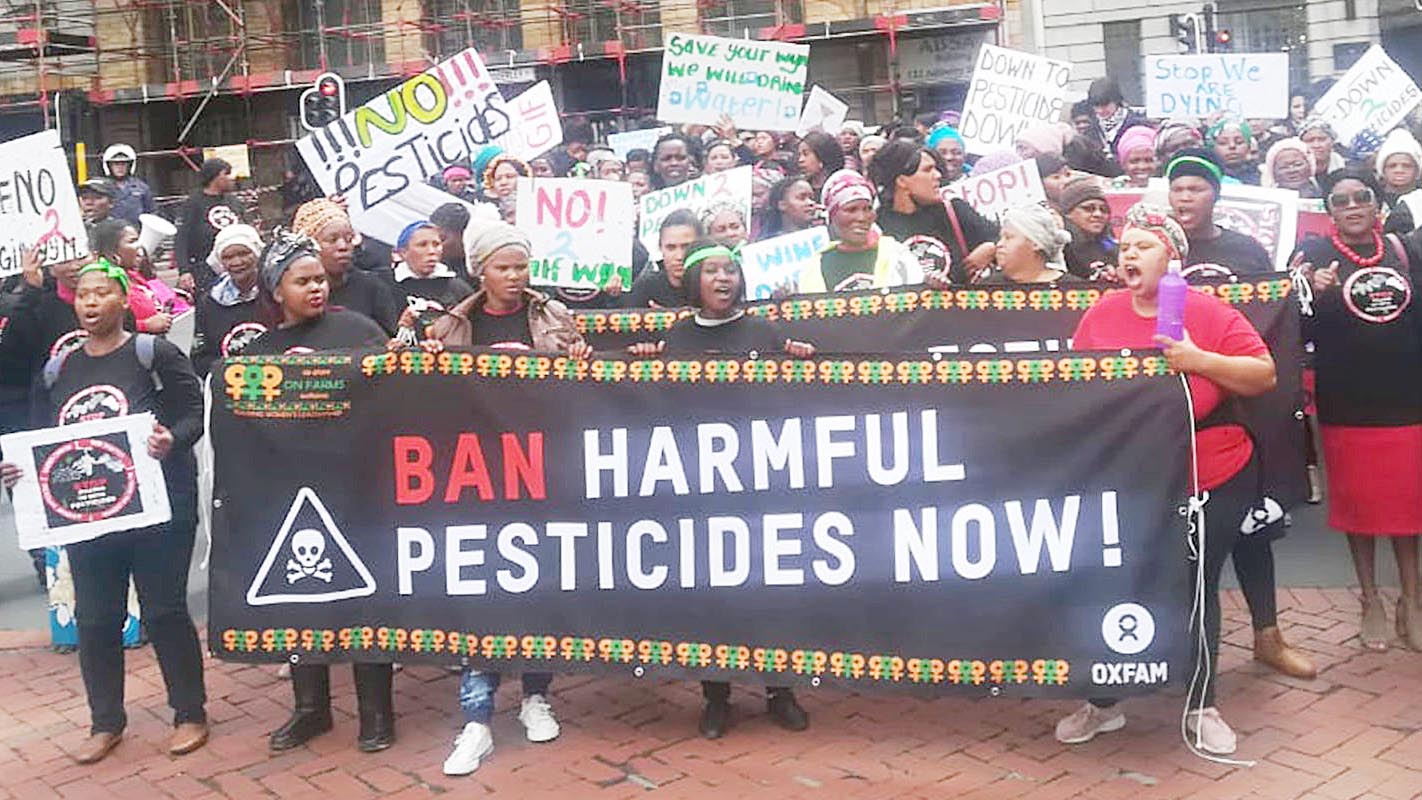
In some countries there is activism against harmful pesticides such as this march which was in South Africa recently. (Oxfam)