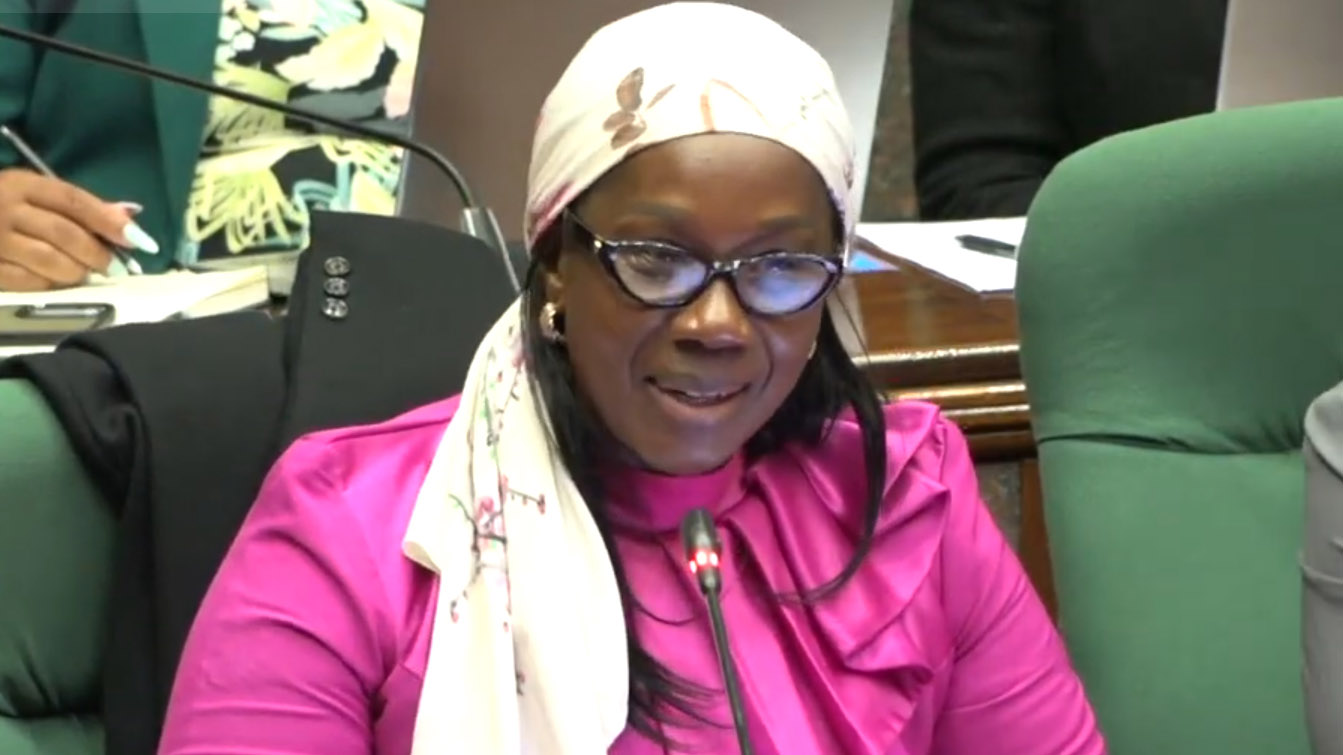
LOBAMBA – EswatiniBank requires a once-off government capital injection of about E300 million to strengthen operations, modernise systems and support its developmental mandate.
This was said by Managing Director (MD) Nozizwe Mulela during the Public Accounts Committee (PAC) hearing involving entities under the Ministry of Finance.
However, Mulela assured the committee that the bank was not facing collapse, saying strategies were already in place to improve its fortunes.
Her appearance followed concerns raised in Auditor General Timothy Matsebula’s report regarding the bank’s financial performance.
The MD moved to dispel claims made by Khubuta Member of Parliament (MP) Masiphula Mamba that reports suggested the institution required an E800 million bailout to remain operational.
In his report, the auditor general stated that the bank recorded a net deficit of E42.9 million for the financial year ending March 31, 2024.
He also noted a decline in dividend payments despite other commercial banks in the country reporting profits and positive growth.
Addressing the committee, Mulela acknowledged the findings and attributed the bank’s challenges largely to its dual role as both a commercial and developmental financial institution.
“Everything raised by the auditor general is correct. The challenge is that EswatiniBank carries two mandates. We are a commercial bank, but we are also a development bank. Those mandates often pull in different directions,” she said. She explained that while the bank generally performed well on the commercial side of its operations, difficulties arose in developmental lending, where projects often required long-term financing and carried higher levels of risk. According to Mulela, EswatiniBank was established primarily to drive economic development and support sectors that may not ordinarily attract funding from commercial banks.
However, unlike many development finance institutions, the bank has received limited capital support from its shareholders over the years.
She told the committee that government had invested approximately E189 million in the institution since its establishment more than six decades ago, with an additional E60 million injected in the early 2000s. As a result, the bank had often relied on commercial funds to finance developmental projects.
Mulela also pointed to the costs associated with the bank’s modernisation programme. For many years, EswatiniBank operated as a traditional banking institution with legacy systems and extensive manual processes supported by a nationwide branch network.
She said the banking landscape had changed significantly, particularly after the COVID-19 pandemic, making digital transformation unavoidable.
*Full article available on Pressreader*
EswatiniBank Managing Director (MD) Nozizwe Mulela requires a once-off government capital injection of about E300 million to strengthen operations, modernise systems and support its developmental mandate. (Courtesy pic)