MBABANE –While the South African High Court declared government plans for 1 500MW of new coal-fired power ‘unlawful and invalid’, an Eswatini coal investor favours the approach by the USA and other countries regarding the black rock.
On April 8, 2025, President Donald Trump signed Executive Order 14261 titled "Reinvigorating America’s Beautiful Clean Coal Industry and Amending Executive Order 14241".
Executive Order 14261 reverses previous environmental policies to prioritise domestic coal production and it mandates federal agencies to accelerate coal leasing on federal lands, reduce royalty rates and streamline permits.
The order aims to boost energy security for AI data centres and reduce regulations on coal-fired power plants, signalling a major shift toward fossil fuel reliance.
In South Africa, the African Climate Alliance, Vukani Environmental Justice Movement in Action and groundwork Trust successfully argued at the SA High Court that the new coal violated constitutional rights to a healthy environment, life and dignity.
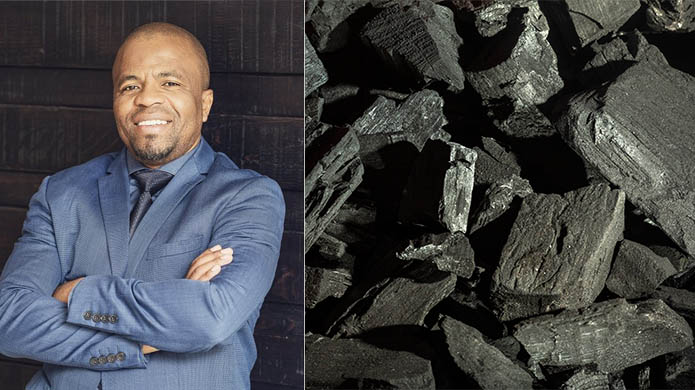
Ellington Nxumalo, the Director of Lurco Eswatini and South African businessman, says coal remains a critical energy source for underdeveloped and developing countries because it provides ‘affordable’, ‘reliable’ and ‘baseload electricity essential for economic development’ and ‘poverty reduction’. Nxumalo stated that coal-fired power is seen as an immediately available, indigenous and cost-effective option, reducing dependency on costly imported fuels in many emerging economies, particularly in Asia and Africa (South Africa, Eswatini, Botswana and Zambia as they have huge deposits.
On September 9, 2025, the USA Department of the Interior announced the opening of 13.1 million acres of federal land for coal leasing, tripling the benchmarks set by the landmark One Big Beautiful Bill Act and delivering on President Donald J. Trump’s directive to restore American energy dominance. This is what Nxumalo supports as a giant step taken by the United States, which countries like South Africa and Eswatini should understand to mean coal has not been phased out.
According to the Department of Interior, its action would help strengthen USA’s domestic supply chains and secure reliable energy.
Secretary of the Interior Doug Burgum signed this policy initiative during a Department of the Interior event focused on advancing Beautiful Clean Coal.
This milestone was reinforced by complementary initiatives signed by Environmental Protection Agency Administrator Lee Zeldin and Department of Energy Undersecretary P. Wells Griffith.
“President Trump promised to put American energy workers first and today we’re delivering,” said Secretary Burgum.
“By reducing the royalty rate for coal, increasing coal acres available for leasing and unlocking critical minerals from mine waste, we are strengthening our economy, protecting national security and ensuring that communities from Montana to Alabama benefit from good-paying jobs. Washington doesn’t build prosperity, American workers and entrepreneurs do and we’re giving them the tools to succeed.”
The Bureau of Land Management was reportedly making up to 13.1 million acres of federal coal available for lease, lowering royalty rates to strengthen competitiveness and streamlining approvals for projects in Montana, Wyoming, Tennessee and beyond.
In the USA, the department is also accelerating efforts to recover valuable minerals from mine waste and abandoned sites.
It is working with the USA Geological Survey and State partners to map mine waste deposits and fast-track projects that can recover strategic resources like uranium, zinc, germanium, tellurium and rare earth elements. These are materials that are vital for defence technologies, energy production and advanced manufacturing.
Lease sales under the One Big Beautiful Bill Act are already underway, including projects at Freedom Mine, Falkirk Mine in North Dakota and major expansions at Warrior Met, Skyline, Spring Creek and West Antelope III.
It is said that, together, these sales represent hundreds of millions of tonnes of coal and decades of energy production.
Section 1 of the Executive Order 14261 provides that, in order to secure America’s economic prosperity and national security, lower the cost of living and provide for increases in electrical demand from emerging technologies, they must increase domestic energy production, including coal.
Partly reads the Order: “Coal is abundant and cost effective and can be used in any weather condition. Moreover, the industry has historically employed hundreds of thousands of Americans.
“America’s coal resources are vast, with a current estimated value in the trillions of Dollars and are more than capable of substantially contributing to American energy independence with excess to export to support allies and our economic competitiveness.”
The Order provides that the nation’s coal resources will be critical to meeting the rise in electricity demand due to the resurgence of domestic manufacturing and the construction of artificial intelligence data processing centres.
“We must encourage and support our nation’s coal industry to increase our energy supply, lower electricity costs, stabilise our grid, create high-paying jobs, support burgeoning industries and assist our allies,” reads President Trump’s Executive Order.
Section 2 states that it is the policy of the United States that coal is essential to its national and economic security. Coal is described as a national priority to support the domestic coal industry by removing federal regulatory barriers that undermine coal production, encouraging the utilisation of coal to meet growing domestic energy demands, “increasing American coal exports and ensuring that Federal policy does not discriminate against coal production or coal-fired electricity generation.”
Section 3 speaks to the strengthening of USA’s national energy security by instructing the chair of the National Energy Dominance Council (NEDC) to designate coal as a mineral as defined in Section 2 of Executive Order 14241 of March 20, 2025 (Immediate Measures to Increase American Mineral Production).
This, according to the law, will entitle coal to all the benefits of a ‘mineral’ under that piece of legislation.
Section 4 addresses assessing coal resources and accessibility on federal lands.
It is said that, within 60 days of the date of this Order, the secretary of the interior, the secretary of agriculture and the secretary of energy “shall submit a consolidated report to the president through the assistant to the president for economic policy that identifies coal resources and reserves on federal lands, assesses impediments to mining such coal resources, and proposes policies to address such impediments and ultimately enable the mining of such coal resources by either private or public actors.”
The secretary of energy was ordered through legislation to include in the report an analysis of the impact that the availability of the coal resources identified could have electricity costs and grid reliability.
Section 5 speaks to the lifting of barriers to coal mining on federal lands. It is said that the secretary of the interior and the secretary of agriculture shall prioritise coal leasing and related activities as the primary land use for the public lands with coal resources identified in the report.
It is ordered that coal leasing be expedited coal in these areas, including by “utilising such emergency authorities as are available to them and identifying opportunities to provide for expedited environmental reviews, consistent with applicable law.”
Let us look at what other countries are doing.
Japan
The Times of Eswatini can also report that Japan continues to rely on coal imports. It is the world's third-largest coal importer, relying on foreign sources for 99 per cent of its supply, primarily from Australia.
Australia
Coal contributed E1.8 trillion (US$99.3 billion) to the national economy in 2022-2023.
It supports regional communities, directly employing 42 500 Australians and supporting more than 300 000 more jobs.
It has been learnt that Australians rely on coal and they rely on the people and communities that sustain our coal industry.
Despite climate commitments, it has been established that coal remains a cornerstone of Japan's energy, providing roughly one-third of its electricity.
Sources said the country focuses on "clean coal" technologies like high-efficiency ultra-supercritica (USC) plants, aiming for decarbonisation through carbon capture and storage
(CCS) and ammonia co-firing.
It has also been learnt that Australia's prosperity is directly linked to the success of the coal industry. It is said that coal provides this country with reliable and affordable baseload electricity.
On the other hand, coal is said to be also a critical mineral in making steel, meaning it is essential to build homes and infrastructure.
It is worth mentioning that the coal industry remains a contentious issue in the global energy landscape, particularly as nations are faced with the urgency of addressing climate change.
Research by this newspaper reveal that despite international commitments to reduce carbon emissions, coal continues to play a significant role in the energy mix of many developed and developing countries.
The situation varies widely across regions, reflecting differences in economic priorities, energy security concerns and political will.
Germany
In Germany, it has been established that the coal phase-out has been a central part of the country’s Energiewende (energy transition) policy. The government has committed to ending coal-fired power generation by 2038 at the latest, though debates continue about accelerating the timeline. Despite the expansion of renewable energy, Germany temporarily increased coal use in 2022 amid the energy crisis triggered by reduced Russian gas supplies. This highlights the tension between energy security and climate commitments even in highly industrialised nations.
China
China, the world’s largest coal producer and consumer, presents the most complex case. Coal accounts for around 55 per cent of China’s energy consumption. While Beijing has invested heavily in renewable energy and pledged to reach carbon neutrality by 2060, it continues to approve new coal-fired power plants to support economic growth and prevent power shortages.
This dual approach points to a challenge of balancing development goals with climate responsibilities.
Globally, while coal’s share in electricity generation is declining, it remains resilient due to its affordability and reliability.
Ellington Nxumalo, the Chief Executive Officer (CEO) of Lurco Eswatini and South Africa. (Pic: Engineering News)
 Advertisement
 Advertisement