

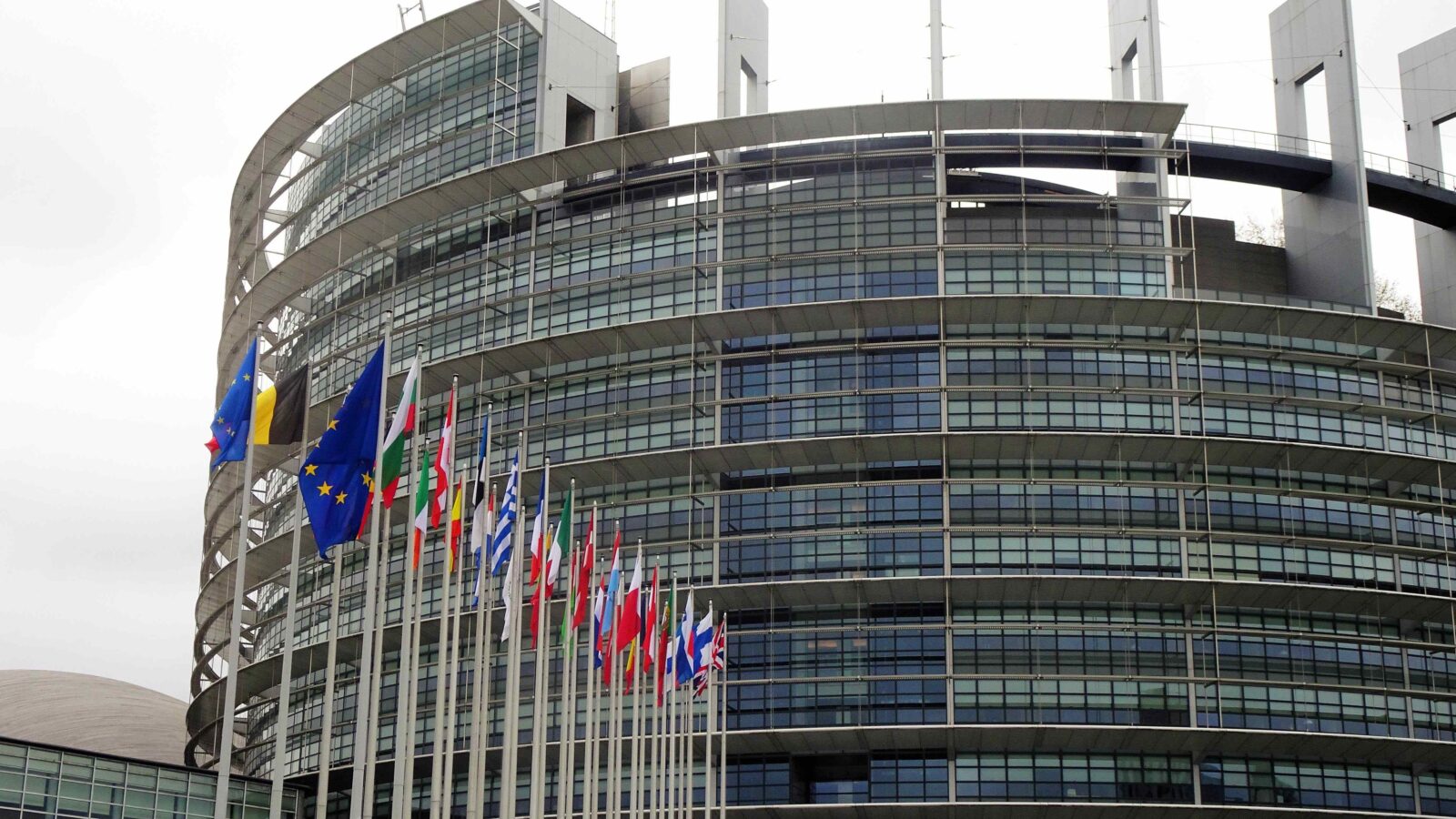
MBABANE – The European Union (EU) has said that the political and security situation in Eswatini remained stable in 2024.
This is despite the fact that the society is still polarised as it is still recovering after the protests of 2021.
This is contained in the 2024 EU’s Annual Report on Human Rights and Democracy.
According to the report, the 2023 assassination of prominent human rights lawyer Thulani Maseko remains a topical issue.
In response to Maseko’s murder, the European Parliament (EP) adopted a resolution strongly condemning the killing. The EP called for a prompt, independent, impartial, transparent and thorough investigation to uncover those responsible.
The EU report reveals that, in early December 2024, the Government of Eswatini replied to the European Parliament’s concerns.
In its letter, government accused ‘communist interests overseas’ of financing and directing the violent protests that took place in 2021. However, the letter also defended Maseko, describing him as a representative of constructive political forces within Eswatini.
Government urged the members of the European Parliament and the EU as a whole to support initiatives aimed at de-escalating conflict and strengthening democracy in the country.
Despite these calls and public pressure, the EU report notes that, to date, the investigation into Maseko’s murder has not produced concrete results.
The report also refers to incarcerated former MPs Mduduzi Bacede Mabuza and Mthandeni Dube.
It is stated that they have been in prison since July 2021, having had three bail applications rejected.
In July 2024, the High Court handed down sentences of 25 years for Mabuza and 18 years for Dube.
The report notes that the EU expressed concern over these sentences, appealing for a fair trial and transparent appeal processes for both men.
According to the report, the EU has maintained particular interest and presence in the case. It is mentioned in the report that the union observers have been consistently present at the MPs’ court proceedings with the aim of upholding justice, the rule of law and due process.
It is noted that, despite the outward appearance of stability in 2024, Eswatini continues to experience significant polarisation within its society. It is mentioned in the report that this tension is a direct result of the aftermath of the 2021 pro-democracy protests, which shook the country and led to increased scrutiny over government’s handling of dissent and political opposition.
The EU report mentions that more than 20 activists arrested in 2023 on allegations relating to political unrest and killings committed between 2021 and 2023 remain behind bars, with none having secured bail.
The report further reveals that civil society organisations (CSOs) believe the civic space in Eswatini has been shrinking since the 2021 crisis. The report states that complaints about human rights violations are on the rise, exacerbated by the limited capacity of the Commission for Human Rights and Public Administration, which remains understaffed and underfunded.
The EU report notes that, in 2024, the European Union continued to engage in wide-ranging dialogue with the Eswatini Government, including the King, Parliament, human rights groups, civil society and faith-based organisations.
It is stated in the report that these conversations focused on critical issues such as:
- The high levels of gender-based violence (GBV), which remain at near-pandemic levels, prompting calls from CSOs for national emergency status
- The protection of human rights defenders
- The need to open political space and uphold fundamental freedoms
- The desire to ensure fair trials and due process, not least in the cases of the two MPs and other detained activists
The EU report notes that EU actions have included advocacy for accountability for perpetrators of human rights violations and abuses, as well as continued monitoring of high-profile court cases.
According to the report, the first EU-Eswatini Partnership Dialogue under the Samoa Agreement was convened in July 2024. This important meeting covered a wide range of issues, including:
- Human rights, particularly freedom of association and expression
- Access to information for all citizens
- Legislation and enforcement to reduce GBV
- Rule of law and matters affecting judicial processes
It is mentioned in the report that, as a result of these discussions, the EU proposed establishing an annual human rights dialogue with Eswatini authorities, aiming for ongoing engagement on these sensitive matters.
Before this formal dialogue, the EU and its member States consulted widely with civil society and the Human Rights Commission, seeking input on the state of democracy, human rights and the rule of law in the country.
The report details that the EU is also supporting Eswatini through various projects aimed at raising awareness and advocating for the protection of democracy, human rights and the rule of law, alongside promoting gender equality and minority rights.
Among the projects highlighted are as follows:
- Back to School: Supporting the Human Rights of Children and Youth with Disabilities in Eswatini – This programme provides a package of support to help children and young people with disabilities recover from the educational impacts of the COVID-19 pandemic
- HLONIPHEKA (Thriving for Dignity) – Focused on preventing and responding to violence against women, girls and people with disabilities.
- Youth and Women Empowerment and Support (YES) – Together We Can: This seeks to build the capacity of local CSOs and promote the social inclusion of women and youth, especially in tackling GBV
- Civil Society in Action – A project focused on empowering community groups to promote freedom, good governance and human rights
It is mentioned in the report that government launched a draft Non-Profit Organisations Bill in late 2024. This Bill is currently under consultation and aims to clarify governance and set financial rules for non-profit organisations, ostensibly to prevent money laundering and the financing of terrorism.
Meanwhile, another ongoing concern is the legal recognition of sexual minorities. The report notes that, after a Supreme Court decision in 2023 against the registration of Eswatini Sexual and Gender Minorities, government again refused registration on formal grounds in 2024.
The organisation is still exploring further legal action.
The EU report highlights that, in 2024, concerns about Eswatini’s human rights situation were raised in international forums
For instance, the International Labour Organisation (ILO) made six recommendations, focusing on deteriorating trade union rights and the lack of accountability in crimes against unionists.
The report points out that Eswatini has not ratified several important global treaties, including the Rome Statute and various optional protocols relating to civil, political, economic, social and cultural rights, as well as the convention against genocide.
While the country has observed a de facto moratorium on the death penalty since 1983, it has yet to formally abolish this practice, according to the report.
The report also highlights that same-sex relations between men remain illegal, although this law is rarely enforced.
The EU’s 2024 report paints a picture of a country in a challenging transitional phase, marked by ongoing political tensions, a polarised society and active international engagement.
To address this challenge, it is stated in the report that the EU will maintain its focus on supporting accountability, the protection of defenders, promotion of justice and inclusion for all, especially in the closely watched case of former MP Mabuza.
The issue of Mabuza is still in court and comments from stakeholders could not be sought; the EU in Eswatini was not contacted because the report was produced by the head office and tabled before the European Parliament.
In a statement released in July 2024, it was stated that the European Union and the Government of the Kingdom of Eswatini held their first partnership dialogue on July 4, 2024.
The dialogue was held under the OACPS – EU Partnership Agreement (the Samoa Agreement).
It was mentioned in the statement that the dialogue, held in Mbabane, took place in a cordial, calm and constructive manner.
According to the statement, it covered international affairs, political and legislative matters, the rule of law, human rights, judicial matters, investment, business environment and development cooperation matters as well as climate change and greening the economy.
Former EU Ambassador to Eswatini, Dessislava Choumelova, co-chaired the meeting with the Minister for Foreign Affairs and International Cooperation, Senator Pholile Shakantu.
The ambassadors of Belgium, Finland, France, Ireland, Spain which are accredited to Eswatini from Pretoria and Maputo and senior diplomats representing Germany, Italy and Portugal also joined the EU side.
The government team included two other Cabinet ministers – the Minister for Commerce, Industry and Trade Manqoba Khumalo, the Minister for Economic Planning and Development Dr Thambo Gina, the Attorney General Sifiso Khumalo, Eswatini Ambassador to Belgium and the EU Sibusisiwe Mngomezulu and senior government officials.
It was mentioned in the statement that the parties reiterated their commitments to the shared values of their partnership based on democracy, the rule of law and the respect for human rights as stipulated in the Samoa Agreement.
The EU pledged its continued support to development initiatives in Eswatini.
It must be said that the EU partnership with Eswatini for the period 2021 – 2027 focuses on one priority area, which is human development and social inclusion through skills, and the empowerment of youth and the most vulnerable.
In her closing remarks, Choumelova emphasised the importance of upholding human rights, the rule of law and fighting corruption; a matter that is expected to form part of this year’s dialogue in September 2025.















Leave a comment