

MBABANE – As EEC seeks a 20.67 per cent hike to avoid insolvency, debt-ridden households warn that another price increase will push them beyond the point of survival.
The Eswatini Electricity Company (EEC) has defended its application for a 20.67 per cent electricity tariff increase for the 2026/27 financial year, citing financial necessity rather than profit motive.
This reality of EEC simply means that consumers, who are barely coping with the cost-of-living, must dig deeper into their pockets and as the proposed tariff hike is more than double the previously approved seven per cent increase.
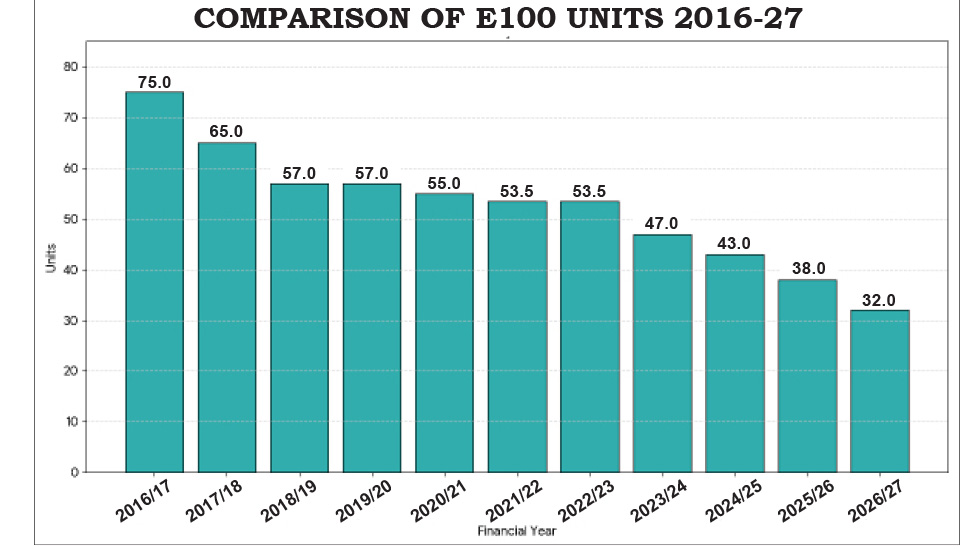
This proposed tariff increment, which the public is yet to submit on, if granted, consumers will see their purchasing power for electricity vanish. For E100, a customer will receive only 32 units, down from the current 40 units, with each unit costing E3.01.
The impact also transcends to those on the lifeline, which is designed for low-income households, as they are facing a proposed 15.6 per cent increase, while standard domestic users could see a staggering 26 per cent jump in their specific category.
Households, already buckling under a wave of price hikes for basic commodities, are facing a ‘breaking point’ as the electricity costs envisaged to increase in April 2026, are adding to other expenditures which have increased in recent months.
In October 2025, the price of bread, the ultimate staple for the working class, increased by seven per cent. This was effected while the public transport is still finalising its proposal for new bus fares.
They are projecting that the bus fare hikes will not be below 50 per cent. This, on its own, threatens household expenditure as parents and guardians use public transport for their children to and from school.
The pending increment on bus fares threatens to make the daily commute unaffordable for those in the private sector who saw only a modest average of five per cent cost-of-living adjustment, as per the approved Wages Council adjustments.
For most low earners, the start of 2026 feels less like a new beginning and more like an economic siege.
A comparison of basic commodity prices against wage growth shows a widening chasm that is limiting the purchasing power of the Lilangeni, as per an assertion of an economist.
*…
EEC attributes massive hike to soaring import costs
MBABANE – EEC attributes the need for the increase to soaring import costs and renegotiated contracts with regional suppliers, notably South Africa’s Eskom (NTCSA) and EDM.
An independent economist said the primary and most critical reason for this adjustment request is not due to the utility’s operational inefficiencies or a desire for increased revenue, but a direct result of unexpected and externally imposed costs for importing electricity.
He said this in response to the Swaziland Consumer Forum (SWACOF) assertions, where it vehemently condemned utility’s proposal for a 20.67 per cent tariff hike, labelling the move an unjustified and regressive burden on an already strained populace.
The application, submitted to the Eswatini Energy Regulatory Authority (ESERA), seeks an additional E437.9 million in revenue for the 2026/27 financial year.
SWACOF warned that the increase threatens the livelihoods of 60 per cent of the population living in poverty.
With many households already surviving hand-to-mouth, SWACOF said higher utility costs could force families to choose between electricity and necessities like food, healthcare and education.
The forum highlighted that the hike would disproportionately affect the elderly, rural families and small home-based businesses, potentially widening the gap in one of the world’s most unequal societies.
Criticising a perceived lack of transparency, SWACOF questioned the jump from the previously approved seven per cent increase to over 20 per cent, citing poor planning and a disregard for consumer welfare.
The body called for a full audit of EEC’s operational efficiencies and a shift towards renewable energy rather than penalising the public.
The current financial strain is exacerbated by a historical decision where, for the 2025/26 year, ESERA had initially approved a 14 per cent average increase, which was subsequently reduced to eight per cent without a compensatory funding mechanism.
This, he said, created an immediate tariff-cost mismatch, forcing EEC to absorb rising costs within a constrained revenue framework from the outset.
*…
Financial statements indicate dire situation – report
MBABANE – Eswatini Electricity Company (EEC) is not crying wolf; its financial statements indicate a dire situation, according to the annual financial report.
An economist said the utility is projecting a cash flow deficit of E231 million by March 2026, while it is already operating at a gross loss and a significant operating loss.
He said EEC has frozen capital projects, cut operational spending and maxed out its overdraft. Critically, he said, the new power import contract requires a security guarantee of about E200 million by 2027, which EEC cannot provide under current revenues.
“If the tariff adjustment is not granted to cover these specific import costs, EEC faces severe liquidity risk and contractual non-compliance. This directly threatens the long-term security and reliability of the electricity supply for the entire nation.
“The choice is not simply between higher or lower bills, but between a financially sustainable utility that can keep the lights on and one that risks operational collapse,” the economist said.
*Full article available on Pressreader*
















Leave a comment