Madam,
I recently read Joseph Zulu’s article titled: ‘Four years later: Family believes river will release missing son,’ and found myself deeply unsettled, not by the story itself, but by my reaction to it.
The account of a father who believes his son, missing since 2021, will return from the river initially felt impossible to me, almost like a fairy tale. Yet, as I reflected further, I realised that what I was confronting was not fiction, but a belief system rooted in our own cultural understanding, one I had instinctively dismissed.
What struck me most was the complexity of the father’s position. As a Christian pastor, his faith remains intact, yet in his search for answers, he has turned to traditional healers who believe his son is alive, undergoing spiritual initiation beneath the water. To some, this may sound like grief speaking. To him, it is faith.
This raises a deeper question: What does it mean when a man grounded in Christianity seeks hope through traditional African spirituality? Is it a contradiction or does it reveal something about the limits of how we have come to define belief?
I found myself judging the situation through a Western religious lens, one that insists such survival is impossible. Yet in African tradition, there are long-held beliefs about spiritual callings and initiation processes under the guidance of tinyanga. Whether one accepts these beliefs or not, they have shaped generations before us.
Our forefathers lived within these systems. They found healing, guidance and meaning through them. Their faith, like all faith, was built on hope. Today, however, we often find ourselves quick to dismiss these same beliefs, while accepting others without question.
Having been exposed to both religions, even in their Bible, Matthew 19:26 reminds us: “With man this is impossible, but with God all things are possible.” This Scripture is often used to affirm the boundless nature of faith, yet it also exposes how differently we interpret ‘possibility’ depending on the belief system we are speaking from.
In African traditional spirituality, similar ideas of the unseen, the spiritual journey and transformation beyond ordinary human understanding also exist. The language may differ, but the underlying theme of faith in the unseen remains strikingly similar.
This is where my reflection deepens. If both systems speak, in different ways, about realms beyond human logic, then why do we so easily elevate one while dismissing the other as superstition?
Perhaps the real issue is not belief itself, but familiarity. What we inherit through history we tend to accept as truth, while what we are born into, we are taught to question.
We once existed as a people deeply connected to our identity, through our traditions, spirituality and worldview. There are certain landmarks that still stand as reminders of that enduring presence. Yet somewhere along the way, we began to distance ourselves from parts of that identity.
I cannot say whether the young man will return. Instead, I can say that this story forces us to reflect, not only on faith, but on how we define truth, belief and cultural legitimacy.
Perhaps the real question is not whether one system is right and the other wrong, but whether we have fully understood the value of both.
I do not write to undermine any religion. I write to question, to reflect and to stand, as always, with humanity.
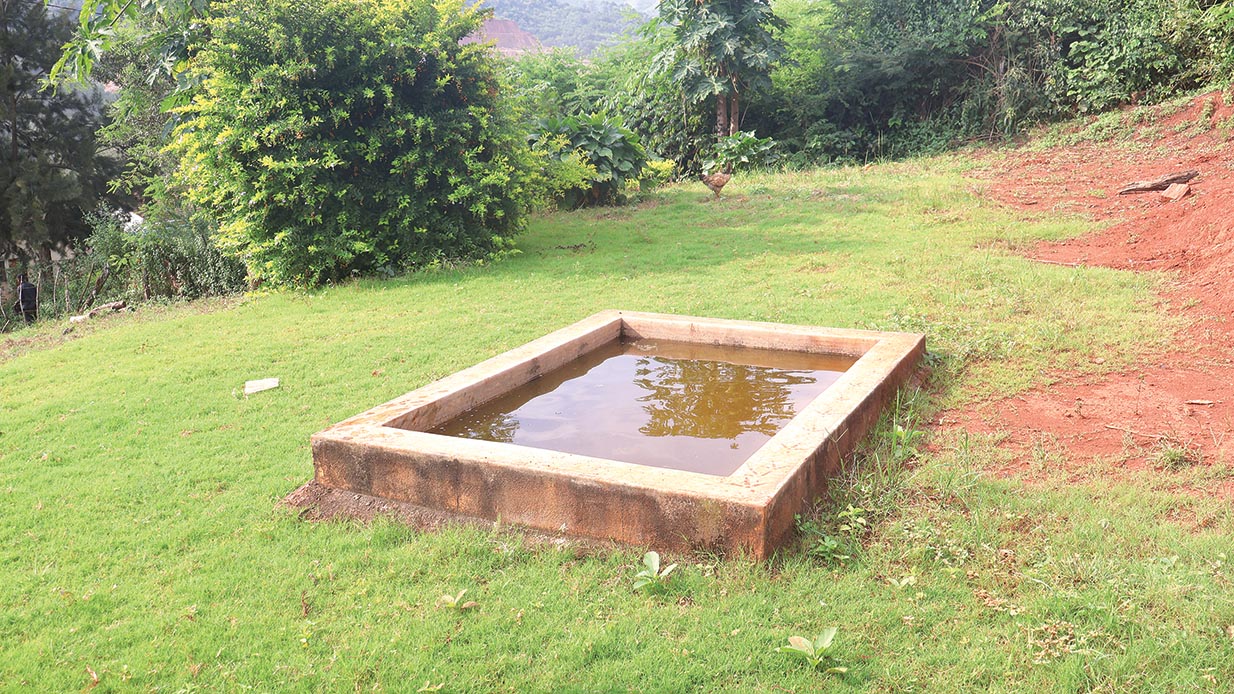
A pond constructed for the return of Kholwa Dlamini, who has been missing for over four years. (Pic: Joseph Zulu)