Madam,
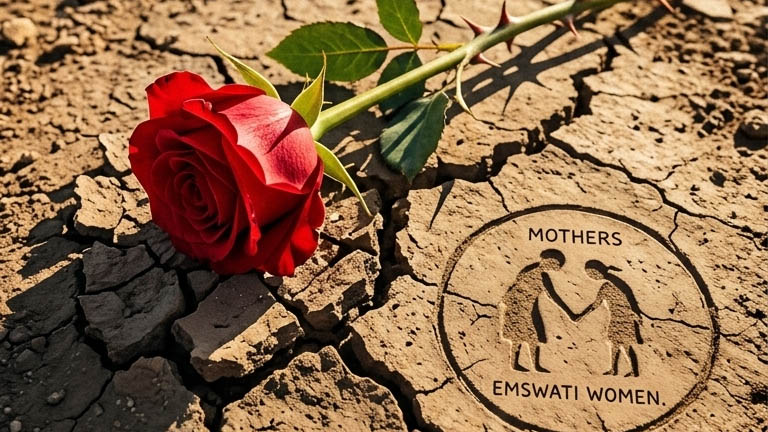
I am grateful for the kind gesture to be allowed to write, although it is with a heavy heart due to the deafening silence of human rights organisations, who in the expense of their insouciance, continue to indirectly put the lives of our women counterparts on the edge. In my preoccupied life, I was rather obliged to stop and address the issue of ‘femicide’ across our beautiful motherland Eswatini. It’s an alarming fact for a country with a small population that we have such high femicide rates as we were once a sought after haven of a country, since it was an exemplary epitome of love and respect
I have sat and, in-between sobs, read cases of spousal abuse, which in most cases end in murder. One is even tempted to question what love really is - does it have the ability to even go to the lengths of killing, if push comes to shove?
Why are our fellow emaSwati butchering one another in the name of love? It has always been the reality that the nation was anchored on Christian values; nonetheless, it is surprising that we seem to be ignorant of the sub-virtues of love which Christianity encourages. Love is being patient and kind, not envious, arrogant, rude, irritable and resentful. The intriguing question then becomes; why is it that contemporary love seems to produce quite the opposite of the Bible’s attributes of love? Or maybe there has been a re-defining of terms. The Bible always has emphasised on agape between lovers, not eros, which seems to be the most used of late. Where in the Bible, for the women’s sake, are partners commanded to kill one another? Kani konakale kuphi? Ngatsi kwamele sibuyele emasisweni.
The nefarious scheme of spousal killing really is a bone of contention because when paying attention to the insensitivity of the cases, the desperate need for intervention and a stern voice is much required.
I can’t then propose without disposing a possible solution. It is worth mentioning that my resolutions are not, however, binding but liberal and subject to questioning. It is, nonetheless, shameful how the younger generation has created a whole new inexcusable idea of what love is.
One of the root causes for growing cases of spousal killings, I have concluded, is related to a condition called post-traumatic slave syndrome (PTSS). Many emaSwati are unfortunately ignorant of such and only conversant to the better-known stress disorder (PTSD). PTSS was proposed by an American, Joy DeGruy Leary. In his thesis, a book written in 2005, he relays that slavery or abuse creates inter-generational psychological trauma, leading to instances where abuse is inherent to one’s generation.
He makes reference to the Atlantic slave trade and issues faced by Africans in America, arguing that they suffer from this syndrome.
It is no wonder then that some people may relate to this; where in their past or current relationships, a partner would say ‘I like men who beat me’, a partner would even leave if not abused and some partners would derive pleasure from beating their partners (also known as sadists).
These people don’t need prayer but help, they are sick; we are tempted to pray for them yet they don not change.
What this means for bachelors who aspire to tie the knot is that careful and God-guided consideration has to be made, specifically on the person’s historical trace of relationships, before you get too comfortable.
Don’t bury your head in the sand; abuse is, as it seems, somewhat hereditary. Your partner might be a survivor of abuse, thus they may perpetuate the cycle and victimise others. People do not just go haywire, there is usually a cause. Be careful.
The nefarious scheme of spousal killing really is a bone of contention because when paying attention to the insensitivity of the cases, the desperate need for intervention and a stern voice is much required.