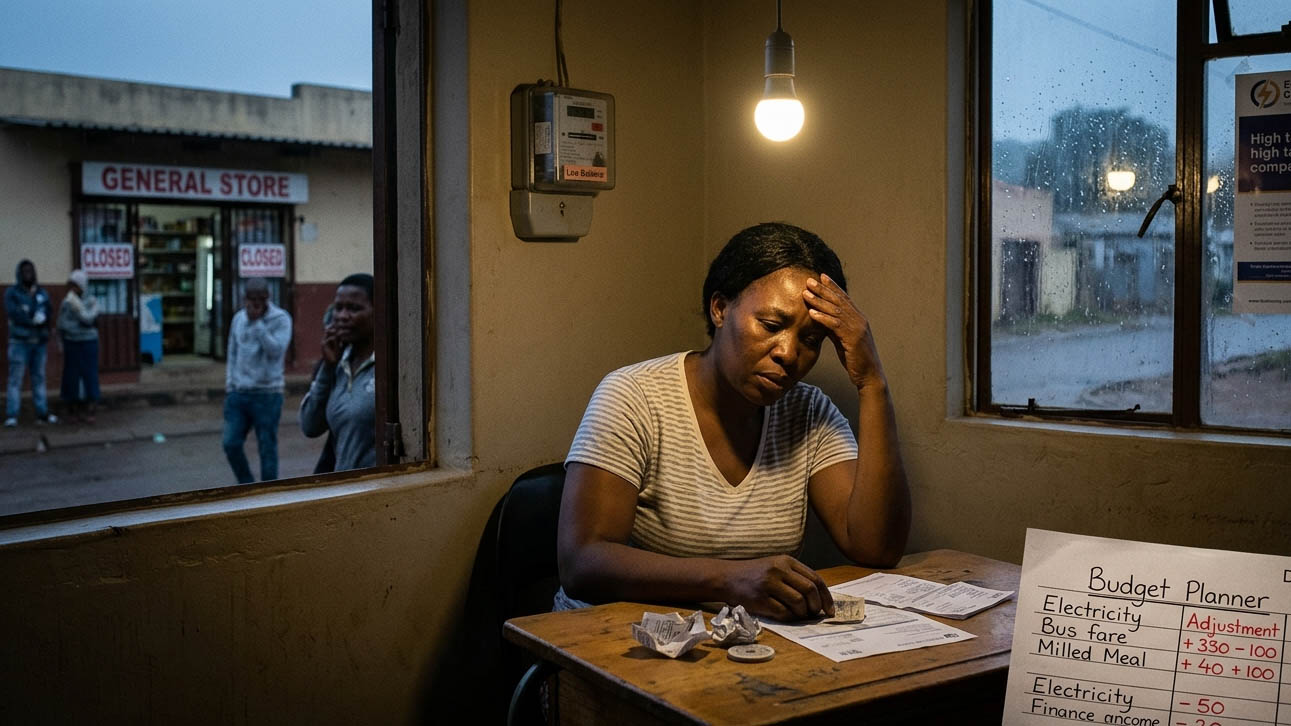
I write with a deep sense of unease and, indeed, quiet desperation shared by countless emaSwati who find themselves increasingly suffocated by the relentless escalation in the cost of living.
The recent upward adjustments in electricity tariffs and fuel prices have not merely strained household budgets; they have fundamentally altered the lived realities of ordinary citizens, pushing many to the brink of economic survival. Electricity, once considered a basic utility, is fast becoming a luxury. With each tariff hike, families are forced into impossible choices: Whether to keep the lights on, preserve perishable food or redirect those scarce funds towards school fees and daily sustenance.
Small businesses, already operating on precariously thin margins, now face the grim prospect of scaling down operations or closing altogether as operational costs surge beyond manageable levels. Equally troubling, is the ripple effect of rising fuel prices. Transport costs will surge, inevitably inflating the price of goods and services across the board.
From the commuter who must now dig deeper into their pocket ,simply to get to work, to the rural farmer who struggles to bring produce to market, the consequences are far-reaching and deeply inequitable. What we are witnessing is not an isolated economic adjustment, but a cascading crisis that disproportionately punishes the most vulnerable.
While it is acknowledged that global economic pressures and regional dynamics may necessitate periodic adjustments, the absence of sufficient cushioning mechanisms for ordinary citizens is both disconcerting and unsustainable. One is compelled to ask: Where are the robust, responsive policies that shield the public from such shocks? Where are the targeted subsidies, the transparent pricing frameworks and the long-term strategies aimed at stabilising essential costs? There is an urgent need for authorities to engage in meaningful dialogue with the public, to provide clarity on the rationale behind these increases and crucially to outline tangible measures that will mitigate their impact. Economic policy must not exist in abstraction; it must resonate wit and respond to the daily struggles of the people it is meant to serve. If left unaddressed, this mounting pressure risks eroding not only economic stability, but also public trust. A nation cannot thrive when its citizens are perpetually preoccupied with survival. It is, therefore, imperative that decisive, compassionate and forward-thinking interventions are prioritised.
The recent upward adjustments in electricity tariffs and fuel prices have not merely strained household budgets.