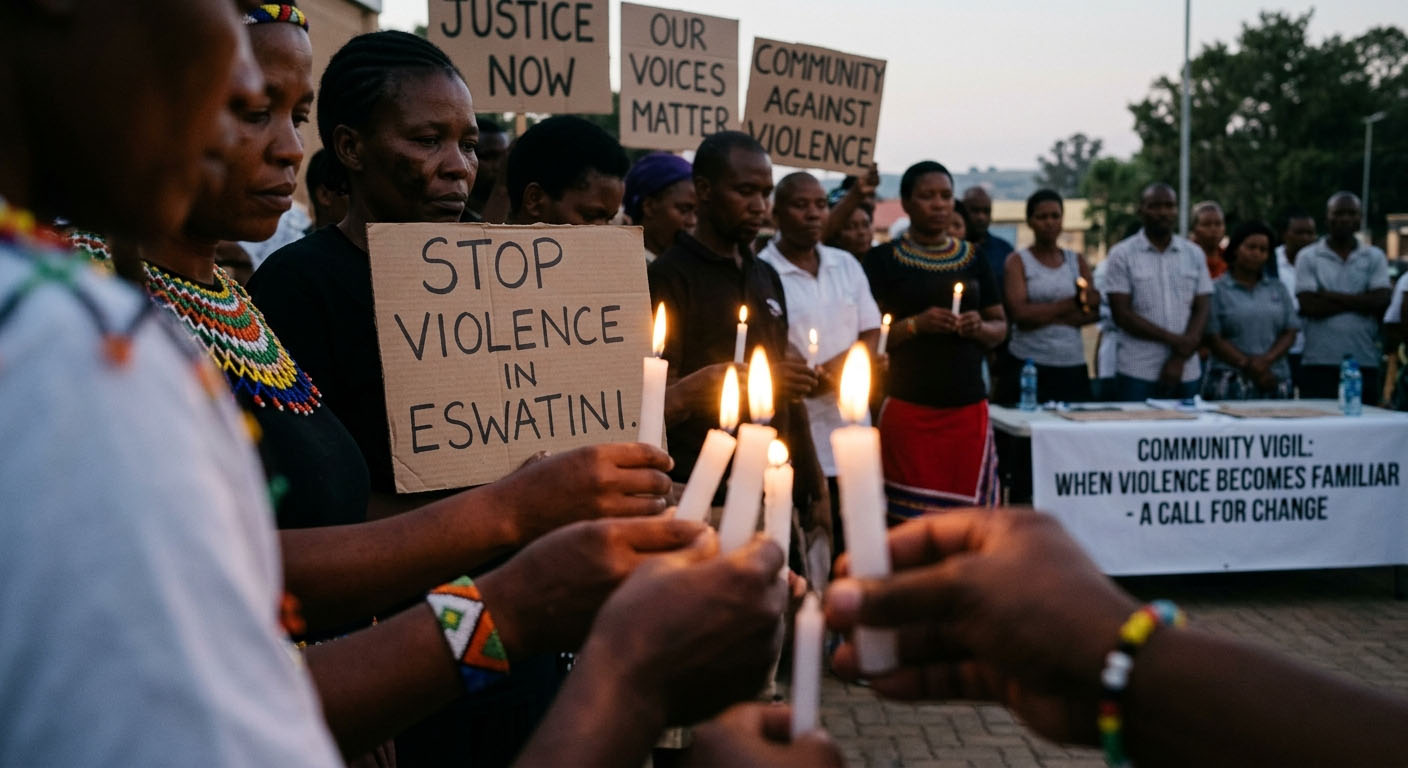
The recent spate of gruesome violent crimes reported in Eswatini has left the nation shaken.
Reports of a church leader facing charges relating to the deaths of several women, alongside allegations of sexual offences and the tragic murder-suicide that recently claimed innocent lives, have reignited a painful national conversation about the state of our society.
These incidents, while different in circumstance, point to one disturbing reality: violence is becoming an increasingly visible feature of our communities.
It is important to remember that every accused person is presumed innocent until proven guilty in a court of law.
Yet irrespective of how these particular cases are ultimately decided, the broader pattern they expose cannot be ignored.
They force us to ask uncomfortable questions about why extreme violence continues to surface and whether enough is being done to prevent it before lives are lost.
Crime of this nature does not emerge in isolation. It is often the culmination of untreated trauma, unhealthy concepts of power and masculinity, domestic conflict, substance abuse and communities that have gradually become desensitised to warning signs.
Families sometimes dismiss troubling behaviour as ‘private matters,’ neighbours choose silence over intervention and victims frequently suffer alone because of fear, shame or the belief that they will not be believed.
The recent murder-suicide is a painful reminder of how unresolved interpersonal conflict can spiral into irreversible tragedy. It also highlights the urgent need to improve mental health awareness in Eswatini. Emotional distress, possessiveness and uncontrolled anger should never be accepted as normal aspects of relationships. Healthy conflict resolution must become a skill taught from childhood rather than a lesson learned after lives have already been destroyed.
Government also has a significant role to play. Law enforcement agencies deserve recognition whenever they move swiftly to investigate serious crimes and bring suspects before the courts.
However, policing alone cannot solve a societal problem. Crime prevention must begin long before detectives arrive at a crime scene.
Greater investment is needed in community policing, counselling services, victim support programmes and mental healthcare. Schools should incorporate stronger life-skills education focusing on emotional intelligence, gender respect, conflict management and responsible relationships.
Religious institutions, traditional leaders and civic organisations should equally become active partners in identifying vulnerable individuals and supporting families before situations deteriorate into violence.
The justice system must also continue demonstrating efficiency in handling serious criminal matters. Justice delayed not only prolongs the suffering of victims’ families but can also weaken public confidence in the institutions responsible for protecting society. At the same time, fair trials remain essential because justice requires both accountability and due process.
There is also a responsibility that rests with ordinary emaSwati. We must move away from the culture of minding our own business when obvious signs of abuse, threats or dangerous behaviour emerge. Reporting suspicious conduct should never be viewed as interference but as an act of protecting human life. Communities that look after one another become far more resilient against crime than communities bound together only by proximity.
Eswatini has overcome many challenges throughout its history because of its strong sense of community. That same collective spirit is now needed more than ever. We cannot afford to become numb to headlines of rape, murder or domestic violence. Every victim represents a family forever changed and a community left searching for answers.
The recent cases should, therefore, serve as more than shocking news stories. They should become a national wake-up call that reminds us violence is not merely a policing issue; it is a societal issue. Only through stronger families, responsive institutions, effective mental health support, accountable leadership and vigilant communities can Eswatini begin reversing this troubling trajectory and restore the safety and compassion that have long defined the nation.
The recent spate of gruesome violent crimes reported in Eswatini has left the nation shaken.