As President Cyril Ramaphosa delivered South Africa’s 2026 State of the Nation Address, the emphasis was on shifting gears from rhetoric to implementation, particularly in areas of economic growth, governance reform and expanded national dialogue to strengthen the social contract. These priorities resonate not merely as regional context, but as imperatives for the kingdom. The country’s economy is deeply integrated with that of South Africa and the Southern African region. It is imperative, therefore, that we analyse the SONA and posture the kingdom to reap benefits, where possible and mitigate where necessary.
Shared challenges, divergent trajectories
South Africa’s list of challenges include unemployment, inequality and lagging service delivery. These mirror many challenges faced by Eswatini, albeit on a smaller scale. The country’s economy has grown modestly in recent years after the pandemic, but growth remains fragile and highly dependent on South African trade links and Southern African Customs Union (SACU) revenues. The country also faces unique structural constraints, including heavy reliance on SACU receipts, limited diversification in exports, and a small domestic market. Persistent public sector weaknesses in health and other key services, exacerbated by resource constraints, further complicate the picture. At the same time, the country has secured important development partnerships, such as loans from the African Development Bank designed to support sustainable growth, fiscal resilience, and private sector development, as well as longstanding EU technical cooperation in agriculture and trade.
Security, governance in focus
Several cross-border issues have emerged as sources of friction and risk. Most notably, acceptance of immigrants from the United States, including individuals with serious criminal convictions, has triggered concern from Pretoria over potential security and immigration implications.
While government has defended its sovereign decisions, the situation underscores the importance of shared security frameworks and cooperative border management in the region. Moreover, rising distrust of African immigrants in South Africa, driven by economic anxieties highlights a broader regional security and social challenge that smaller states like must navigate carefully.
The tightening of borders in South Africa will affect education and health outcomes of emaSwati on living near the border as they are used to accessing services from South Africa. Therefore, it is imperative that we strengthen our education and health system to mitigate against inequality in access.
Infrastructure, supply chains
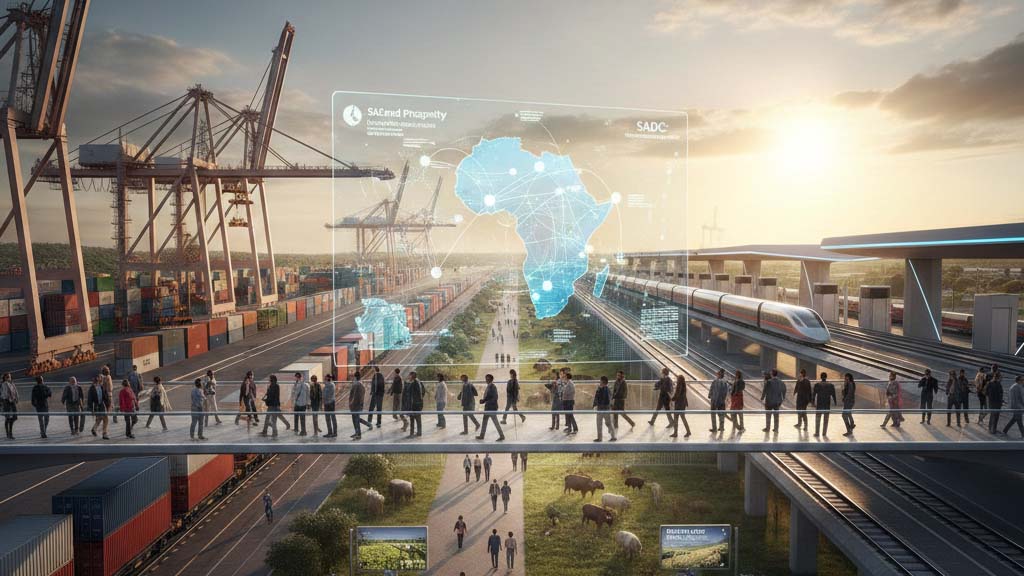
President Ramaphosa announced a huge infrastructure spending possibility and revamping the ports and rail system. Improved supply chains and the strengthening of ports and rail systems in South Africa offer significant benefits to Eswatini. Enhanced logistics infrastructure facilitates faster and more reliable movement of goods, reducing transportation costs and delays that currently hinder trade efficiency. As Eswatini relies heavily on South African ports for its imports and exports, upgrades in these facilities directly improve access to international markets. Strengthened rail connections provide a cost-effective alternative to road transport, easing congestion and lowering environmental impact.
These improvements also foster regional integration by promoting smoother cross-border trade and cooperation within the Southern African Development Community (SADC). For Eswatini’s industries, better supply chains mean increased competitiveness, encouraging investment and economic diversification. Ultimately, these developments contribute to Eswatini’s economic resilience, job creation and sustainable growth by linking it more effectively to regional and global value chains.
Eswatini’s prosperity is intertwined with South Africa’s stability and growth. Rather than presenting policy choices in isolation, the kingdom should work within the Southern African Development Community (SADC) framework to deepen economic and security cooperation, particularly around border management, trade facilitation and human capital movement. Enhanced cooperation could include joint investment in border infrastructure and logistics to streamline trade and movement while managing security risks. Coordinated labour mobility agreements could help Eswatini’s youth find opportunities in larger markets under regulated frameworks, reducing irregular migration pressures. By positioning itself as a proactive partner rather than a passive observer of regional policy, Eswatini can elevate its strategic relevance.
Vector management
South Africa has reaffirmed its commitment to eradicating foot-and-mouth disease (FMD), recognising the severe economic consequences the disease poses for livestock production, rural livelihoods and export markets. Through intensified vaccination campaigns, strengthened veterinary surveillance, tighter movement controls and investment in biosecurity infrastructure, authorities aim to contain outbreaks and restore international confidence in South African beef and related products. This commitment carries important spill-over effects for Eswatini, whose livestock sector is closely integrated with South Africa through trade corridors and shared grazing boundaries.
Effective disease control south of the border reduces the risk of cross-border transmission, protects Eswatini’s cattle industry and safeguards access to premium export markets such as the European Union under regional trade agreements. Conversely, persistent outbreaks in South Africa can trigger regional movement restrictions, disrupt abattoir operations and undermine farmer incomes in Eswatini. Coordinated surveillance and harmonised veterinary standards are, therefore, critical to sustaining regional agricultural resilience and economic stability.
At this regional crossroads, we must act with strategic clarity. By aligning with South Africa’s reforms, strengthening domestic institutions, investing in resilience and deepening regional cooperation. The kingdom can convert external shifts into opportunity, safeguarding stability, competitiveness and inclusive growth in an increasingly interconnected Southern African landscape.
South Africa’s list of challenges include unemployment, inequality and lagging service delivery.