MBABANE – The joint venture (JV) that signed a contract to build a road in Eswatini consists of companies that were penalised for tender collusion in South Africa.
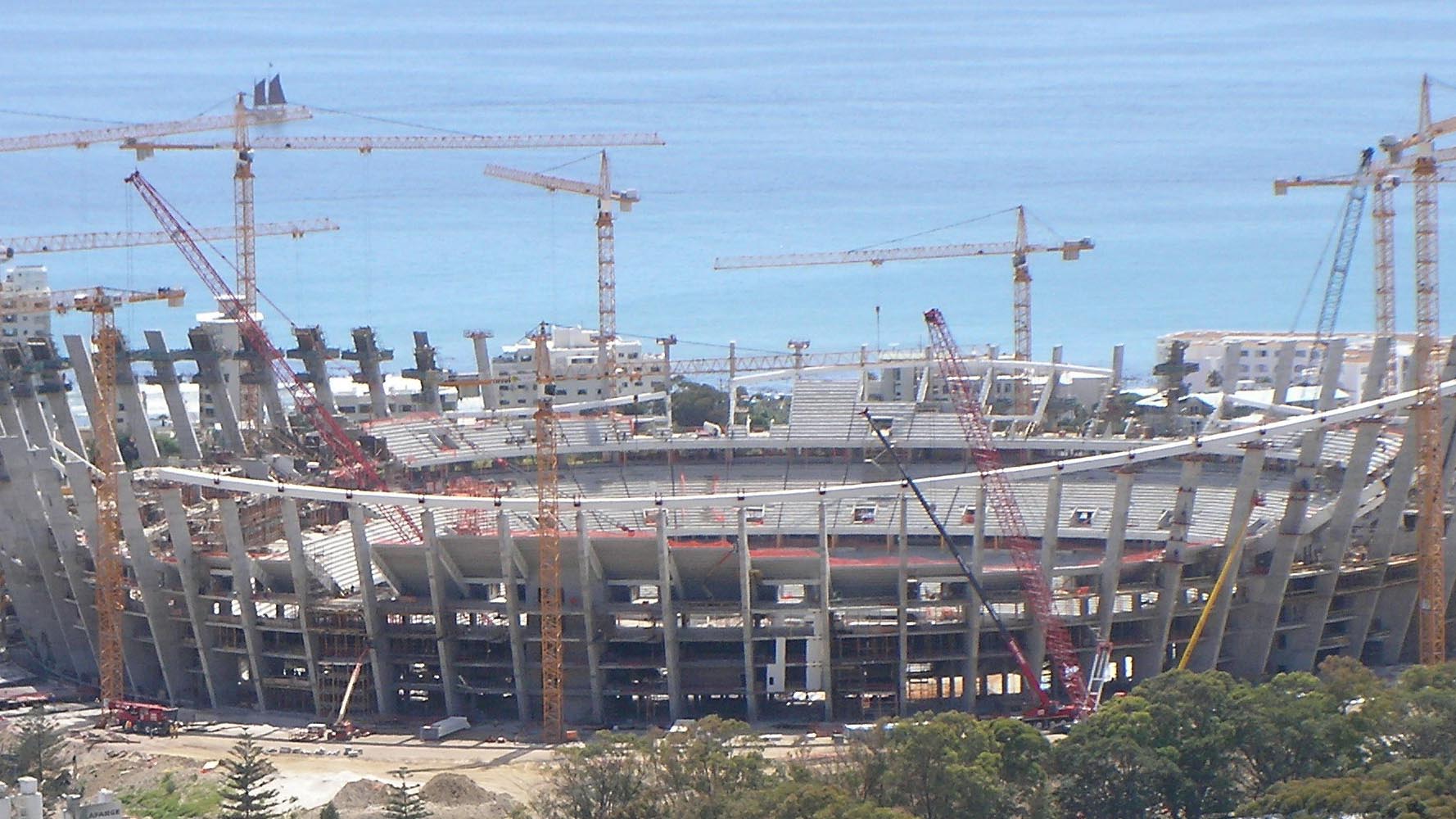
Stefanutti Stocks and WBHO, which has signed a construction contract with the Eswatini Government for the MR14 and MR21 were ordered to pay a penalty of E63 million for tender collusion in the construction of the Cape Town Stadium.
MR14 relates to the upgrading of the Siphofaneni–Sithobela–Maloma–Nsoko while MR21 is the Maloma–Siphambanweni (MR21) Road.
AG Thomas was only engaged as a specialist subcontractor for pavement design and construction, and it is not involved in the South African tender scandal.
The Eswatini project is the first phase of the Eswatini Road Infrastructure Improvement Programme (ERIIP Phase I), financed by the African Development Bank (AfDB).
The Competition Commission of South Africa issued a statement that WBHO, Stefanutti Stocks and Aveng colluded to create the illusion of competition by submitting ‘bogus tenders’ or ‘cover pricing’ to allow an ‘alleged conspirator’ to win a tender.
Based on due diligence conducted by this newspaper, it must be clarified that this article is not about a JV in South Africa that involved the two companies but about Stefanutti Stocks and WBHO participating in the tendering process under highly questionable circumstances.
WBHO and Stefanutti Stocks alongside Aveng delayed their settlement because their case was before arbitration for many years until it was concluded in 2022.
The city was given the green light to pursue a civil damages claim against companies which colluded on the R4.5 billion (E4.5 billion) Cape Town Stadium contract after receiving certificates that proved collusive conduct. The tribunal issued three certificates in favour of the city in the construction of the Cape Town Stadium.
Initially, the city’s claim was against Murray & Roberts and WBHO Construction, which built the stadium in a JV. However, the three certificates in the construction of Cape Town Stadium were issued based on admissions by Aveng, Stefanutti Stocks and WBHO.
In its admission, Aveng spoke about the group of companies, Grinaker LTA, WBHO, Murray & Roberts, Group Five, Concor, Basil Read and Stefanutti, which met twice in 2006 to reach an agreement on the 2010 World Cup stadiums.
The firms agreed to allocate the Mbombela, Peter Mokaba, Moses Mabhida, Soccer City, Nelson Mandela Bay and Cape Town stadium tenders among themselves and to exchange cover prices. They reportedly agreed that they would aim to obtain a 17.5 per cent profit margin in all the World Cup stadia projects.
The Times of Eswatini SUNDAY can mention that it is not the first time that Stefanutti Stocks and WBHO come together and participate in a gigantic project. Their most notable one is the Cape Town Stadium.
They are both listed on the Johannesburg Stock Exchange (JSE). It has been established that the Cape Town Stadium project resulted in these two companies doing business in Eswatini facing the civil claim from the City of Cape Town.
Despite denial of the allegations, the City of Cape Town filed a civil claim against Stefanutti Stocks, WBHO and Aveng for collusion and bid-rigging in the construction of the Cape Town Stadium (formerly Green Point Stadium). The City of Cape Town accused SS and WBHO for allegedly engaging in anti-competitive behaviour, including fixing prices and inflating tender costs, which caused financial harm to the city.
*Full article available on Pressreader*
The City of Cape Town accused Stefanutti Stocks and WBHO for allegedly engaging in anti-competitive behaviour, including fixing prices and inflating tender costs, which caused financial harm to the city during the construction of the Cape Town Stadium which hosted game during the 2010 World Cup in South Africa. (Courtesy Pics)