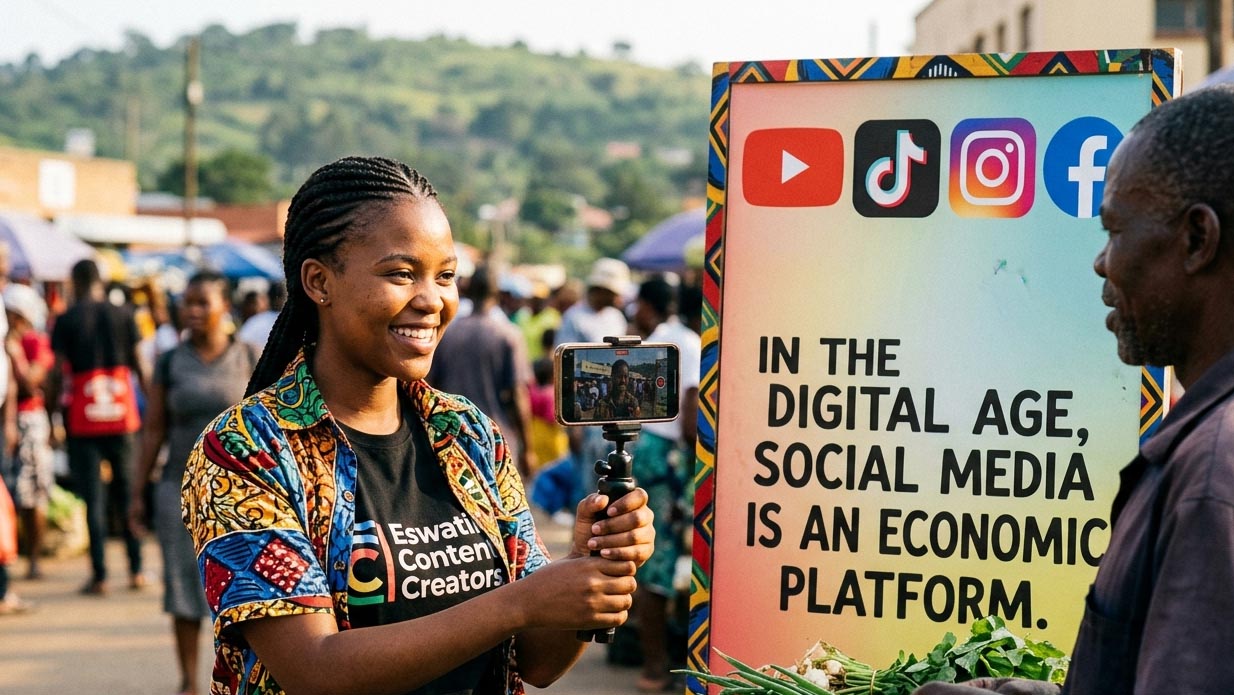
In the digital age, social media has transformed from a communication tool into a powerful economic platform. Across the world, individuals are leveraging platforms such as YouTube, TikTok, Instagram and Facebook to generate income through content creation, brand partnerships and digital entrepreneurship. However, while monetisation opportunities have expanded globally, their benefits are not evenly distributed. In many third-world or developing countries, talented individuals remain disadvantaged due to structural inequalities, limited infrastructure, and systemic barriers. As a result, despite creativity and potential, poorer nations continue to lag behind in the digital economy. Eswatini is not an exception of this.
Social media monetisation refers to the process of converting online engagement into income. This includes revenue streams such as advertisements, sponsorships, affiliate marketing and subscription-based content. In theory, social media provides a level playing field where anyone with talent, creativity and consistency can succeed. The rise in internet and smartphone usage in developing countries suggests growing participation in digital spaces. People in developing countries are increasingly present online and eager to participate in digital opportunities. However, access does not equate to equal opportunity. One of the most significant barriers to monetisation in developing countries is the digital divide. This divide exists not only in access to technology, but also in the quality of access, digital skills and the ability to benefit economically from online participation. While some individuals may have smartphones and internet connectivity, they often lack the resources, training or infrastructure needed to fully capitalise on digital platforms.
Another key issue is the economic structure of social media monetisation itself. Earnings on platforms are often determined by audience location. Advertisers pay more to reach audiences in wealthier countries because of their higher purchasing power. As a result, content creators in developing countries typically earn less per view or engagement than creators in developed nations.
This creates an uneven playing field where geography directly affects income potential. Even when creators in poorer countries produce high-quality content, their financial returns remain disproportionately low. Additionally, financial exclusion further limits monetisation opportunities. Many platforms require access to digital payment systems, bank accounts or international financial services such as PayPal services that are not widely accessible in some developing countries. This makes it difficult for creators to receive payments, participate in global markets or scale their digital businesses. The lack of supportive financial infrastructure reinforces economic inequality and restricts participation in the global digital economy.
Social and structural inequalities, including gender disparities, also contribute to the problem. Women in developing countries often face greater challenges in accessing technology due to financial, cultural and educational barriers. Despite these challenges, it is important to acknowledge the resilience and innovation emerging from developing countries. Many creators and small businesses are finding alternative ways to monetise their platforms, such as targeting global audiences, collaborating with brands or using social media as a marketing tool for offline businesses. Social media has also enabled entrepreneurs to bypass traditional barriers and reach customers directly, creating new forms of economic participation. However, without systemic changes, these individual successes remain exceptions rather than the norm. Governments and international organisations must invest in digital infrastructure, reduce the cost of internet access and promote digital literacy. Policy reforms that support financial inclusion and enable easier access to global payment systems are also essential.
Furthermore, social media platforms themselves must address disparities in monetisation models to ensure fair compensation regardless of geographic location. In conclusion, while social media has the potential to democratise income generation and empower individuals globally, the reality in third-world countries tells a different story. Talent exists in abundance, but opportunity does not. The digital divide, economic inequality and structural barriers continue to limit the ability of creators in poorer nations to fully benefit from social media monetisation. Bridging this gap requires collective effort from governments, corporations and communities to create a more inclusive and equitable digital economy, one where talent, not geography, determines success. Will we one day have an Eswatini full of people enjoying the opportunities in the digital field? It remains unknown, but this should not be what we dwell on, more so because the road to changing it is still unknown. However, we can all be participants in building an online system that works for us, engaging content by locals and creating space for them to work with local brands and grow.
In the digital age, social media has transformed from a communication tool into a powerful economic platform.