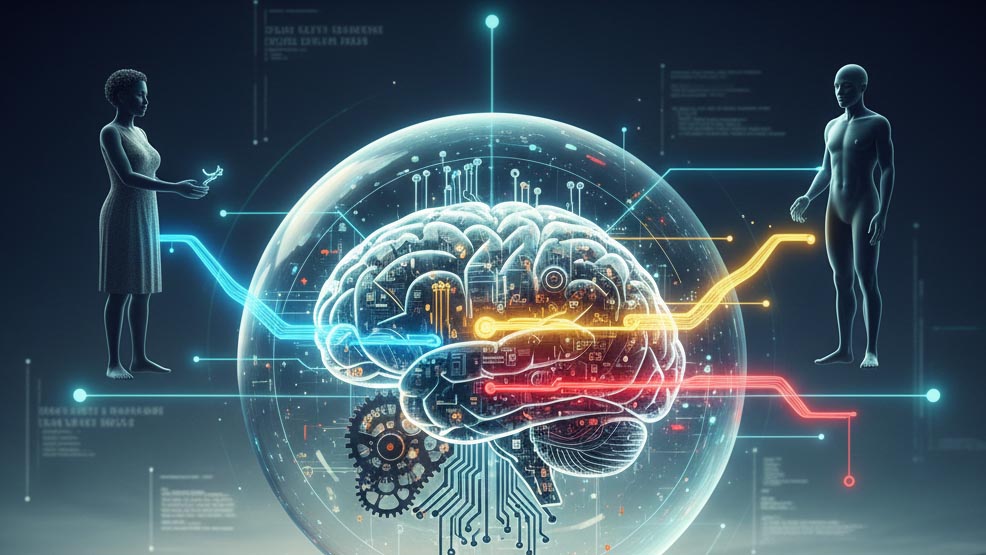
One of the most glaring similarities that the human mind (some may choose to call it the brain) has in common with a man-made machine is the ability to be ‘fed instructions and obey commands’ or, to put it more technically, being programmable to respond in specific ways in any given specific life situation. The comparison between the human mind and a machine is purely just that - a comparison, because, the mind is far more complex and has the potential to operate at a level so superior, it takes some understanding.
The field of mental health is strikingly similar to ‘playground for different minds who study other minds’ and the idea that, we each possess a malleable, programmable and teachable minds (or brains) bodes well for the effectiveness of what we are attempting to achieve within our society. Of course, some individuals’ mind functioning may be altered: From birth, substance abuse or even brain trauma, and these may be exceptions, however, in the case where none of these are the case, that individual is at a prime advantage to tackle, assert control and engage accordingly with the psycho-emotional challenges they may come across.
The secret lies in fully understanding the fact that everything is learnable if you teach yourself hard enough.
To use a rather counter-intuitive example; any form of addiction is an example of exercising a behaviour that has been learnt and overtime, it becomes the fabric of that individual’s every day.
Using that same logic, we could easily be mentally healthier people if we applied the same principle when it comes to adopting positive, less toxic behaviour. Not only limited to behaviours, but it also stretches well into us assimilating new traits, fresh ways of thinking and adjusting our perspectives to keep up with our ever-changing individual environments.
In my very humble opinion, if we (as individuals) could tap in to and develop methods of harnessing this intrinsic ‘super-power’ that (I feel) we were born with, psychologically, we would be in much better stead as a national community.
The main challenge, however, is that there are not enough people equipped with the knowledge that they can influence their own thoughts, actions and behaviours in a positive way without external assistance.
Emotional intelligence, for instance, such an influential part of our everyday lives, is something that is moulded and shaped by ourselves when we learn how to engage with others, exercising restraint as well as knowing what to invest in emotionally without overstretching our psycho-emotional resources.
So, it is these psychological ‘bits and pieces’ that come together to make us whole, which is why it is important that we do not stop working on ourselves; recognising the weaknesses in our characters, capitalising on the strengths that we have, all while teaching ourselves to be better composed, rational and mentally balanced members of a healing society.
Send comments to runsford0505@gmail.com
One of the most glaring similarities that the human mind (some may choose to call it the brain) has in common with a man-made machine is the ability to be ‘fed instructions and obey commands’ or, to put it more technically, being programmable to respond in specific ways in any given specific life situation.