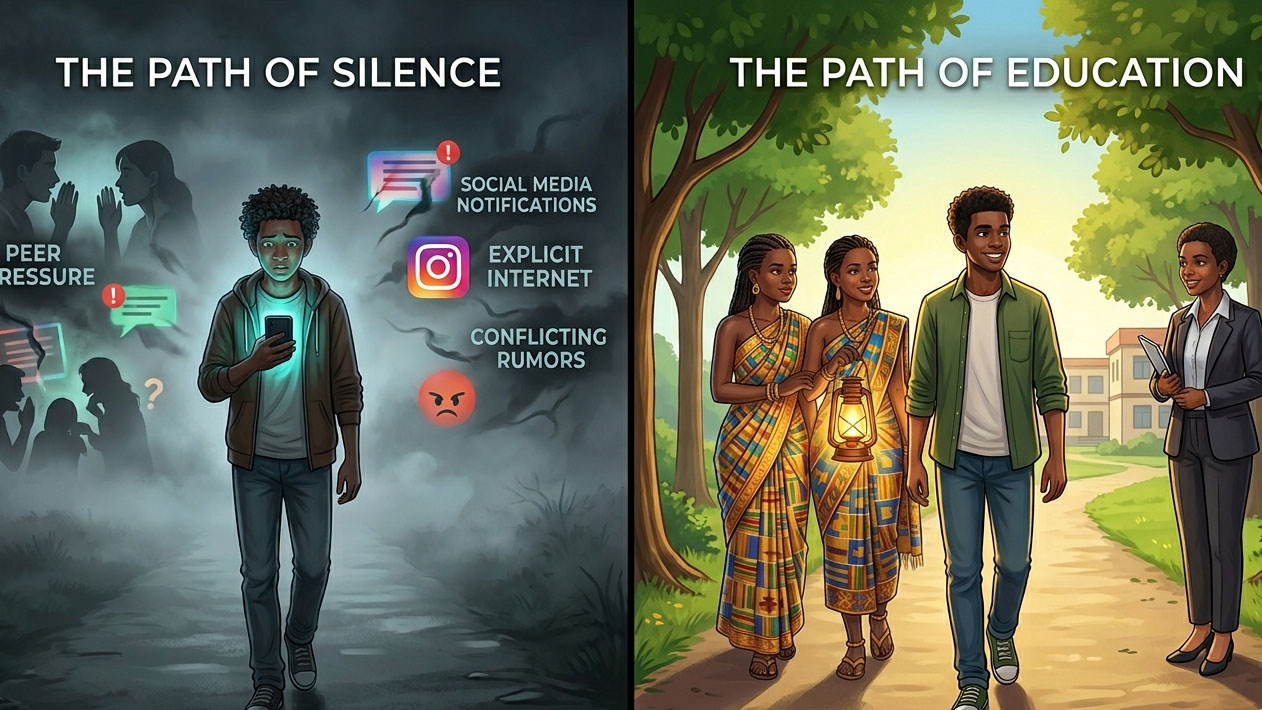
In many traditional households, conversations about sex are often treated as taboo. The subject is avoided, whispered about or mentioned only in the context of warnings and shame. Parents may believe that discussing sex with children encourages early experimentation or ‘spoils’ their innocence. As a result, many young people grow up learning about sex from friends, social media, or the internet sources that are often incomplete, misleading or harmful. Yet the reality is simple: Silence does not protect children.
Education does. Normalising sex education in traditional homes is not about promoting sexual activity. It is about equipping children with knowledge, self-awareness and confidence to make informed choices about their bodies, boundaries and future. It is about helping them understand themselves before the world teaches them distorted versions of intimacy, consent and relationships.
Traditional households often prioritise discipline, respect and preserving cultural values. These are important foundations.
However, avoiding discussions about sex can unintentionally leave children vulnerable. Curiosity is natural, especially as children grow into adolescence. They will have questions. They will notice changes in their bodies. They will hear conversations from peers. If these questions are not answered at home, they will seek answers elsewhere. Unfortunately, not all information they encounter will guide them safely. This is why early, age-appropriate sex education is essential. It begins not with explicit discussions, but with teaching children about their bodies, privacy and personal boundaries. Children who understand the correct names for body parts, what consent means and what inappropriate behaviour looks like are better equipped to protect themselves. They are more likely to speak up if they experience abuse or discomfort. Silence, on the other hand, often creates confusion and fear, making children easier targets for manipulation.
Why is it important?
Sex education also raises self-aware children. Self-awareness means understanding one’s body, emotions, choices and responsibilities. A child who receives healthy sex education is more likely to understand the consequences of their actions, whether related to relationships, sexual health or emotional well-being. They are less likely to make decisions based purely on peer pressure or misinformation. Without proper guidance, many young people develop their understanding of sex through pornography, social media trends or casual conversations among peers.
These sources rarely provide healthy or realistic representations. Pornography, for instance, often presents distorted views of consent, relationships and intimacy. Social media can glamourise risky behaviour without addressing consequences. Friends, while well-meaning, may also share myths or misinformation. In the absence of trusted adult guidance, these become the default teachers. The consequences can be serious.
Misinformation can lead to unplanned pregnancies, sexually transmitted infections, emotional trauma and unhealthy relationships. It can also contribute to shame around one’s body and identity. Many adults carry misconceptions about sex because no one taught them differently. This cycle often repeats across generations, especially in households where sex remains unspoken. Parents may feel uncomfortable initiating these conversations because they themselves were never taught openly. Many grew up in homes where the topic was considered inappropriate or disrespectful. However, breaking this silence is one of the most valuable things a parent can do. Children should not learn about one of the most important aspects of life through secrecy and trial-and-error. They deserve guidance that is honest, respectful and rooted in care.
Schools as agents of sex education
Schools play a critical role in this process, and parents should be enthusiastic about educational institutions that provide comprehensive sex education. Some parents oppose school-based programmes out of fear that they conflict with family values. However, schools are not replacing parental guidance; they are reinforcing essential knowledge in structured and age-appropriate ways. Comprehensive sex education includes topics such as anatomy, puberty, consent, reproductive health, emotional well-being and healthy relationships.
These lessons help children navigate adolescence with greater understanding and confidence. Parents who support schools in providing sex education are investing in their children’s long-term safety and decision-making. A child who learns about reproductive health, boundaries and consent is better prepared to make responsible choices. They are less likely to engage in risky behaviour simply because they are informed. Education does not encourage recklessness, but it encourages responsibility.
Open communication between parents and schools creates stronger outcomes. When children hear consistent messages at home and in the classroom, they are more likely to internalise healthy attitudes. This partnership helps normalise conversations that might otherwise feel uncomfortable. It also shows children that their questions are not shameful, but important. Traditional values do not have to be abandoned to make room for these conversations. In fact, many cultural values: Respect, dignity, responsibility, and care, align naturally with healthy sex education. Parents can frame these discussions within their beliefs while still ensuring children are informed. The goal is not to remove tradition but to strengthen it with knowledge that protects the next generation.
In many traditional households, conversations about sex are often treated as taboo. The subject is avoided, whispered about or mentioned only in the context of warnings and shame. Parents may believe that discussing sex with children encourages early experimentation or ‘spoils’ their innocence.