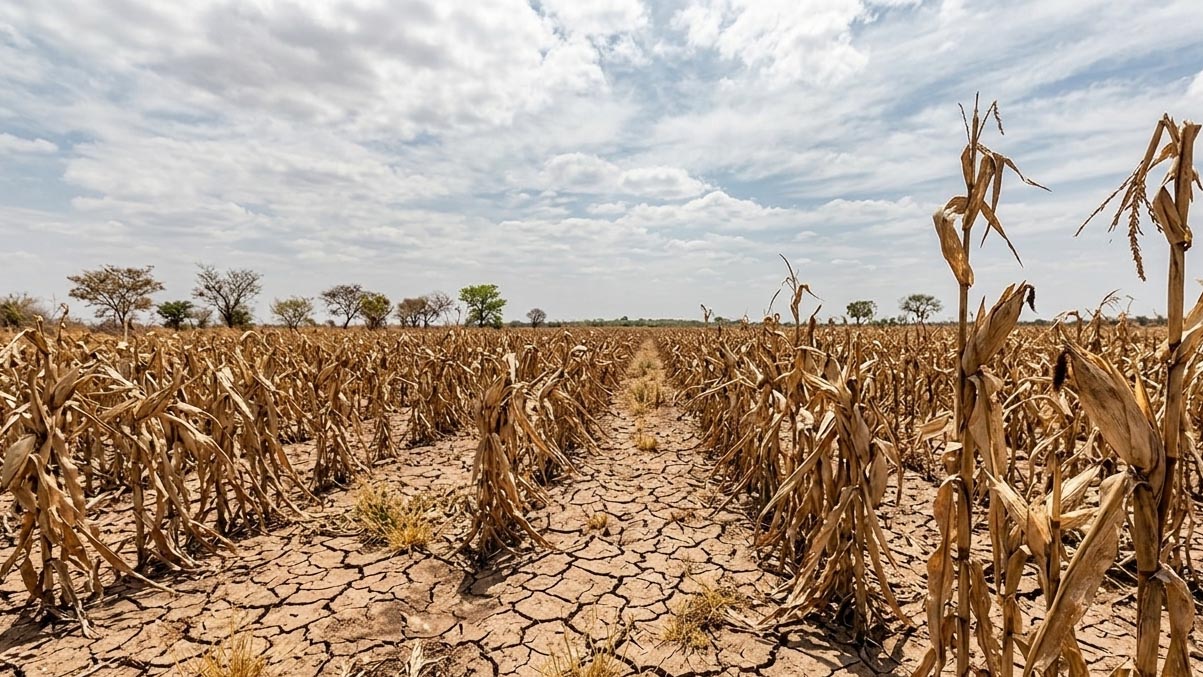
MBABANE – The NDRMA has warned the public to prepare for a possible El Niño-induced drought.
The National Disaster Risk Management Authority (NDRMA) has issued an early preparedness advisory following growing international forecasts pointing to a high probability of El Niño conditions developing during the latter half of 2026.
While there is currently no drought declaration in Eswatini and weather conditions remain favourable, disaster management authorities say the country cannot afford to ignore warning signs emerging from global climate monitoring agencies.
The warning comes amid projections from the World Meteorological Organisation (WMO) and the United States National Oceanic and Atmospheric Administration (NOAA), which indicate a strong likelihood that El Niño conditions could develop later this year and extend into early 2027.
According to the NDRMA, the WMO has projected an 80 per cent probability of El Niño conditions occurring between June and August this year. The probability is expected to rise to above 90 per cent towards the end of 2026.
Similarly, NOAA has placed the global climate system under an El Niño Watch, signalling that conditions are increasingly favourable for the phenomenon to develop.
NDRMA Communications Manager Magman Mahlalela said the advisory is intended to encourage early action rather than cause alarm.
He said previous experiences have demonstrated that countries that prepare in advance are better positioned to withstand the effects of climate shocks.
“Experience from previous El Niño events has shown that early preparedness significantly reduces the human and economic costs associated with drought and other climate-related impacts,” said Mahlalela.
The authority stressed that the advisory should not be interpreted as confirmation that drought conditions would occur.
Instead, it said the current situation presents an opportunity for households, communities, institutions and businesses to strengthen their resilience while conditions remain stable.
The Eswatini Meteorological Service continues to forecast generally favourable winter conditions, including normal to above-normal rainfall across most parts of the country.
However, climate experts have cautioned that El Niño conditions could emerge later in the year and influence the country’s next summer rainfall season.
For many emaSwati, the latest warning revives memories of one of the most devastating droughts in the country’s recent history.
The 2015/16 El Niño event caused widespread hardship across Eswatini, leaving thousands of households grappling with food shortages, water scarcity and significant agricultural losses.
The drought severely affected crop production and livestock farming, threatening livelihoods in rural communities where many families depend on agriculture for survival.
According to the NDRMA, national economic losses resulting from that drought were estimated at approximately E3.843 billion.
The impact extended beyond agriculture, affecting household incomes, food prices, water supply systems and economic activity.
Experts believe the lessons learnt from that experience should serve as a reminder of the importance of preparing before a crisis emerges.
As part of its preparedness campaign, the NDRMA is encouraging households to preserve food stocks harvested during the current season.
Families are also being urged to avoid unnecessary food wastage and carefully assess future household needs before selling surplus produce.
The authority said maintaining adequate food reserves could help households cope should rainfall patterns deteriorate during the next agricultural season.
Communities have also been urged to protect available water resources and avoid practices that could worsen future vulnerabilities.
*Full article available on Pressreader*