MPs pocket repeated pay increases
Politics
MBABANE – Members of Eswatini’s 12th Parliament have benefitted from repeated salary increases since assuming office in 2023, an investigation by the Times Sunday has revealed.The investigation has uncovered that the country’s remuneration framework has enabled political office bearers to benefit from successive pay adjustments while many civil servants continue waiting for the full implementation of their own salary review. The investigation established that Members of Parliament (MPs), presiding officers, deputy presiding officers, regional administrators (RAs) and other designated political office bearers have received more than one salary increase through different remuneration mechanisms during the current parliamentary term.One of the most significant adjustments came in 2023 when the implementation of Finance Circular No. 2 of 2023, which introduced a new remuneration framework for the 12th Parliament following recommendations by the Mvuselelo Fakudze-led Royal Commission, substantially increased politicians’ remuneration. The framework linked politicians’ salaries to that of the Secretary to Cabinet, the highest-ranking civil servant, meaning subsequent adjustments to the benchmark salary automatically filtered through to political office bearers in accordance with a predetermined formula.The Times Sunday established that in August 2023, government implemented a three per cent Cost of Living Adjustment (COLA) for public servants for the 2023/24 financial year. During the same period, politicians also benefitted from the implementation of the new remuneration framework, with reports indicating that the package translated into salary increases of about 53.4 per cent together with revised allowances and benefits.The Finance Circular No. 2 of 2023 was issued by Minister for Finance Neal Rijkenberg on August 8, 2023, shortly after the national elections ushered in the 12th Parliament. The circular set out revised terms and conditions of service for MPs, Cabinet ministers, designated office bearers and the attorney general (AG). The three per cent COLA, backdated to April 1, 2023, was authorised through a collective agreement signed by Minister for Public Service Mabulala Maseko. It applied across the public service, including security forces, non-unionised employees and political office bearers. Again, government awarded a four per cent increase on monthly basic salaries in July 2024 after signing another collective agreement with Public Sector Unions (PSUs), with the adjustment also backdated to April 1, 2024. The Ministry of Public Service confirmed that the increase applied universally across government, including political office bearers. Since politicians’ remuneration is linked to the Secretary to Cabinet’s salary through the Royal Commission framework, each adjustment to the benchmark salary also affected their earnings and, by extension, increased the value of their end-of-term gratuities. The pattern continued under the 2025 salary review.Although government and the PSUs reached an agreement on a comprehensive salary review, civil servants received only 15 per cent of the approved adjustment, with government committing to settle the remaining 85 per cent at a later stage because of financial constraints.Political office bearers, however, benefitted from the full implementation of the remuneration adjustments applicable to them through the existing salary-linking formula. The contrast has fuelled criticism from labour unions, which argue that while ordinary civil servants continue waiting for the balance of their approved salary review, politicians have repeatedly benefitted from remuneration adjustments during the life of the current Parliament.The investigation further established that the current remuneration arrangement is not new, but is rooted in a framework that has evolved over the past decade through successive Finance Circulars governing political office bearers.Documents reviewed by the Times Sunday further showed that Finance Circular No. 2 of 2013 introduced a comprehensive remuneration framework for politicians, establishing a separate structure for MPs, Cabinet ministers and other designated office bearers. Besides providing for salaries, the framework also introduced a range of allowances and benefits over and above basic pay. Under the 2013 framework, the prime minister’s (PM) annual basic salary was set at approximately E617 646, while Cabinet ministers earned about E463 235 annually and Members of Parliament approximately E370 588 a year.In addition to their salaries, MPs became entitled to a constituency allowance equivalent to 12.5 per cent of their monthly basic salary, while housing allowances were pegged at 10 per cent of basic salary for MPs and 25 per cent for Cabinet ministers. The package further included motor vehicle benefits, medical aid, pension provisions, sitting allowances and settling-in allowances equivalent to 15 per cent of an annual basic salary upon assuming office.Although a review of the 2013 framework was proposed in 2019 during the tenure of the late Prime Minister Ambrose Mandvulo Dlamini, amid concerns over the rising cost of maintaining benefits for political office bearers, the proposed amendments were never implemented. As a result, the 2013 remuneration framework largely remained in place until a fresh review was undertaken ahead of the 2023 parliamentary term.Following the 2023 general elections, the Mvuselelo Fakudze-led Royal Commission was tasked with reviewing remuneration for politicians, designated office bearers and the AG. Its recommendations were subsequently adopted through Finance Circular No. 2 of 2023, which now governs the remuneration of the country’s 12th Parliament. The Royal Commission stated that the revised framework sought to strike a balance between attracting suitably qualified people into political office and ensuring affordability to the State. *Full article available on Pressreader*
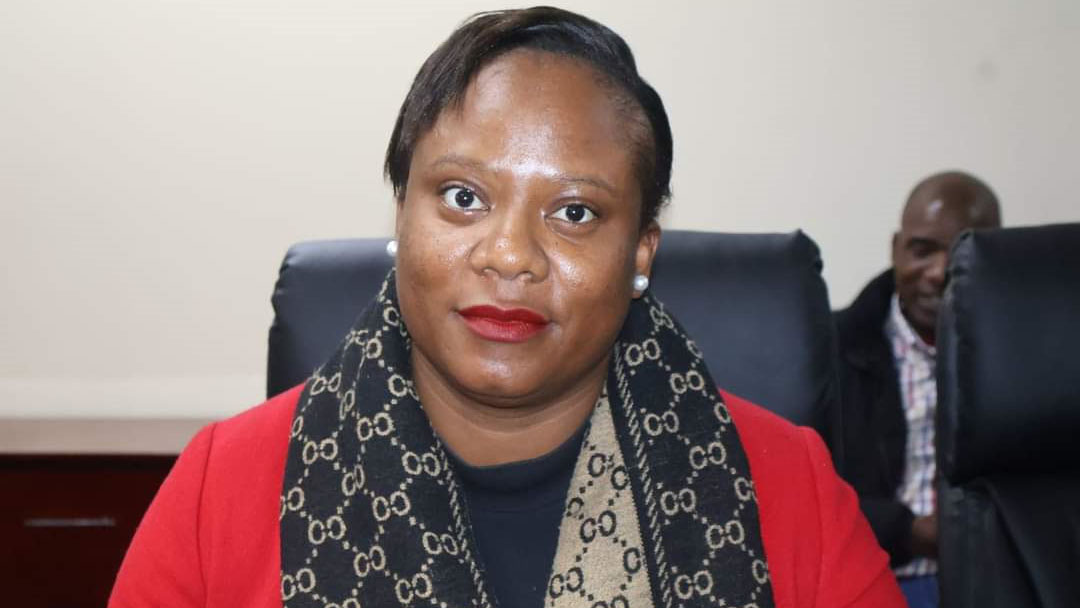
SNAGAP Secretary General Phumzile Masilela, has described the continued linkage between politicians’ salaries and those of civil servants as fundamentally flawed. (Pic: Courtesy SNAGAP)