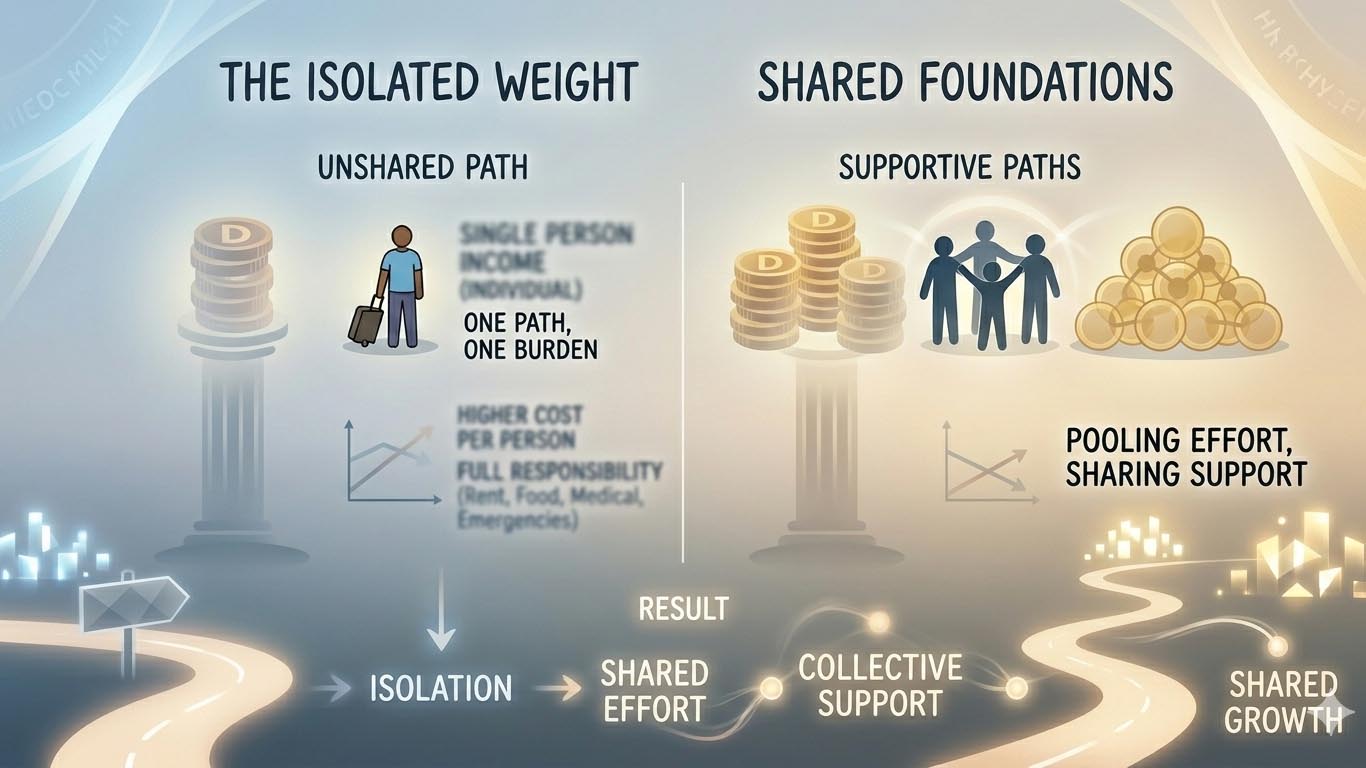
Independence is romanticised. We celebrate the woman who pays her own bills, the man who builds from nothing, the graduate who moves out early and ‘figures it out.’ Society glorifies self-made success stories and captions that read, ‘I did this on my own.’ Independence is marketed as power. As freedom. As proof of maturity and while independence is deeply empowering, there is a side of it we rarely discuss: The economic cost. Behind the polished image of self-reliance lies a quiet financial pressure many people carry alone. Independence gives you control, but it also gives you full responsibility and responsibility, especially in today’s economy, is expensive. When you are independent, everything falls on you. Rent. Electricity. Water. Groceries. Internet. Transport. Insurance. Medical expenses. Emergencies. Unexpected repairs. There is no automatic back-up plan. No one to split the bill by default. No one whose income cushions yours.
In shared households or marriages, expenses are divided. In extended family systems, resources are pooled but when you stand alone, you are the system. If something breaks, you fix it. If money runs short, you adjust. If income stops, the pressure multiplies. Living alone, for example, is significantly more expensive per person than sharing a household. One person pays full rent instead of half. One salary must stretch across every bill. The cost of privacy and autonomy is often double. Independence is freedom, but it is also financial exposure which is why many young people end up tangled in debt.
There is also a psychological cost that translates into economic decisions. Many independent people struggle to ask for help. They avoid borrowing. They avoid leaning on family. They hesitate to move back home even temporarily during financial setbacks because it feels like failure and so instead, they absorb the pressure. They take on extra work. They overextend themselves. They live paycheck to paycheck quietly. The pride of ‘I don’t need anyone’ can sometimes prevent smart financial interdependence such as sharing resources, collaborating or accepting support during hard seasons. Independence without community can become isolation. Taking a pay cut for long-term growth feels irresponsible when bills are due now. People with shared financial responsibility often have more room to experiment. Someone else’s income can soften the impact of a temporary loss. As a result, many independent individuals stay in safe but unfulfilling jobs longer than they would like. For many women especially, independence carries additional economic weight. Women who choose to be financially independent may still face societal expectations to contribute emotionally and domestically in relationships. They may pay half the bills while still carrying invisible labor. In some cases, they prepare for the possibility that they may one day need to sustain a household alone with children. Building financial buffers ‘just in case.’ Independence, in this sense, becomes not just a lifestyle choice, but a survival strategy and survival strategies are expensive.
Money is not just numbers. It is security. It is stability. It is peace of mind. When you are fully independent, financial stress can feel amplified because there is no emotional co-holder of the burden. Even if friends or family offer advice, the final responsibility rests with you. This constant awareness that everything depends on you can be exhausting. You become hyper-aware of spending. You second-guess large purchases. You worry about emergencies. You calculate constantly. The freedom to make your own decisions comes with the weight of bearing all consequences. That mental load is rarely acknowledged when independence is celebrated.
There is dignity in paying your own way. There is confidence in knowing you can survive on your own income. There is peace in not being financially trapped in unhealthy relationships or situations because you depend on someone else. The key is honesty about the trade-off. Independence is not cheap. True strength is not about doing everything alone. It is about having the capacity to stand alone if necessary while still understanding the value of shared responsibility. There is no weakness in building community. There is no failure in pooling resources.
Independence is romanticised. We celebrate the woman who pays her own bills, the man who builds from nothing, the graduate who moves out early and ‘figures it out.’