


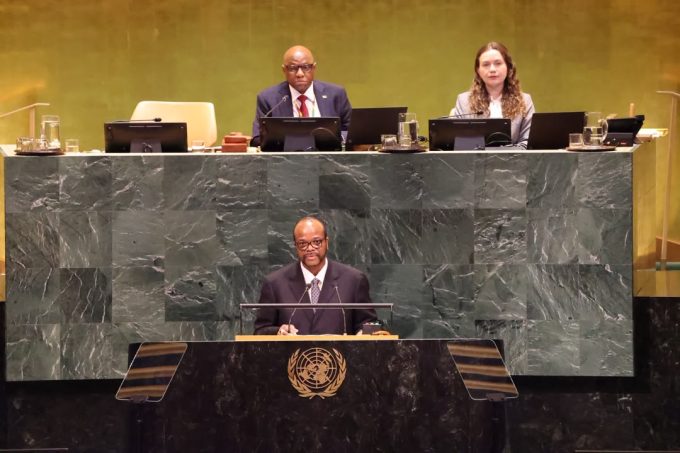
When His Majesty King Mswati III rose to deliver the 2026 Speech from the Throne, many expected the customary review of economic indicators, infrastructure milestones and legislative priorities. Those were present. However, what made this year’s address profound was not only the statistics or policy direction-it was the moral framework he placed at the centre of national life: Agape love.
‘‘As we enter 2026,’’ the King declared, ‘‘let us be reminded that this is a year of agape love, which calls upon us to demonstrate the highest form of unconditional and sacrificial love.’’ He went further, framing it as a prayer and a commitment: To love one’s neighbour unconditionally, to uphold national interest above self-interest and to serve the country with honesty.
In political language, that is revolutionary. Agape is not sentimental affection.
It is disciplined, ethical love-love expressed through sacrifice, restraint and responsibility. When introduced into the political arena, it challenges the very instincts that often dominate governance: Ambition, rivalry, factionalism and personal gain.
The King’s formulation was clear: ‘‘May I uphold respect and honour national interest and not self-interest at all times.’’ That line alone reframes political will. In a year where Parliament resumes its work under sharper public scrutiny-with debates now to be broadcast live-agape becomes both a moral compass and a public accountability test.
If applied seriously, agape love would influence every directive outlined in the speech. Consider agriculture. His Majesty acknowledged progress, but also admitted that the country has not yet achieved food self-sufficiency. He called for reliable markets, climate resilience programmes and intensified efforts to eliminate foot-and-mouth disease. Agape in agriculture means more than subsidies; it means designing systems that protect the most vulnerable farmer, ensuring timely veterinary support, and refusing complacency when past lessons-such as disease containment-have not been fully applied. It demands foresight.
In health, the King was unequivocal: Drug shortages ‘should stop now.’ Agape here translates into urgency. A politics of agape cannot tolerate bureaucratic delay when lives are at stake. It requires long-term procurement systems that outlive political cycles and ensure future generations inherit efficient structures.
Even economic diversification carries an agape dimension. His Majesty urged the country to aim for at least 10 companies with a minimum of E10 billion annual turnover across sectors. That ambition is not merely about wealth accumulation; it is about job creation, dignity and lifting GDP per capita to levels that improve living standards. Agape transforms economic policy from an abstract growth target into a human-centred project.
What makes this framework particularly timely is the global political climate. Across continents, we are witnessing polarisation hardening into hostility. Elections are increasingly defined by division. Wars persist despite international charters that denounce conflict. Economic nationalism often overshadows cooperation. Trust in public institutions is fragile.
Against that backdrop, agape is not naïve; it is necessary. The King’s commitment that Eswatini will denounce conflict and work within regional and international structures-including assuming leadership within SADC’s Organ on Politics, Defence and Security Cooperation-situates agape within diplomacy. Respect for constitutions, adherence to law and mutual respect between States are not just legal obligations; they are expressions of disciplined love for humanity.
Imagine if global powers approached negotiations not from dominance but from sacrificial responsibility.
Critics may argue that love has no place in politics. Yet, history shows that transformative leadership often rests on moral imagination. Policies endure when they are anchored in values that transcend election cycles. The King’s speech subtly connected agape to national identity. Over four decades, he noted, Eswatini has enjoyed peace and stability. Those are not accidental achievements. They are social products of restraint, unity and collective responsibility.
For Parliamentarians, it is a challenge to legislate beyond ego. For civil servants, it is a call to administer with integrity. For business leaders, it is an invitation to reinvest locally and create meaningful employment. For citizens, it is a reminder that national transformation is relational.
Agape also introduces a new twist to political accountability. If leaders publicly commit to unconditional and sacrificial love, then public discourse must measure them against that standard.
In this sense, agape becomes both aspiration and an audit tool. The profundity of the 2026 Speech from the Throne lies not only in its economic targets or infrastructure ambitions, but in its insistence that moral character precedes sustainable development. Vision 2022 has evolved; Vision beyond 2026 now requires ethical infrastructure as much as physical infrastructure. If 2026 truly becomes the year of agape, then the success of every directive -from agriculture to digital transformation, from health reform to youth empowerment-will not be measured only in numbers, but in whether national interest consistently triumphs over self-interest. That would be a profound legacy indeed.

















Leave a comment