

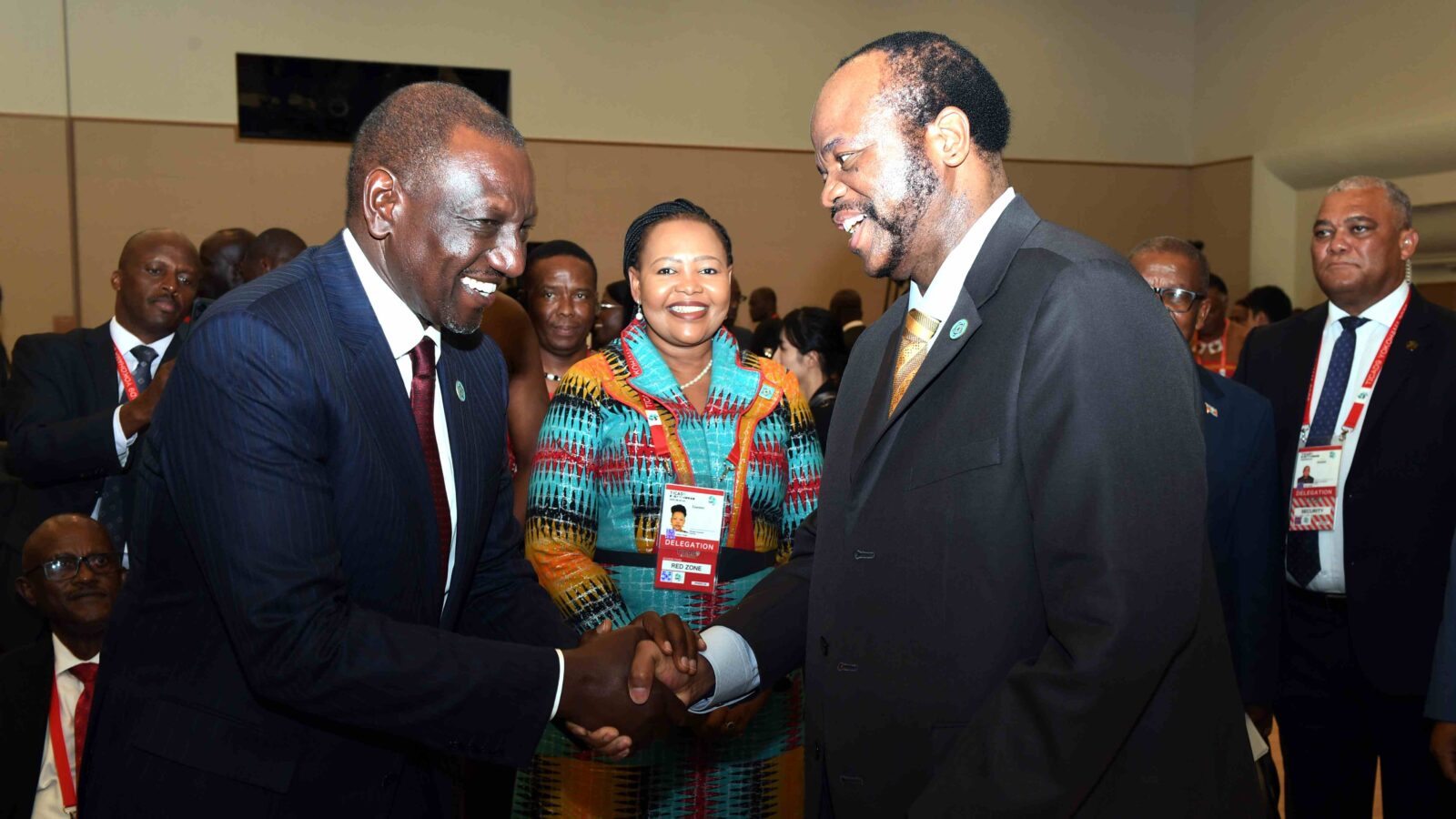
YOKOHAMA, JAPAN – His Majesty King Mswati III has said implementing the Ezulwini Consensus is vital for global peace and stability.
The Ezulwini Consensus, adopted by the African Union (AU) in 2005 during a meeting held in Eswatini, demands two permanent and five non-permanent United Nations (UN) Security Council seats for Africa to address historical imbalances.
The King said: “This reform will empower Africa to resolve conflicts peacefully, protecting civilians and fostering stability.”
Speaking at the Ninth Tokyo International Conference on African Development (TICAD 9) yesterday, His Majesty urged reform of the United Nations Security Council to ensure fair representation for Africa, as per the Ezulwini Consensus. He stated: “For peace and stability in our continent and the world, we must reform global institutions.”
As a member of the AU Peace and Security Council (2025–2028) and incoming Chairperson of the SADC Troika on Defence, Peace and Security, the King said Eswatini is committed to diplomacy and mediation. His Majesty commended the AU Peace and Security Council’s efforts, stating: “Their role in defusing conflicts is critical for Africa’s progress.”
The Ninth TICAD summit, co-hosted by the AU, focused on peace, stability and economic cooperation under the Yokohama Aspirations. The King shared how the Tinkhundla System, is a model for peace saying: “Our home-grown governance model ensures national unity and stability, creating a secure environment for investments.”
He further assured that this stability supports TICAD’s goals of attracting investment for development. The King noted: “Eswatini guarantees the security of investments and fund repatriation, aligning with Africa’s economic aspirations.” TICAD’s support has already boosted Eswatini’s social and economic sectors, with potential for further partnerships in climate resilience and digital transformation.
According to government data, Japan has been providing essential food assistance to Eswatini since 2019, primarily through the United Nations World Food Programme (WFP). The Home-Grown School Feeding (HGSF) Programme provides meals to 25 000 pupils across 50 primary and secondary schools in Eswatini’s four regions, directly contributing to SDG 2 (Zero Hunger) and indirectly supporting SDG 4 (Quality Education).
Japan has also invested in educational infrastructure and advanced training programmes, such as the Improvement of Secondary Schools Project, which aims to improve access to quality education. The ABE (African Business Education Initiative for Youth) / SDG Training Programme provides postgraduate degree training opportunities for Eswatini nationals, fostering a mutually beneficial exchange of knowledge and expertise. These initiatives aim to cultivate a highly skilled workforce capable of driving Eswatini’s economic diversification and contributing to the goal of achieving ‘First World status’. Japan’s commitment to these initiatives aligns with SDGs 8 (Decent Work and Economic Growth) and SDG 9 (Industry, Innovation and Infrastructure), which are preparing Eswatini for a more competitive and diversified economic future.
Full article available in our publication.













Leave a comment