










header Home | Set as homepage | Add to favorites | Contact Us |
Search the Site   Advanced Search »
Archive
Mo Tu We Th Fr Sa Su
12345
6789101112
13141516171819
20212223242526
27282930


email Email to a friend | print Print version | comment Comments (0 posted)

The people spoke: Kudliwa inhloko

By Musa Hlophe on July 26,2009

image


Before tackling today’s topic, let me reflect a bit on the feedback I have so far about last week’s article on SPTC and the rumoured attempt at removing an unnamed expatriate Chief Executive Officer of an unnamed private company.

I have written articles before, but rarely have I received such positive feedback! I am actually quite amazed. The feedback raised a number of questions; such as, what does warehousing the shares mean? The 10 per cent shares are warehoused at SPTC, who then is the rightful owner?  

It has been clear from this feedback that Swazis are asking a lot of questions on this troubled deal. Some are arguing that the present administration under Dr. Sibusiso Barnabas Dlamini seems set to reverse anything that represents progress initiated by the previous administration of A. T. Dlamini. People quote the SPTC turn-around to profitability as one key example.

Former Minister, Thandi Shongwe appears to have touched the correct button.  Firstly, by appointing a competent Managing Director in Nathi Dlamini, under whose leadership the turnaround has been achieved. Secondly, by appointing competent Board Members, who have added value by way of providing clear strategic direction for the executive team to achieve the turnaround that I am referring to.  

What then could be the motive of this unprocedural intervention by the government?  There is a strong belief, among those who have had the courage to voice their suspicions, that the so called ‘warehoused’ shares are actually being steered in the direction of private pockets of powerful individuals and that the Prime Minister and his government are being used to frustrate this legitimate deal between SPTC and MTN, so that private pockets may benefit from this.  

The question is; who are these private interests? Can the Prime Minister and his government be transparent enough on this and take the nation into its confidence?
Those with long memories will remind you that this is not the first time this Prime Minister has interfered in an SPTC deal. Remember how he frustrated former Managing Director, Sipho Alfred Dlamini? What became of that case? The Prime Minister needs to know this one thing; the population he has been appointed to lead now is totally different from that of 2002, when he could flout the law and get away with it.

Times have changed and we are watching, with keen interest, as to what will happen to these so called warehoused shares at SPTC.  
Should they get into the wrong pocket, he can be sure we will want to know why—especially when we are aware of the fact that MTN was paying the best price per share which would have resulted in SPTC becoming financially viable, and able to deliver excellent service to the people of Swaziland, at an affordable price, better than the high price we are made to pay, due to the monopoly MTN enjoys.

Of course, we would also like to know how much the government’s interference in these affairs is going to cost SPTC: is the estimate of half a billion Emalangeni accurate?
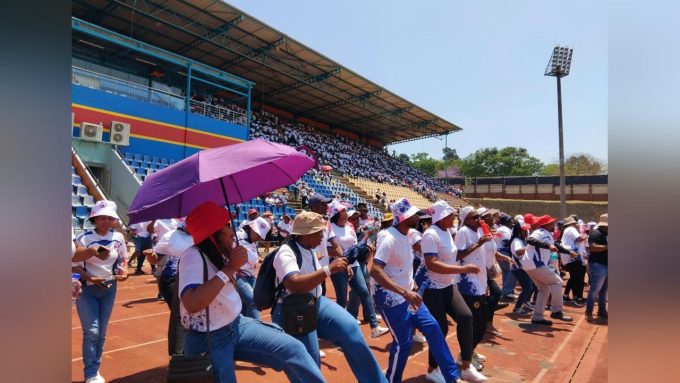
Now back to the topic of today. So much has been said about what those who did not attend the SMART Partnership Dialogue, on Monday, missed. While there is huge hype about us not being there, we are, however, not told what it is, exactly, that we missed.  In the meantime, some of us are proud of the fact that, on Saturday, July 18, 2009, we were part of a ground-breaking experience, wherein, people of all walks of life, converged at John Bosco Hall, in Manzini, to talk about those issues that confront ordinary citizens on a daily basis.
This time around, it was not the usual suspects: the likes of Musa Hlophe, Jan Sithole, Siphiwe Hlophe and Vincent Ncongwane, who spoke.  It was rural folks and market vendors who spoke! For the first time, in as many years, the likes of Jan Sithole, Mrs. Khangezile Dlamini and Vincent Ncongwane were mere participants or facilitators, the show belonged to the people; and of course the people spoke their minds, based on their daily experiences.

Rural farmers spoke on the need for security of tenure of the land they occupy and farm. They spoke about the urgent need to address issues of the Land Policy Reform to be speeded up and formalised, as opposed to what we see, wherein certain interests are granted 99 year leases in ad-hoc fashion, which opens itself to possibilities of corruption. Security of tenure has to be enjoyed as a basic right of the citizens.
People spoke against the unchecked powers of the chiefs and other traditional structures, whose arbitrary actions can infringe on the rights of the citizens.

Then there was the youth. The youth demanded to be given space in the affairs of their motherland. They decried the fact that, at the moment, national resources were being spent propping up a group of young conservatives, who are not in touch with issues confronting young people in the country. Young people called for political spaces in shaping their country’s destiny. Young people also spoke about those things that threaten the future, i.e. drug abuse, HIV/AIDS, and other social ills.

Then there was a commission on gender. This commission discussed the myriad of issues that still cause the denial of equality between men and women, boys and girls. Key among these, were that women and girls were still open to such abuses as rape and violence. That it was still OK to read that a man or a boy has killed a woman or girl because the woman had indicated her intention to end a bad relationship!

Activists called for the protection of both women and girls from such abuses. Good stuff, wouldn’t you say?
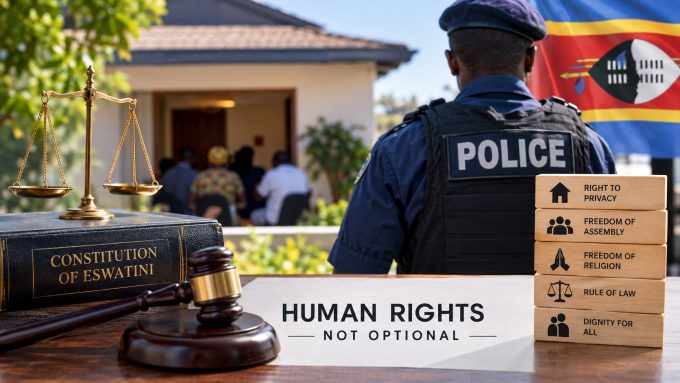
You then went to listen to what the Commission on Human Rights had to say. Human Rights are a critical subject in Swaziland. What one found with this group was a deep appreciation of what human rights are about. There was a great understanding that human rights are not a notion created by lawyers to mislead otherwise loyal Swazi citizens.
There was a clear understanding that human rights are God given and that no one has the right to withhold them from citizens, who rightly deserved to enjoy them. Some of the rights said to be threatened in Swaziland, were: the right to health, the right to descent housing, the right to clean water, the right to life, education, security and all the basic amenities of life. Along these rights people spoke of the basic freedoms that they are entitled to, but which are severely threatened, if not denied in Swaziland, under numerous disguises. These are freedom of assembly, association and free expression.
The fact that you had a heavy army of police, both in uniform and plain clothes, is indicative of this denial. The fact that at the end of it all, you had people arrested for exercising these freedoms is proof enough that Swaziland is virtually a police state, and, under a police state, these freedoms are severely undermined.

People demanded that these freedoms are guaranteed and respected. In fact, yours truly had time with the police chiefs, to explain that their conduct was a violation of the people’s freedoms of free assembly and free speech. Note that I surrendered because the police told me of their duty to enforce the provisions of the Suppression of Terrorism Act of 2008.  It is obvious that they were acting on behalf of their political masters in government.  
There is a world of difference between dissent and terrorism, and it is a sign of extreme political immaturity to try and conflate the two.  Civil Society plays an important role in a democratic society. We are not terrorists and refuse to be treated as such. Be on notice because we are still to hold more of these meetings country-wide. The government and police must use their common sense.  
Bafana BeMbube, be on notice that the next time you threaten us as terrorists, be sure you will meet us at the High Court. Let our courts confirm the brief life and early death of civil rights in Swaziland as a result of the police actions.
People ended discussions of this commission by calling on government to appoint the Human Rights Commission, as a matter of urgency, and to consider Civil Society interests in its composition. Of course, one cannot discuss all these issues outside of democracy and good governance.

Yes, Democracy and good Governance is something that is now taboo in the government sponsored Smart Partnership Dialogue. People discussed issues of democratic governance processes at all national levels: from communities, to Chiefdoms, and national government. People called for Multi-party democracy, for effective participation in their own governance, at all levels.

With all this, would you still say we missed out by not attending the Big Party? It really depends on what you consider to be important. At the ‘people’s convention’, we dealt with the real hard issues facing this country’s development efforts. The results are going to be taken to the government, and advocacy carried around these issues until resolution is found.
Finally, people spoke their minds, and we now have to carry out the mandate given to us.  Can we say the same about the outcomes of the Big SMART Party? Long live the people!!! Amandla!!


202 times read

Rate this Article

1 2 3 4 5 Rating: 5.00Rating: 5.00Rating: 5.00Rating: 5.00Rating: 5.00 (total 2 votes)
We value your feedback. Please comment on this article. comment Comments (0 posted)
 

ADVERTISEMENTS

real broadband

Whats happening in Swaziland

Most Commented

Most E-mailed